Following Dharmendra’s passing, here's looking past mega-hits like Sholay that reveals a daring body of work that widened his "He-Man" action image.
From Hrishikesh Mukherjee’s Satyakam to J.P. Dutta’s Hathyar, several of his boldest dramatic and genre experiments stumbled at the ticket window upon release.
Rediscovered through television reruns, home video, and streaming, these overlooked gems have since found passionate, cross-generational cult status.
Dharmendra Death Anniversary | Superstar's 7 Box-Office Misses That Eventually Became Cult Gold
On Dharmendra's first death anniversary, we remember him as the actor who posthumously endures as one of Hindi cinema's most successful actors, embodying traditional escapism

Summary
For over six decades, Dharmendra embodied the beating heart of Hindi cinema, a grand screen presence who could swerve effortlessly from the vulnerable lover of Bandini to the swaggering action icon of Sholay and Phool Aur Patthar. After his passing in 2025, tributes have rightly celebrated the blockbuster milestones that cemented his status as Bollywood’s original "He-Man." Yet some of the finest, boldest chapters of his filmography were written far away from the box-office victory laps. Across the 1960s, ’70s, and ’80s, and even into his later decades, Dharmendra frequently ventured outside his commercial comfort zone, backing unconventional directors, morally complex characters, and ambitious genre experiments that left contemporaneous theater audiences perplexed and alienated.

Many of these films either flailed or were outright rejected upon arrival. They were overshadowed by louder mass entertainers or deemed too bleak, too poetic, or too ahead of their time. Years later, however, television reruns, home video, and streaming gave them a fresh lease of life. In remembering a legend whose range was always wider than his matinee-idol billing, here are seven Dharmendra films that the box office or the public perception initially got wrong, whose reception shifted over the following decades.
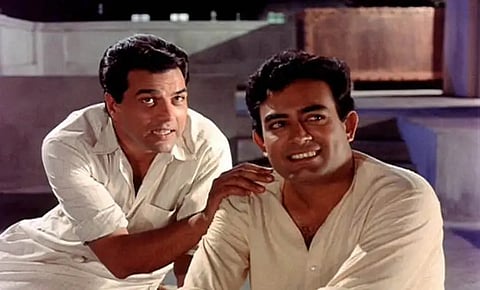
Satyakam IMDB
Often cited as the film containing Dharmendra's finest performance, Satyakam was Hrishikesh Mukherjee's follow-up to the super-successful Anupama, with the same principal cast and crew. Despite winning the National Film Award for Best Feature Film in Hindi, this uncompromising, bleak drama about an idealistic engineer (Satyapriya) who marries a sexual assault survivor and refuses to buckle to post-Independence corruption performed dismally at the box office. Its sobering, quietly reflective qualities might have spurred impatience in an era defined by romances.
In later years, it grew to be cherished by audiences discovering it anew. In a corrupt, skewed world, this film's insistence on idealism and staunch pursuit of truth endure as inspiring.

Dharmendra In Mera Naam Joker IMDB
Spanning four hours with two intervals, Raj Kapoor’s semi-autobiographical magnum opus, featuring Dharmendra in a pivotal role as circus ringmaster Mahendra, was dismissed for its length and unconventional three-chapter structure. It was a dream project of Raj Kapoor. Kapoor went broke trying to bankroll the now-iconic film, but the film bombed at the box office. When it got released in 1970, it emerged as a disaster. So, Raj Kapoor immediately sold it to a Russian distributor to recover some money and get himself out of financial crisis. But then the movie became a blockbuster in Russia.
Advertisement
The film has now become a cult classic, reappraised as an ambitious classic of Indian cinema, celebrated for its emotional depth, Shankar-Jaikishan’s timeless score, and the natural warmth Dharmendra wove into the circus arc. Appearing just before Dharmendra established his larger-than-life "He-Man" action-star image in the early 1970s, his turn as Mahendra drives through quiet authority, beaming warmth, and fraternal camaraderie rather than heightened, hammy melodrama.
In 1970, Indian audiences, already dashing to escapist hits like Johny Mera Naam, snubbed a despairing, introspective, three-chapter meta-narrative about an aging clown’s heartbreak and unrequited love (including an adolescent crush on his teacher, played by Simi Garewal). Decades later, as Indian audiences grew more familiar to world cinema and non-linear, character-driven storytelling, its emotional frankness and semi-autobiographical vulnerability struck out as audacious rather than self-indulgent.

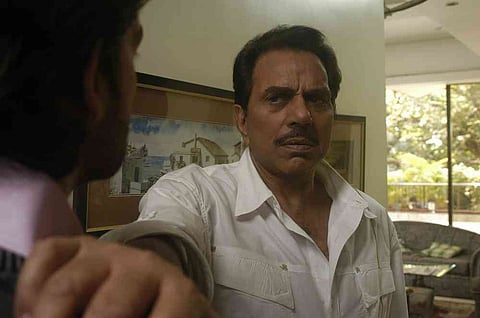
Johnny Gaddaar IMDB
Released the same year as Dharmendra’s emotional family hit Apne, Sriram Raghavan’s pulp-inspired neo-noir, featuring Dharmendra as Seshadri, the veteran patriarch of a tight-knit crime syndicate, underperformed commercially despite favourable reviews.
Advertisement
Widely considered a modern neo-noir landmark in Bollywood. Dharmendra’s dignified, forbiddingly calm performance, replete with a shrewd meta-nod to his own filmography, helped cement the film’s reputation as a nifty genre-defining thriller. Unwilling to be slotted into any one category, the unhinged perversions of this film remain singular.
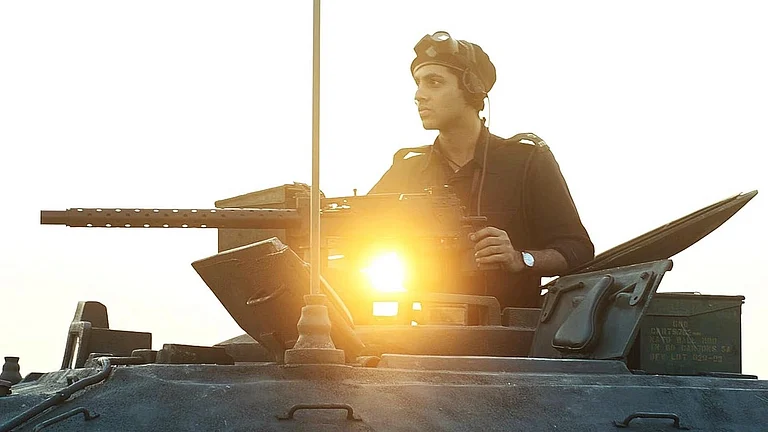

The Burning Train IMDB
Produced by BR Chopra and directed by Ravi Chopra, The Burning Train boasted a stacked ensemble of six major stars : Dharmendra, Hema Malini, Vinod Khanna, Jeetendra, Parveen Babi, and Neetu Kapoor. Even Amitabh Bachchan was initially attached before scheduling conflicts forced him out. Despite its star-studded billing, the film failed to spark at the ticket window and struggled to claw back its hefty price tag. Instead, its true afterlife erupted on Doordarshan, morphing into an iconic small-screen cult favorite over the years. Anchored by hands-on mechanical set pieces, taut suspense, and R.D. Burman’s evergreen numbers like "Pal Do Pal Ka Saath Hamara," it became mandatory viewing across generations.
Advertisement
Dharmendra’s 1997 actioner Loha, directed by trash-cinema provocateur Kanti Shah and co-starring Mithun Chakraborty and Govinda, was a low-budget theatrical tanker that later ascended into the pantheon of Indian "so-bad-it’s-good" cult cinema. Sans any conventional Bollywood polish, the film works through pure midnight-movie fever-dream logic: gravity-defying stunts, absurdly rhyming dialogue, and harebrained plotting. Yet what elevates Loha from forgotten B-grade filler to an iconic YouTube and meme-culture phenomenon is the deadpan, unbothered swagger with which Dharmendra and Mithun fully embrace and own up to the madness. The sheer commitment of these actors to the tone turn a forgotten late-'90s cash-grab into an essential, endlessly quotable artifact of camp nostalgia.
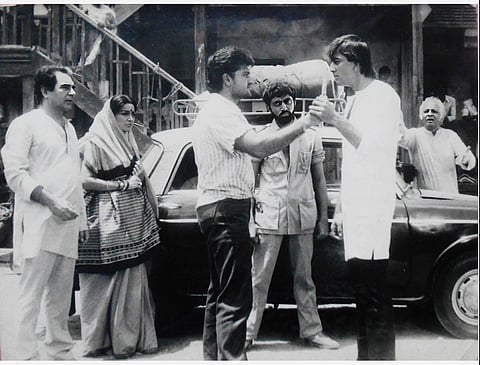
Hathyar IMDB
Released in 1989 and directed by J.P. Dutta, Hathyar did middling business. Its direly pessimistic view of the Mumbai underworld. The film, rooted by Dharmendra’s admirably restrained, weathered turn as aging Pathan don Khushal Khan opposite Sanjay Dutt and Rishi Kapoor, refused late-'80s audiences the escapist romance or high-decibel masala they always sought. Yet that very refusal to glamorize or sensationalise violence later crystallised its cult legacy. Rediscovered through satellite TV and home video, Hathyar is now celebrated by cinephiles as a gritty, fatalistic blueprint for modern Indian gangster realism that heralded classics Satya and Vaastav by nearly a decade, while standing as a career-best showcase of Dharmendra’s quiet late-career gravitas.
Advertisement
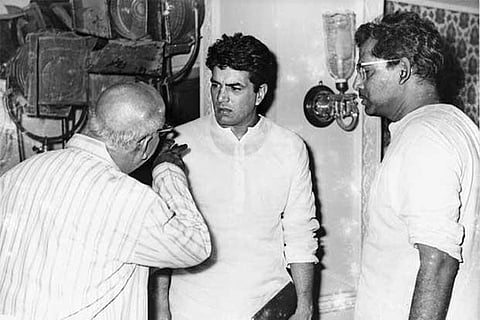
On Sets Of Dil Bhi Tera Hum Bhi Tere IMDB
Arjun Hingorani’s Dil Bhi Tera Hum Bhi Tere, which famously paid a 24-year-old Dharmendra a modest ₹51 signing fee as his debut release, drubbed at the box office, buried under the towering shadow of that year’s magnum opus Mughal-e-Azam. Yet the film lingers in cultural memory as an essential origin story for Indian cinema’s original "He-Man": shorn of the oversized, bulky action-hero swagger that would later define him. A raw, slender Dharmendra delivers a vulnerable, understated turn as a morally conflicted young man in urban Mumbai. Audiences can get a rare glimpse of his natural screen magnetism before stardom crashed in.
Published At: