Indian communists mark 100 years amid decline, while the RSS dominates national power.
The essay urges reclaiming secular, socialist ideals of the freedom movement.
Calls for reimagining class struggle to confront caste, inequality and authoritarianism.
The Right In The Left: Lessons And Limits
The challenge before communists is to use the lessons gleaned from historical hindsight to advance the movement today

Summary
As 2025 draws to an end, the organised communist movement completes its centenary in India. At the other end of the ideological spectrum, the far-Right Rashtriya Swayamsevak Sangh (RSS) also celebrated its centenary on October 1, 2025. The coincidence obviously leads to the question of why the communists find themselves electorally marginalised while the RSS has reached the zenith of power. Yet, when we look back, for much of the last 100 years, especially in the first five decades, it was the RSS that remained rather isolated while the communists had a fairly noticeable electoral presence.
The two trajectories could well have been different. There have been moments that the communist movement missed or mishandled, while the RSS benefited immensely from several turns of events in the last few decades. As long as the Congress dominated the scene, there was a period when the Left and the Right oppositions grew simultaneously, albeit in different parts of the country, but with a growing rightward shift across almost the entire policy spectrum and the Congress giving in to the aggression of the Sangh brigade, India since 2014 has been witnessing a virtual Bharatiya Janata Party (BJP) takeover while the communists have lost momentum.
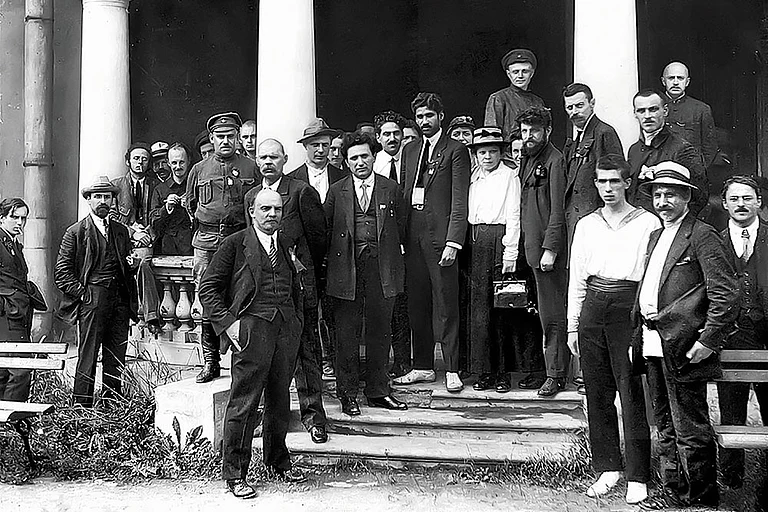
Historical hindsight can offer plenty of experiences and lessons. However, the challenge before communists is to use those to good effect to advance the movement today. Like in many former colonies, in India too, the communist movement had emerged as a powerful anti-colonial stream. Within the overarching agenda of freedom from colonial rule, communists had distinguished themselves by their unwavering commitment to the secular democratic character of the republic and the cause of abolition of landlordism and the feudal order; securing of workers’ rights; and attainment of social progress.
The Constitution of India that emerged from the freedom movement broadly upheld this direction. At the time of independence and adoption of the Constitution, the RSS was explicitly opposed to the new constitutional framework of modern India. Following the assassination of Gandhi by a Hindutva terrorist, India’s first Home Minister, Sardar Patel, had no other option but to ban the RSS to protect India’s freedom. The short statement made by Patel blamed the RSS-promoted climate of hate and violence for Gandhi’s assassination and identified the organisation as a threat to India’s freedom. It was only after the RSS gave a written undertaking to accept the Constitution and the tri-colour national flag that the outfit was allowed to function as a self-proclaimed ‘cultural organisation’.
Advertisement
Today, the Indian state calls the RSS the world’s biggest NGO and celebrates its centenary by releasing commemorative stamps and coins. In fact, the BJP government and the dominant media are promoting the RSS as the ideological anchor of New India, with RSS appointees increasingly dominating the institutional spaces of education, research, policy-making and governance. Consequently, India is now undergoing a systematic legal and institutional restructuring, and this whole act of subversion of the constitutional foundation and institutional framework of modern India is being presented as a great exercise of decolonisation.
When the anti-colonial legacy of India is overturned in the name of decolonisation, the country clearly faces the challenge of not just defending the Constitution and parliamentary democracy, but also reclaiming the spirit of the freedom movement. Reigniting the anti-imperialist core of Indian nationalism and revitalising the vision of modern India as articulated in the preamble to the Constitution remain the principal ideological challenges for India’s communists as they enter the second century of their protracted journey. India has to wage nothing short of a second freedom struggle to reclaim democracy, and this battle is going to be the most pressing agenda of the Indian communist movement in the coming days.
Advertisement
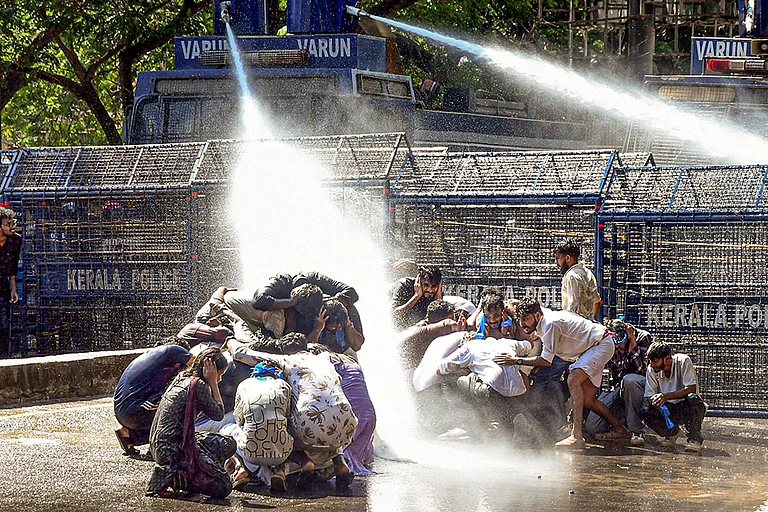
This is a fight that has to be fought on multiple levels. For millions of India’s toilers who will now have to fend for themselves in the corporate jungle raj of hire and fire and more work for less pay, it is a battle for sheer survival. India’s farmers, who had succeeded in getting the three dreaded laws of corporate takeover repealed, still remain utterly vulnerable. With education becoming an ever-expensive commodity and job security becoming increasingly elusive, young Indians find themselves trapped in a permanent state of anxiety and uncertainty. Draconian laws like the Unlawful Activities (Prevention) Act and regimentation drills like the National Register of Citizens (NRC) and Special Intensive Revision (SIR) are making liberty and rights a luxury for dissenting citizens and marginalised groups.
The Partition was the biggest tragedy of modern India as we emerged from two centuries of colonial rule. It left Indians with memories of a permanent wound and dreams of an undivided India or ‘Akhand Bharat’ that would become the aggressive credo of the RSS. But we tend to forget that even a partitioned India is a country of continental dimensions with all its complexity, diversity and vastness, and the RSS fad for bulldozing this diversity into an over-centralised uniformity is leaving the country ever more fragmented from within. The 42nd amendment to the Constitution had inserted not just the two epithets ‘secular’ and ‘socialist’ in the Preamble, it had also added the phrase ‘unity and integrity of the nation’. The Sangh-BJP establishment wants to erase every mention of secularism and socialism, but it does not understand that a multireligious, multicultural society like ours cannot stand united as a nation without secularism and socialist welfarism.
Advertisement
Ever since the publication of the Communist Manifesto in 1848, generations of communists in different parts of the world have had to navigate uncharted territories and deal with unforeseen situations. There have, however, been a few constant concerns—the focus on class struggle as the driver of social transformation, socialisation of capital, the working class emerging as the leading class and attaining political supremacy to constitute and lead their respective nations, and human emancipation from all fetters of bondage. In its attempt to grow at all costs, capital has not only pushed the world into wars and destruction, with growing environmental degradation and the climate crisis, the survival of the planet itself is now at stake.
How do communists in India deal with these questions in the emerging Indian context? The idea and practice of class struggle cannot be confined to the boundaries of economic struggle or the conceptual plane of abstract categories. Class is nothing if it cannot capture the concrete social existence and identity of the people, and if it cannot tackle the question of power, from the power of capital to the power of the state. With all the experience of the first 100 years of organised movement, can communists in India evolve a paradigm of class struggle that does not falter in challenging caste oppression and celebrating cultural diversity, a paradigm that pulsates with the spirit of gender justice and reflects the aspirations and sensitivities of the new generations? Challenging times must produce credible answers.
Advertisement
(Views expressed are personal)
Dipankar Bhattacharya is the general secretary, CPI(ML) Liberation
This article appeared as The Right In The Left in Outlook’s December 21, 2025, issue as 'What's Left of the Left', which explores how the Left finds itself at an interesting and challenging crossroad now that the Left needs to adapt. And perhaps it will do so.
Published At: