Delhi has barred non-BS-VI vehicles registered outside the capital from entering until January 31, 2027.
Traffic police and transport officials will use checkpoints, ANPR cameras, RFID and vehicle-registration data to enforce the ban.
Gurugram and Noida have deployed teams at key routes into Delhi.
The Border Is Where Delhi’s Air Pollution Fight Will Be Won Or Lost
From Gurugram and Noida to Faridabad and Ghaziabad, commuters face checks before entering Delhi. Here’s how officials plan to identify non-compliant vehicles and what motorists need to know

Summary
Delhi’s three-month restriction on older, non-BS-VI vehicles entering the capital is now being tested on the roads. The ban, in force from November 1 to January 31, 2027, could affect an estimated 10 lakh vehicles from neighbouring NCR cities. Its success will depend on whether authorities can identify and stop non-compliant vehicles at busy borders without bringing traffic to a standstill.
Vehicles registered outside Delhi that do not meet BS-VI emission standards are barred from entering the capital. BS-VI vehicles, CNG vehicles and electric vehicles are allowed. Emergency vehicles, including ambulances and fire tenders, are exempt.

How Authorities Plan To Enforce The Ban
Joint teams of the Delhi Traffic Police and Transport Department, supported by local police, are enforcing the restriction. Officials will use automatic number plate recognition (ANPR) cameras, radio frequency identification (RFID) technology and checks at selected entry points. The Delhi government has also said an AI-enabled Integrated Command and Control Centre will support enforcement, with e-challans issued against vehicles that violate the rules.
The challan application used by the Delhi Traffic Police is linked to the Vahan database, which contains details of vehicle makes and models. Officials as cited by the Indian Express said that this would help personnel establish whether a vehicle meets the required emission standard. Cameras will also generate challans, as authorities cannot station personnel at every entry point.
Identifying a vehicle’s emission category may not always be straightforward. Some newer SUVs have design features that help distinguish BS-VI models from earlier versions, but that may not be true for sedans, officials said. Damaged or obscured number plates, outdated registration records and gaps in coverage could also complicate checks.
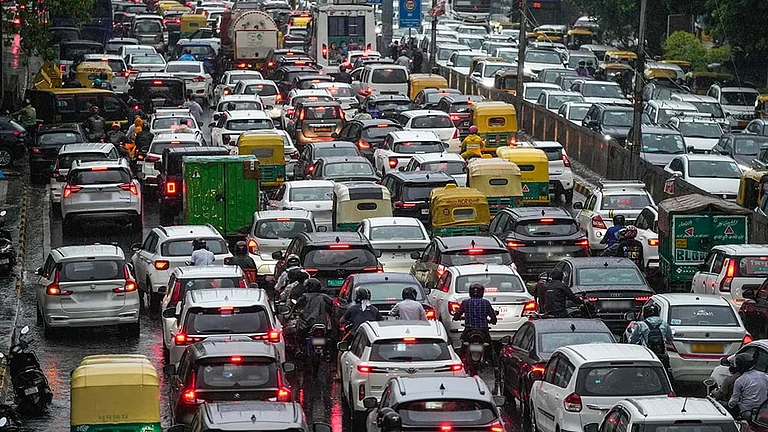
Border Teams In Gurugram And Noida
Gurugram Traffic Police has deployed inspection teams at five routes into Delhi: Sirhaul toll, Kapashera, Bajghera, Aya Nagar and Gwal Pahari. Traffic Police spokesperson Vikas Soni said officers would check vehicles for BS-VI compliance, registration details and valid Pollution Under Control Certificates.
Advertisement
“The roadside inspections will focus primarily on commercial vehicles, interstate buses and heavy goods carriers registered outside Delhi,” Soni said.
In Noida, police said vehicles registered outside Delhi, including buses and trucks, would not be allowed into the capital unless they meet the emission standards. Five teams from the Regional Transport Office will work alongside traffic police at Chilla border, the Delhi-Noida Direct (DND) Flyway, Kalindi Kunj, Pari Chowk and Zero Point.
A Noida RTO officer said BS-IV vehicles registered in Noida could continue to operate within the district, while Delhi-registered vehicles could operate in the capital. “BS-I, BS-II and BS-III vehicles, classified as end-of-life vehicles, were already being checked and their movement restricted within Gautam Buddha Nagar,” the officer said.

What Commuters Need To Know
Commuters travelling from Gurugram, Faridabad, Noida, Greater Noida and Ghaziabad should check their vehicle’s emission category and keep registration and pollution certificate details ready before setting out. Authorities have said drivers and vehicle owners will be held responsible for violations. The supplied order and reports say e-challans will be issued, but do not specify the fine amount.
Advertisement
The restriction is scheduled to remain in force until January 31. Authorities will need to maintain checks throughout that period and make clear which vehicles qualify, where checks are operating and how exemptions are handled. Regularly publishing figures on vehicles checked, turned away and penalised would also show whether enforcement is consistent across Delhi’s borders.
Published At: