Sonia Gandhi says Indira Gandhi was struggling to handle widespread unrest when she imposed Emergency rule in June 1975.
She acknowledges the suspension of democratic rights and habeas corpus and recalls Indira Gandhi's subsequent apology for Emergency excesses.
Indira Gandhi called fresh elections in January 1977, but lost Rae Bareli as the Emergency ended on March 21.
Sonia Gandhi On 1975 Emergency: Indira Gandhi Faced Unrest, Democratic Rights Were Curtailed
While acknowledging that democratic rights had been curtailed and habeas corpus suspended, she said these measures had been carried out constitutionally

Summary
Congress Parliamentary Party chairperson Sonia Gandhi has acknowledged that democratic rights were curtailed during the Emergency but said former prime minister Indira Gandhi was struggling to cope with widespread unrest and deteriorating circumstances when she imposed Emergency rule in June 1975.
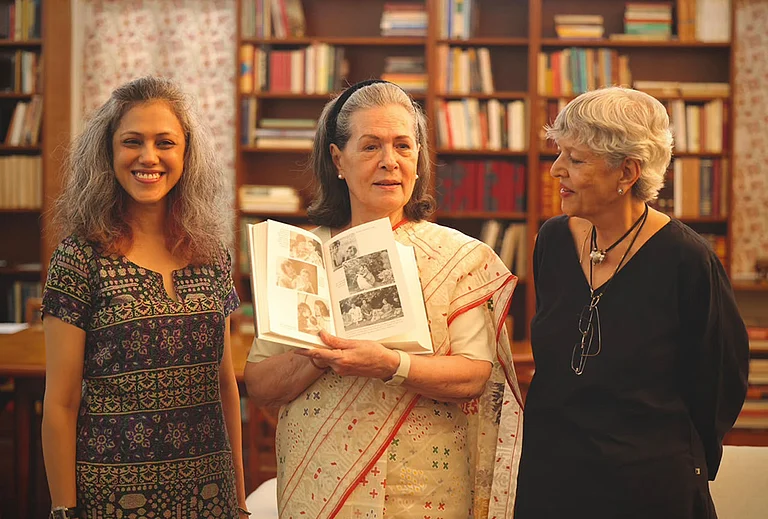
In an interview with The Hindu, published on Saturday ahead of the launch of her book, Belonging: A Journey of Love, Sonia Gandhi said the events of the Emergency could be viewed differently with the benefit of hindsight. She also pointed out that Indira Gandhi later publicly expressed regret and apologised for the excesses committed during the period.
According to PTI, Sonia Gandhi was asked whether the excesses during the Emergency could have been avoided if Indira Gandhi had listened to her elder son Rajiv Gandhi and others, particularly given Sanjay Gandhi's association with the period.
She said Sanjay Gandhi was often seen as synonymous with the Emergency, but pointed out that other senior colleagues had also exerted pressure on Indira Gandhi.
"It was not only Sanjay, though in the public mind he is often seen as synonymous with the Emergency. There was a lot of pressure from some of her senior colleagues, and I think there were very few people around her like Rajiv who had a different point of view," she said.
Sonia Gandhi said Indira Gandhi eventually understood the situation and took steps to address it.
"I think eventually my mother-in-law began to understand the situation through her own wisdom and took actions to remedy it," she said.
The Congress leader said she learnt about the true gravity of the events only after the Emergency had ended. While acknowledging that democratic rights had been curtailed and habeas corpus suspended, she said these measures had been carried out constitutionally.
Advertisement
Recalling the circumstances from Indira Gandhi's perspective, she cited violent protests, attacks on government offices and public transport, organised unrest and calls for the bureaucracy and armed forces to disobey orders.

"Yet, when I take myself back to that period and try and see it from Mrs Gandhi's point of view, I see her struggling to cope with the rapidly deteriorating prevailing circumstances: violent protests, government offices and public transport set on fire, widespread organised unrest and even a call for the bureaucracy and armed forces to disobey orders," Gandhi said.
She said hindsight allowed people to put the events of the Emergency into better perspective.
She further pointed out that Indira Gandhi eventually recognised the situation and called for fresh elections in March 1977. The former prime minister also publicly expressed regret and apologised for the excesses committed during the Emergency, Sonia Gandhi said.
Advertisement
"And you know very well that she herself later publicly expressed regret and apologised for excesses during the Emergency," the former Congress chief said.
The Emergency was imposed by then Prime Minister Indira Gandhi shortly before midnight on June 25, 1975. At her behest, President Fakhruddin Ali Ahmed issued the proclamation, which was subsequently ratified by the Union Cabinet.
On January 18, 1977, Indira Gandhi called for fresh elections and released all political prisoners. Polling for the Lok Sabha elections began on March 16 and continued until March 20, 1977. Both Indira Gandhi and her son Sanjay Gandhi were defeated. The Emergency officially came to an end on March 21, 1977.
Advertisement
Published At: