The UGC’s 2026 Equity Regulations have sparked upper-caste outrage and exposed deep caste anxieties.
The rules strengthen enforcement but dilute clear definitions of caste discrimination.
The backlash reflects savarna counter-victimhood and resistance to constitutional justice.
Sins of Savarnatva: Caste Anxiety and the UGC’s New Equity Framework
The upper castes believe that the UGC regulations are a death knell to their own existence

Summary
The University Grants Commission (UGC) has brought out a gazette notice regarding the Promotion of Equity in Higher Education Institutions Regulations, 2026, which has become a bone of contention among upper-caste Hindus, leading to a spectre of violence. As a matter of fact, people who have expressed their outrage predominantly belong to a certain section of Indian society, mainly the upper castes. According to them, the regulations are a death knell to their own existence. Neither has anyone read the regulations, nor have they attempted to understand them. Social media platforms such as WhatsApp, Instagram and X were filled with anger and hate. While every citizen has the right to express their disagreements, the psyche of opposition is to produce the counter-victimhood syndrome without any deliberation. Worst of all is the media, which has often supported the spectre of hate and violence, be it ideological, philosophical, physical or psychological. The media’s claim is that their job is to report the matter, but in reality, their objectives are guided by certain ideological standpoints and adherence to Brahmanical traditions in the Indian philosophical and social system, and thus, ‘Constitutional letter and spirit’ is absent in their narratives.
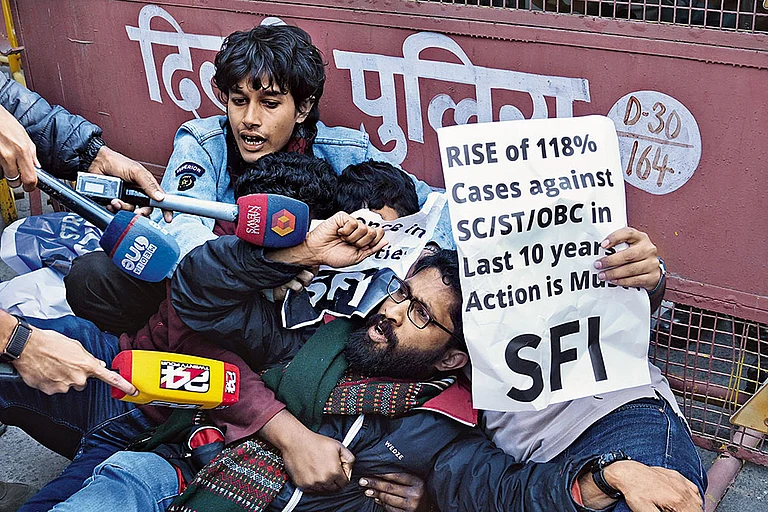
The 2012 equity regulations brought out by the UGC were kept in abeyance all these years. Disha Wadekar, the lawyer representing the petitioners—Rohith Vemula and Payal Tadvi—observes that “the UGC website where the 2012 regulations were uploaded had even put cancelled marks on the first page of the regulations and some of the pages of the regulations were not properly legible. Such insensitivity from the government regulator is unlawful conduct”. Explaining the difference between the 2012 and 2026 regulations, Wadekar says that the “2012 regulations, apart from the general definition of discrimination, have also defined various forms and practices of caste-based discrimination practised in universities. Around 28 forms of caste-based discrimination are defined in the 2012 regulations, in addition to the general definition of discrimination. However, the procedure and mechanism adopted to resolve the complaint of discrimination under the 2012 regulations was found to be weak by the standards of other UGC regulations such as anti-ragging regulations, 2009, and sexual harassment regulations, 2015. The 2026 equity regulations have deleted these forms of discrimination or the caste-based discrimination that has been defined in the 2012 regulations without any justification. The mechanism in 2026 to resolve complaints is better and stronger with a non-compliance clause for the universities that do not comply with the regulations or with respect to setting up a committee to monitor the functioning of the equity committees. However, the removal of forms of discrimination in the 2026 regulations hollows out the regulations to a great extent as it is left to individual equity committees to decide what is discrimination and what is not discrimination on their whims and fancies, or it is left to their own discretion”. The honourable lawyer is very precise and clear that there are categorical differences as well as shortcomings in the regulations. The regulations are not just confined to only one category of people, but involve many social and gender categories. Such a broad spectrum is hardly addressed in sensitising the consciousness of the upper caste society in India.
Advertisement
The set of people who claim to be highly educated and articulate have been involved in expressing their brutality in thinking in many ways. They did not realise the pain and struggle of the mothers of Rohith Vemula and Payal Tadvi. Their ghettoised perception is one of self-endurances, constantly making a cry of victimhood, and the worst is that the so-called educated have been legitimising such syndromes rather than initiating any transformation. This disorder is deeply connected with their social, ideology and belief systems. In the past, many cases of public killings, rapes and lynching on the singular issue of caste hierarchy have become a visual spectre to constantly inscribe in the minds of the oppressed communities to their brute structured power that has produced their claimed ‘self-mighty’ syndrome.
The set of people who claim to be highly educated and articulate have been involved in expressing their brutality in thinking in many ways. They did not realise the pain and struggle of the mothers of Rohith Vemula and Payal Tadvi.
Advertisement
Their collective self is deeply rooted in the belief of natural superiority, despite the fact that their contribution of labour to the nation-building process is highly questionable. Labour in India is all about caste. The lower caste masses are the toiling masses. Caste produces free labour, whereas the industrial economy produces paid labour. Consequently, the upper caste communities started an elite labour space mainly for so-called white collar jobs. Protests against any progressive provision has had a very sordid past. When reservation in government jobs for Other Backward Classes (OBCs) was announced, as per the recommendations of the Mandal Commission, self-immolation was enacted by a young person, Rajiv Goswami, as part of the protests.
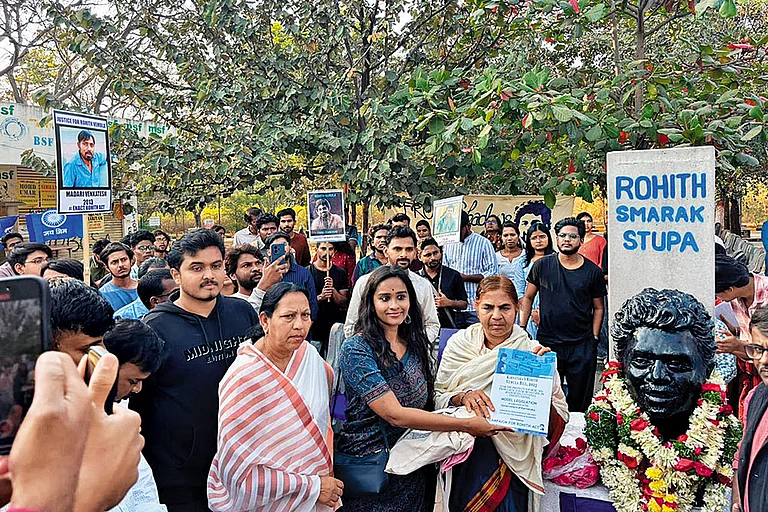
Proportionate representation is a part of distributing equality by the state. But it is never narrated in school textbooks or in the public sphere to sensitise the citizens of the country. When reservation for OBCs was announced, the Maratha community took out a procession in Dadar, opposing their inclusion in the OBC quota. Today, the same community is demanding inclusion in the OBC list of communities. A number of protests were conducted in recent times by the Maratha communities with the slogan of “ek Marāthā, lakh Marāthā” (one Maratha is equal to one lakh Marāthā). One of the demands in these protests was to scrap the Scheduled Castes and Scheduled Tribes (Prevention of Atrocities) Act. The act is meant to protect the SC and ST communities as they face the worst caste-based discrimination in India. Their voices were in tune with the savarnatva (caste-Hinduness). The middle caste groups are often called “subalterns” by Brahmanical intellectuals who do not wish to undergo any introspection. These so-called subalterns are the foot soldiers and custodians of the caste structure. Their reliance on the belief system is like a supreme order to remain conformist throughout their lives.
Advertisement
Any protest by the upper castes gets immediate visibility, no matter whether or not it carries any importance. The upper castes in India are largely Vedantic. They can be classified into two camps: orthodox in every respect and dedicated to the political dispensation of the Bharatiya Janata Party (BJP) and orthodox but not dedicated to the BJP and believing in the Indian Constitution. Protests by the first group of the upper castes get immediate cognisance. Thus, an established ecosystem plays an important role in projecting the community as victims and giving them the power to cause brutal violence. Caste is an institution of psychotic perversions. Those who are ardent believers in caste duties (jati-dharma) constantly maintain violence in society. Their caste brotherhood is very thick and strong, like industrial ‘Fevikwik’. Their syndromic perversion becomes the operative means of their mind consciousness. When they burned the Indian Constitution a few years ago in Delhi, they remained privileged as the administration did not file any case under the National Security Act (NSA). However, whenever there were protests by the SCs and STs, the Brahmanical polity was quick to impose the NSA on the protesters, irrespective of the political party in power. Any protester demanding justice and rights under the Constitutional provisions is always deemed a traitor by the upper caste Hindus who are guided by the Manusmriti syndrome.
Advertisement
Protesters demanding justice and rights under Constitutional provisions are always deemed as traitors by the upper caste Hindus who are guided by the Manusmriti syndrome.
India is a mythyavadi sanskriti (culture of mythic/myths). The Vedantic strongly subscribe to such a phenomenon. The Rig Vedic text is full of praises for many gods and its purpose is to get protection from the respective deity by pleasing the deity through several different offerings. It paved the way to create a devotee. The Puranas are full of such systems. It created ardent devotees in the process. The babas, and buvas have created their own devotees and maintain parallel economics. They have created blind followers. Thus, the devotee syndrome is converted into the chain of command that overpowers everything. It goes against the Constitutional ethos of inculcating scientific temperament. The blind devotee syndrome is a state of subjugation, where chains of command are guided by blind faith and belief. Consequently, it produces violence that has emanated from the consciousness of “protected ignorance”. It is a matter of disgust that the claimed liberal, educated, elite upper castes would like to explain violence from the sub-consciousness of the psychoanalyst Sigmund Freud. On the other hand, an act of violence is a perversion emanated from the caste psychotic perversion of the conscious mind.

Every political leader in India has dedicated devotees. They are blind bhakts. They exist in every political party. They are under the command of their respective leaders. Their numbers depend on the political position of the leaders. Prime Minister Narendra Modi has the largest such following among all leaders in India. However, he has never been vocal against caste violence and blind belief systems. There is a constant denial on the part of Modi in asking his followers to keep away from violence, and above all, not to follow jat-dharma and the caste system. He declared himself apaurusheya (non-human). A perfect example of Brahmanical cultural nationalism.
(Views expressed are personal)
Y. S. Alone is professor in visual studies in the school of arts and aesthetics, Jawaharlal Nehru University, New Delhi
This article appeared in Outlook's February 21 issue titled Seeking Equity which brought together ground reports, analysis and commentary to examine UGC’s recent equity rules and the claims of misuse raised by privileged groups.
Published At: