Operation Sindoor signals India will treat terror attacks as acts of war, blurring lines between non-state actors and state sponsors.
From Ukraine to West Asia, modern warfare is increasingly targeting civilians, infrastructure, and economies in real time.
Despite legal frameworks, public awareness and volunteer strength remain low, making citizen preparedness an urgent priority.
Peace Demands Preparedness: Why India Must Rethink Civil Defence
As global conflicts intensify and security threats multiply, India’s civilian preparedness is emerging as a critical pillar of national defence.

Summary
The world today does not merely stand at a crossroads. It teeters at the edge of an abyss. From the charred ruins of Kyiv to the missile-scarred skies above Tel Aviv and Tehran, from the nuclear sabre-rattling on the Korean Peninsula to the drone warfare reshaping the Indo-Pacific, the international order built after the Second World War is fracturing in real time.
A Turning Point In Doctrine
And India, a nation of 1.4 billion people, a rising global power, a country that has historically championed the path of peace, ‘ahimsa parmo dharmah’, cannot afford to be a passive spectator. The ancient Gita maxim, yuddhay kŕtnischaya (prepare for war) has never rung more urgently than it does today.
Krishna tells Arjuna that war presents only two outcomes. Victory brings an earthly kingdom, while death leads to a heavenly one. In our own neighborhood, India confronts a security environment of compounding complexity.
The Pahalgam terrorist attack of April 2025, in which 26 civilians were massacred in the idyllic valleys of Kashmir by operatives of Pakistan-based Lashkar-e-Taiba, triggered Operation Sindoor, India’s decisive cross-border military strikes against terrorist infrastructure. This marked a categorical shift in India’s doctrine. Future terror attacks will be treated as acts of war, with no distinction drawn between non-state actors and their state sponsors.
On India’s eastern flank, the political implosion in Bangladesh has empowered radical Islamist groups, creating fresh cross-border terror threats to India’s porous eastern borders.
War Without Frontlines
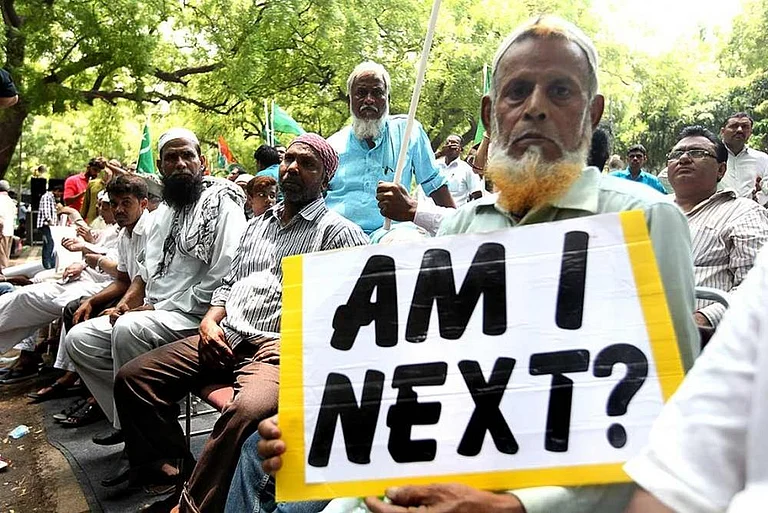
A Geopolitical Reality Check shows that the bipolar US-China rivalry is reshaping every theatre of competition — technological, economic, military, and diplomatic. The Russia-Ukraine war has demonstrated that modern warfare is not a distant, contained event. It disrupts global food chains, energy markets, and civilian economies within hours. International humanitarian law rests on principles of humanity, distinction, proportionality, and military necessity, widely recognised by civilized nations, yet increasingly eroded in recent conflicts.
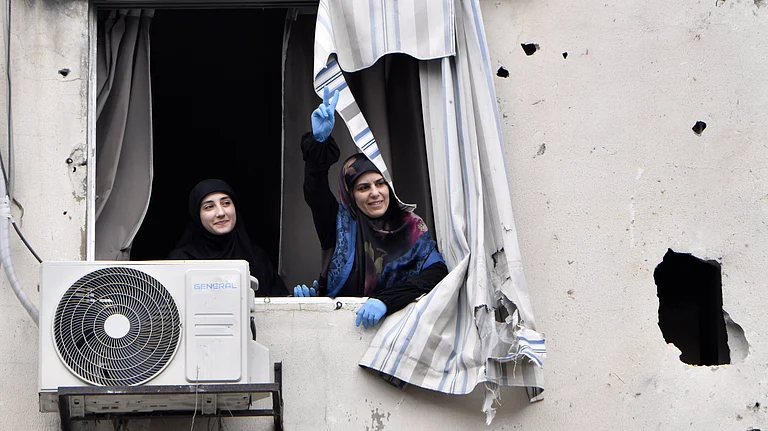
Nine capital cities were struck by state-sponsored aerial attacks in 2025 alone — Kyiv, Moscow, Tel Aviv, Tehran, Beirut, Doha, Kabul, Sanaa, and Damascus — a precedent-shattering collapse of the post-WWII norm against targeting sovereign capitals. The recent US–Iran–Israel confrontation has caused significant civilian casualties, though evidence on whether they exceed combatant deaths remains mixed and contested.
Advertisement
India’s Civil Defence Blind Spot
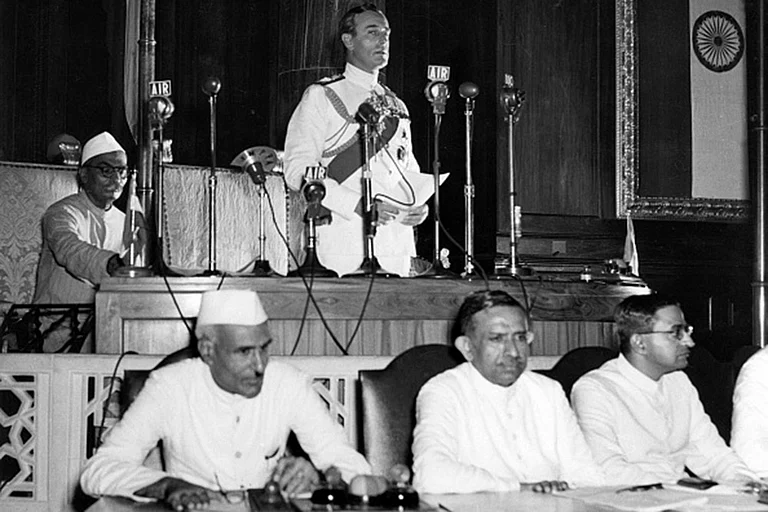
Many citizens today are unaware that their state governments operate a dedicated Civil Defence apparatus. This unawareness is itself the problem this article seeks to address. Civil Defence, as defined under the Civil Defence Act, 1968 (Act No. 27 of 1968), encompasses all measures, short of actual combat, for protecting persons, property, and places within India against hostile attack — whether from air, land, sea, or any other direction — and for sustaining the morale and essential functions of civil society during and after such an attack. The Act was passed by Parliament in May 1968, born out of the hard lessons of the Chinese aggression of 1962 and the Indo-Pakistan conflict of 1965, when India was caught dangerously underprepared on the civilian front.
The Civil Defence (Amendment) Act of 2009 broadened this mandate further, adding disaster management, whether natural or man-made, as an additional and co-equal responsibility of the Civil Defence Corps.
Today, the Directorates of Civil Defence function as the nodal state-level institution, operating under the administrative oversight of respective state governments, and in coordination with the Directorate General of Fire Services, Civil Defence and Home Guards, Ministry of Home Affairs, Government of India. Civil Defence is organised in India primarily on a voluntary basis, with a small nucleus of trained, paid permanent staff augmented by volunteers who are provided duty and training allowances.
Advertisement
The Civil Defence Corps functions across three tiers: local/town/district level, state level, and national level. Volunteers are trained in warden services, rescue and relief, fire-fighting support, first aid and casualty services, communication and emergency information services, and evacuation management. The objectives of Civil Defence are fourfold: to save lives, minimise the loss of property, maintain continuity of essential production and services, and keep high the morale of the people in the face of adversity.
In times of war or grave national emergency, the Civil Defence Corps serves as the first civilian line of support behind the Armed Forces — guarding the hinterland, assisting civil administration, mobilising communities, and maintaining the essential nervous system of the nation.
Lessons from Nations Under Threat
To understand where India must go, it is instructive to examine where others already stand. Nations living under the constant shadow of conflict have built Civil Defence frameworks that are not merely institutional formalities, but deeply embedded social and civic habits. With its extensive network of bomb shelters, many inherited from the Soviet era, Russia’s civil defence system is a state-led, highly centralized structure adapted for modern risks. It is designed to protect civilians during war, disasters, and large-scale emergencies through integrated early warning systems, shelters, evacuation planning, and mass training.
Advertisement
The United States’ civil preparedness strategy centres on a federal emergency management system supported by the defence establishment, emphasizing nationwide early warning, and resilience to sustain operations across simultaneous multi-region crises. They have operationalised a culture of preparedness among every household to maintain emergency kits with 72-hour supplies of food, water, medications, and communication devices.
South Korea and Israel, both within artillery range of hostile neighbours, have built civil defence strategies centred on extensive shelter infrastructure, rapid early warning systems, and regular whole-of-society participation in nationwide exercises simulating real-world scenarios including cyberattacks on power grids, military communications systems, port infrastructure, semiconductor supply chains and nuclear attacks.
From Awareness To Preparedness
India's constitutional commitment to peace, enshrined in Article 51, which directs the State to promote international peace and security, has been a source of national pride. But peace as aspiration must never be confused with peace as naivety. Near to Operation Sindoor, the Ministry of Home Affairs launched Operation Abhyas, an exercise involving not just civil defence volunteers and civil servants, hospital staff, and utility workers, but above all, wide participation by ordinary citizens to prepare themselves for defence from aerial strikes. Most Indians had never heard a Civil Defence siren, never participated in an air raid drill, and did not know where the nearest Civil Defence shelter or warden post in their town was located.
Advertisement
Power blackout and siren protocols and public warning systems were tested for the first time after the Indo-Pak conflict of the early 1970s. It succeeded in creating mass awareness and preparedness of the erstwhile dormant civil defence apparatus of the states, so far as wartime preparedness is concerned. But much remains to be done. The Home Ministry has set a target of raising 1 crore Civil Defence volunteers nationwide within seven years. As of last count, only approximately 5.38 lakh volunteers of a target of 14.11 lakh have been enrolled.
Building A Civil Defence State
The concept of Civil Defence has evolved far beyond its original Cold War paradigm of protection against conventional aerial bombing. It now explicitly encompasses threats from, chemical, biological, radiological and nuclear (CBRN) weapons, cyberattacks on critical infrastructure, and complex multi-hazard emergencies. Volunteers are now required to be equipped with skills in decontamination services (critical in CBRN scenarios), responding to cyberattacks, and meeting the demand for emergency shelters that may be mandated under the Building Code.
A massive enrolment drive will require large-scale capacity building, for which the National Civil Defence College in Nagpur may train master trainers and specialised personnel, and State Civil Defence Training Institutes may conduct operational training. Yet raising awareness among the citizenry will require effective utilisation of print, electronic, and social media platforms.
Peace Through Preparedness
Peace is not passivity. The 2025 Indian military response to terror underscored that modern conflict is designed to disrupt and unsettle civilian life as much as it engages armed forces, even in a civilisation rooted in Ahimsa. Contemporary wars show that power grids, data centres, supply chains, schools, and cities are all vulnerable. Civil defence is therefore no longer optional. It must be embedded into national preparedness, including school curricula from an early age. A nation may equip its military with cutting-edge systems, but without preparing its 1.4 billion citizens for emergencies, it builds a fortress with strong walls but no roof. Join Civil Defence. Train with us. Build with us. Because a prepared citizen is the most powerful asset a democracy possesses, and civil defence is not the government’s responsibility alone. It is every citizen’s duty.
Dr Paresh Saxena is Director General-cum-Commissioner, Civil Defence, Bihar.
(Views expressed are personal)
Published At: