Delhi Police raided Okhla unit and arrested 7 for relabelling expired branded food.
Expired products like Maggi and Thums Up got fake dates and entered markets via e-commerce.
Consumers advised to check for tampered labels and report suspicious deals.
Delhi’s Expired Food Racket Explained: How Relabelled Products May Have Reached Your Kitchen
Branded products like Maggi, Bournvita, and Thums Up allegedly tampered with and pushed into markets, including e-commerce platforms.

Summary
Delhi Police have alleged that expired branded food and beverage products were sent back into the market after a unit in Okhla removed original manufacturing and expiry dates and replaced them with fresh labels. The alleged operation came to light after a raid in Okhla Industrial Area that was initially conducted over suspected child labour.
Delhi Police have arrested seven people, including the alleged owner of the unit, and are tracing suppliers, buyers and distribution channels across several states. They are also examining whether some of the relabelled products reached warehouses linked to e-commerce sellers and were delivered to consumers.
Separately, the Food Safety and Standards Authority of India (FSSAI) has issued notices to Swiggy Instamart over consumer complaints alleging the supply of expired, spoiled and unsafe food products. The two matters are not connected, but together they have raised concerns over food supply chains, traceability and regulatory oversight.
What is Delhi’s expiry date racket?
The alleged racket was uncovered on July 2 when a joint team of Delhi Police, officials from the Sub-Divisional Magistrate’s office in Badarpur, FSSAI and the National Human Rights Commission (NHRC) raided a unit at Plot X-57 in Okhla Industrial Area.
The raid followed a tip-off about suspected child labour. According to The Indian Express, the joint team found what police described as a food relabelling operation.
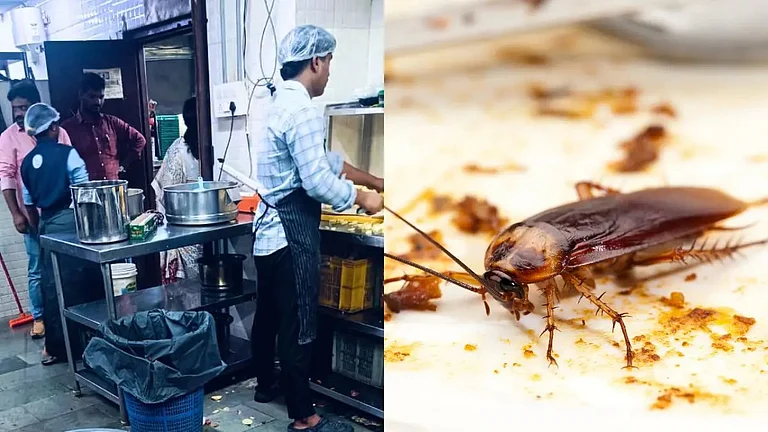
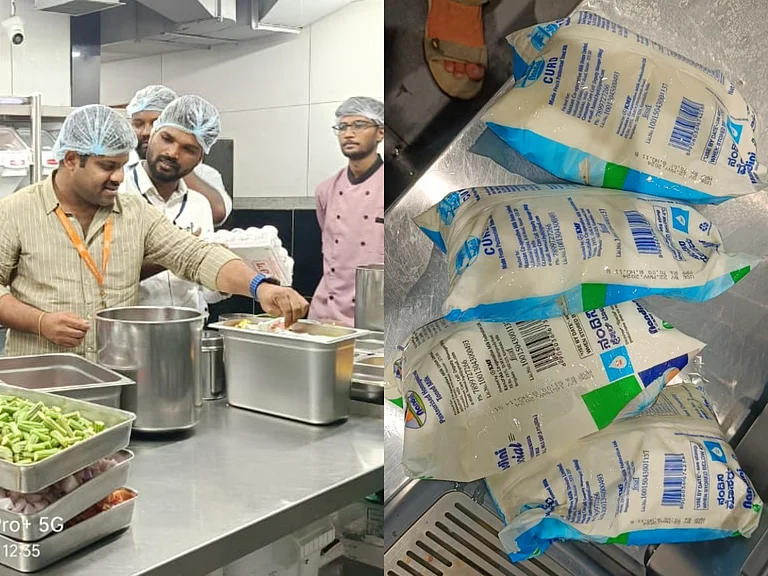
Police said the unit was removing original manufacturing and expiry dates from food and beverage products that had allegedly crossed their shelf life and replacing them with fresh labels before putting them back into circulation.
“The products included brands such as Thums Up, Fanta, Bournvita, Horlicks, Maggi noodles and Paper Boat beverages, as well as ghee products,” a senior police official told The Indian Express.
Police arrested seven people, including 70-year-old Darshan Singh Sachdeva, who allegedly operated the business under the name Westend Corporation Private Limited. Police told The Indian Express that Sachdeva had allegedly run the Okhla unit under this name for more than three years. The other accused include the unit manager, accountant, operator, warehouse keeper and two supervisors.
Advertisement
According to The Indian Express, police are also examining the nature of Sachdeva’s business before he shifted operations to the Okhla premises. The accused have been booked under Bharatiya Nyaya Sanhita provisions related to the sale of noxious food or drink, cheating, forgery and criminal conspiracy.
Police said the products recovered from the unit were genuine branded items that had allegedly crossed their shelf life and were being prepared for resale.
How were expired products allegedly relabelled?
According to Delhi Police, the alleged tampering process involved altering dates printed on original packaging.
“They would first use thinner, applied to paper or cotton, to remove the original manufacturing and expiry dates printed on the packaging,” an officer told The Indian Express.
After removing the dates, workers allegedly used handheld printing machines to add fresh expiry dates. Police said this extended the stated shelf life of products by five to six months, depending on the item.
Advertisement
Where the original dates could not be completely erased, workers allegedly covered them with stickers carrying newly printed dates.
During the raid, police seized products valued at more than Rs 20 lakh, along with what they described as counterfeit labels and stickers, forged nutrition-value labels, fake barcodes and batch labels.
How did they reach consumers?
Delhi Police said the alleged operation relied on a supply network involving wholesalers across multiple states.
Police said the accused told investigators that they sourced near-expiry and expired food products from around 60 to 70 suppliers in Punjab, Haryana, Uttar Pradesh and Bihar.
“Most of the suppliers were wholesalers. The accused purchased goods from wherever they could secure the steepest discounts,” an officer told The Indian Express.
Police are also seeking details of suppliers and customers to determine the extent of the alleged distribution network.

Advertisement
Deputy Commissioner of Police (Southeast) Hemant Tiwari said the accused allegedly procured near-expiry and expired products, erased original dates using chemicals, printed fresh dates on packaging and reintroduced the products into the market through retail outlets and e-commerce platforms across the country.
Delhi Police are also examining whether other businesses or intermediaries were involved in moving the products after they left the Okhla unit.
Were e-commerce platforms involved?
Police are investigating whether some of the allegedly relabelled products entered online supply chains.
A senior police official told The Indian Express:
“We suspect some of the relabelled products were supplied to warehouses operated by e-commerce platforms and may have reached consumers. We have alerted the companies as we probe the scale of the operation.”
Another officer said:
“The products were supplied to warehouses linked to e-commerce sellers in the National Capital Region, from where they may have been distributed to consumers across the country.”
Advertisement
Police are examining whether companies or intermediaries involved in handling these products knew that the items had allegedly been relabelled. Police have also sought details of suppliers and customers linked to the alleged network.
“We are investigating how these transactions were carried out and whether those dealing in these products knew that the items had been relabelled,” another officer told The Indian Express.
How can consumers identify tampered food products?
Relabelled products may not always be easy to identify, but consumers can look for signs of possible tampering.
These include:
Expiry dates covered with stickers placed over existing labels.
Manufacturing or expiry dates that appear erased, smudged or freshly printed.
Labels that appear uneven or inconsistent with the rest of the packaging.
Mismatched batch numbers, barcodes or nutrition information.
Packaging that appears damaged, resealed or altered.
Consumers should avoid consuming products that appear expired or tampered with and report such cases to sellers or food safety authorities.
Products sold at unusually steep discounts compared with normal retail prices.
What action have police and FSSAI taken?
Delhi Police sealed the Okhla unit after the raid and arrested seven accused. According to The Indian Express, the investigation is being led by Inspector Anil Malik under the supervision of Assistant Commissioner of Police (Sarita Vihar) Anil Sharma.
DCP Hemant Tiwari said investigators are tracing suppliers, customers and distribution channels to determine how widely the allegedly relabelled products may have travelled.
Separately, FSSAI has issued nine notices to Swiggy Instamart after taking suo motu cognisance and receiving consumer complaints alleging violations under the Food Safety and Standards Act, 2006, PTI reported.
The complaints included allegations that expired, spoiled, rotten, contaminated and otherwise unsafe food products were supplied through the platform.
FSSAI said one complaint involved an infant food formulation that was allegedly found in a deteriorated condition showing signs of contamination and improper storage and handling. The regulator also cited complaints involving contaminated eggs and milk, damaged packaged food items, incorrect or invalid FSSAI licence numbers and businesses operating under names different from those registered with the regulator.
The regulator has directed Swiggy Instamart to submit an explanation and compliance report, warning that failure to do so could invite legal action.
A Swiggy Instamart spokesperson said: “We are reviewing the flagged listings by FSSAI and are in touch with the authorities to resolve the same.”
As the investigation continues, police are working to identify suppliers, buyers and distribution links and determine whether products allegedly relabelled at the Okhla unit reached consumers through retail and online supply chains.
(With inputs from PTI and Indian Express)
Published At: