Farmers in Srikakulam and Vizianagaram are increasingly adopting Direct Seeded Rice to reduce water use and labour costs.
Delayed rains and El Niño concerns are influencing sowing decisions, crop choices and paddy acreage this kharif season.
DSR, AWD, cover crops and soil-specific nutrient management are emerging as key climate adaptation measures in the region.
As El Niño Risks Grow, Is DSR The New Normal For Farmers?
With rains delayed and water concerns growing, farmers in Srikakulam and Vizianagaram are adopting Direct Seeded Rice, diversifying crops and changing sowing strategies ahead of the kharif season.

Summary
Rice farming in coastal Andhra Pradesh is being reshaped by delayed monsoon patterns and El Niño-linked uncertainty, pushing some cultivators to rethink long-standing transplanting practices. In Srikakulam district, farmers who have grown paddy the same way for decades are now experimenting with Direct Seeded Rice (DSR), which removes the nursery stage and reduces dependence on standing water.
Majji Satyam, a 52-year-old farmer from JR Puram village, has been watching the sky since May as he waits for rains. He farms five acres, has two borewells, and has spent a lifetime growing paddy the way his father did – raising seedlings in a nursery, transplanting them into flooded fields and maintaining standing water until harvest.
The shift is being supported through field programmes run by the Dr Reddy's Foundation, a CSR beneficiary initiative of Dr Reddy's Laboratories. The foundation works across over 1,500 villages in Srikakulam and Vizianagaram districts, covering roughly 10 lakh acres of paddy area under its Action for Climate and Environment (ACE) programme. State agricultural departments and Krishi Vighyan Kendras are also working with farmers, advising them to reduce paddy acreage, switch to short-duration crops, or move to pulses and cereals.
What is DSR and Why now?
DSR, or Direct Seeded Rice, is a method where seeds are sown directly into the field, skipping nursery raising and transplantation. It also removes the need for continuous waterlogging and standing puddles in paddy fields.
Satyam is trying the method this kharif season as monsoon delays continue.
"Last year, rains had arrived in May itself. This year it has not yet come. I have heard that the rainfall will be less due to El Nino," Satyam told PTI.
"So I have decided to try DSR."
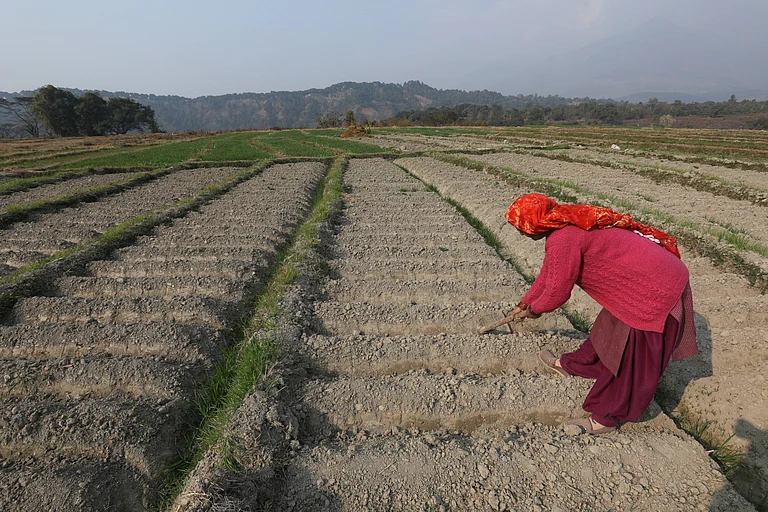
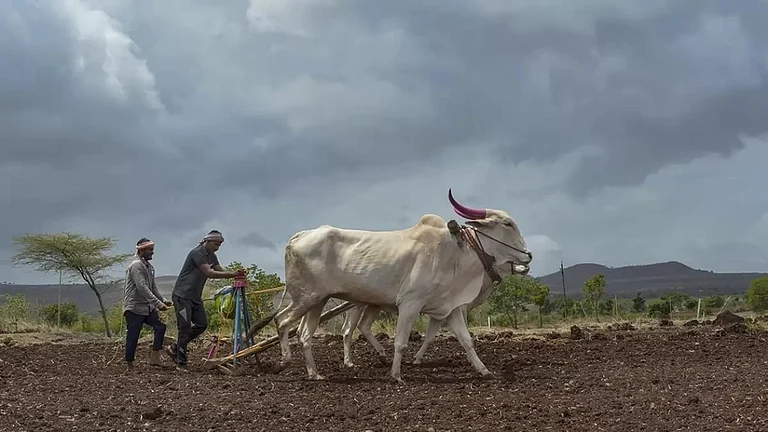
He is not alone. R Sanyas Rao, 50, from the same village, adopted wet DSR on five acres last kharif and found it workable, particularly because labour costs dropped and nursery management was eliminated.
Importantly, Rao has been associated with the Foundation since 2014, three years before Satyam joined.
Advertisement
This year, he is expanding his approach further: dry DSR on two acres and maize on three.
"With the borewell facility, I will be able to manage," he said.
El Niño impact on sowing?
Srikakulam, a cyclone-prone and rainfed belt, has already seen its sowing calendar shift over the last three to four years. Traditionally, paddy sowing took place by the end of June. Now it has moved to July, with transplantation often extending into August.
With El Niño conditions back in the forecast, farmers are adjusting their expectations and crop choices. In some cases, paddy cultivation is being limited to household consumption.
"If El Nino gets severe, we will cultivate paddy for house consumption only," Satyam said.
Agricultural departments and Krishi Vighyan Kendras are reinforcing this shift, advising farmers to reduce paddy acreage, switch to short-duration crops, or move to pulses and cereals.
To manage dry spells between seasons, farmers are also being encouraged to grow short-duration cover crops in the May–June window before kharif begins. These include black gram, green gram and sesamum. Green manuring crops such as sun hemp and napier are used to retain soil moisture during this gap period.
Advertisement
Last year, cover crops were cultivated across 2,372 acres, while agro-forestry covered 1,508 acres, including mixed plantation systems combining timber and fruit plants in coconut orchards. Both interventions are expected to expand this season.
DSR vs paddy costs?
Conventional paddy cultivation is highly water-intensive, relying on continuous standing water. DSR and Alternate Wetting and Drying (AWD) significantly reduce water demand by changing how fields are irrigated and maintained.
"Dry DSR method saves around 11-12 lakh litres of water per acre. Wet DSR saves around 4-5.5 lakh litres AWD saves roughly 3-5 lakh litres of water compared to traditional methods," said Suman Saraswathibatla, Director (Rural Livelihoods and Climate Action) at Dr Reddy's Foundation.
He added that both DSR and AWD require stable soil moisture in the upper 30–40 cm of soil for successful establishment, which directly influences sowing decisions.

Advertisement
Last year, farmers in two districts adopted DSR across 3,667 acres and AWD across 21,963 acres. The programme reported water savings of more than 3,000 crore litres and a reduction of over 50,000 tonne equivalent carbon dioxide emissions.
Labour costs have also reduced, as transplantation and nursery management are no longer required under DSR systems, making it a practical option for farmers facing labour and water constraints.
Can diversification help?
Alongside changes in rice cultivation, farmers are being pushed towards diversification and soil-specific management practices.
A key intervention is soil health assessment. The Foundation launched a soil testing facility in Hyderabad in January 2025, providing faster results and actionable advisories. Over 5,000 soil health cards were issued last year.
Findings from soil testing are consistent across the region: organic carbon levels are very low, micronutrients such as sulphur, zinc and boron are deficient, while potash is in excess.
"Site-specific nutrient management is one of our major interventions this year, especially given the combination of El Nino effects and the fertilizer crunch. We're pushing hard to bring in as many samples as possible," Suman said.
Advertisement
The Foundation has also been running awareness campaigns for the past five years using bulk SMS messages, posters and farm extension meetings, urging farmers to apply fertilisers based on actual soil needs rather than routine practice.
Diversification efforts include encouraging short-duration crops, cover cropping, and agro-forestry systems, including mixed plantation models in coconut orchards. These approaches aim to improve soil moisture retention and reduce dependence on a single paddy cycle.
For DSR and AWD systems, maintaining consistent soil moisture in the upper 30–40 cm of soil remains essential.
There is more awareness being created to adopt DSR instead of paddy transplantation, but adoption remains gradual and dependent on rainfall behaviour in the coming weeks.

"There is more awareness being created to adopt DSR instead of paddy transplantation," Rao said. "I will decide on the sowing operation in July."
For now, farmers across Srikakulam are preparing for multiple scenarios, with the monsoon ultimately deciding how far the shift away from traditional paddy cultivation will go this season.
(With inputs from PTI)
Published At: