Kanchan Kumari’s killing over alleged online content remains the starkest case of moral policing turning violent.
Ludhiana saw confrontations over reels, clothing and public behaviour at Rakh Bagh and an influencer’s home.
Nihang voices have distanced themselves from vigilantism, while police say such complaints must go through the law.
A Phone, A Reel, A Dress: Punjab’s Uneasy Encounter With Moral Policing
From confrontations over clothes and social-media reels to threats and violence, a series of cases has raised questions over self-styled moral policing, the use of Nihang identity and who has the authority to regulate public behaviour

Summary
In Punjab, a park can become a courtroom without a judge, a mobile phone can become evidence, and a reel can be treated like a provocation. In recent months, groups of men identifying themselves as Nihangs have appeared in public spaces, homes and social-media controversies, confronting women over their clothes, couples over displays of affection and creators over videos they deem “obscene”.
What is emerging is not a single organisation or coordinated campaign, but a troubling pattern of self-appointed cultural enforcement — and a widening question over who gets to decide where personal freedom ends and “Punjab’s culture” begins.
From A Bathinda Murder To A Ludhiana Park
The most chilling reference point remains the killing of social-media influencer Kanchan Kumari, popularly known as Kamal Kaur Bhabhi. In June 2025, her body was found in a car in Bathinda. Police arrested two men identifying themselves as Nihangs and accused self-styled radical leader Amritpal Singh Mehron of being the key conspirator.
Police said the suspects told investigators they had killed Kumari over her allegedly “immoral and vulgar” online content. Mehron later claimed responsibility in a video and said he had warned her.
The case moved beyond crime into a debate about the language used to justify it. Then Akal Takht head granthi Giani Malkit Singh said that people who defamed religion through vulgarity should be stopped and appeared to justify the killing. His remarks were widely criticised as an endorsement of vigilante justice.
Importantly, a head granthi is not the same office as the Akal Takht Jathedar, and the comments should not be treated as a blanket position of Sikh religious authority.
The police response, meanwhile, was unequivocal: the killing was described as an outcome of “unauthorised moral policing”. Punjab Police also pursued Mehron, who fled abroad, and provided protection to other influencers who received threats. The message from the law-enforcement side was that questions over content belong before the law, not in the hands of self-appointed enforcers.
Advertisement
A year later, the confrontations have moved into more ordinary spaces. At Ludhiana’s Rakh Bagh, a group calling itself Tarna Dal 96 Crori staged what it described as a “raid” on July 26. The group confronted women wearing sleeveless clothes, questioned people dancing and making reels, and objected to couples sitting together.
One woman and her mother were made to apologise after the group took their phone and deleted photographs. The group’s claimed leader, Kuldeep Singh Khalsa, told The Indian Express that his men were merely “counselling” people they believed were on the wrong path.

When ‘Obscene’ Becomes A Licence To Intervene
The same logic entered a Ludhiana home. Days before the Rakh Bagh confrontation, another group led by Manpreet Singh Khalsa entered the house of influencer Ranjit Kaur, popularly known as “Bhabhi Chummewali”, and questioned her family about her Instagram reels.
Advertisement
Kaur said around 15-20 people entered the house and forced her and her husband to issue an apology promising to stop posting reels. She said the videos were their livelihood and accused the group of targeting them because they were poor.
The confrontation did not remain outside the legal system. Kaur and her family complained to police, while Khalsa filed a counter-complaint alleging obscene online content. Ludhiana Police subsequently registered an FIR against Kaur and her husband under Sections 67 and 67A of the Information Technology Act.
Kaur denied wrongdoing and alleged that the Nihangs had been threatening them. Police Commissioner Swapan Sharma said proceedings would be conducted on merit, while a Ludhiana DCP said nobody had the right to dictate what people wore or prevent them from making reels.

The distinction matters. A complaint about potentially unlawful online material can be investigated by police and tested in court. A group arriving at someone’s house, demanding an apology or prescribing how they should dress is something else.
Advertisement
In Rakh Bagh, the alleged policing extended from screens to bodies — from what people posted to what women wore and how couples behaved in public. The justification offered by the groups was cultural protection; the method was confrontation.
The Mad Sandhu Question — And The Line Between Suspicion And Proof
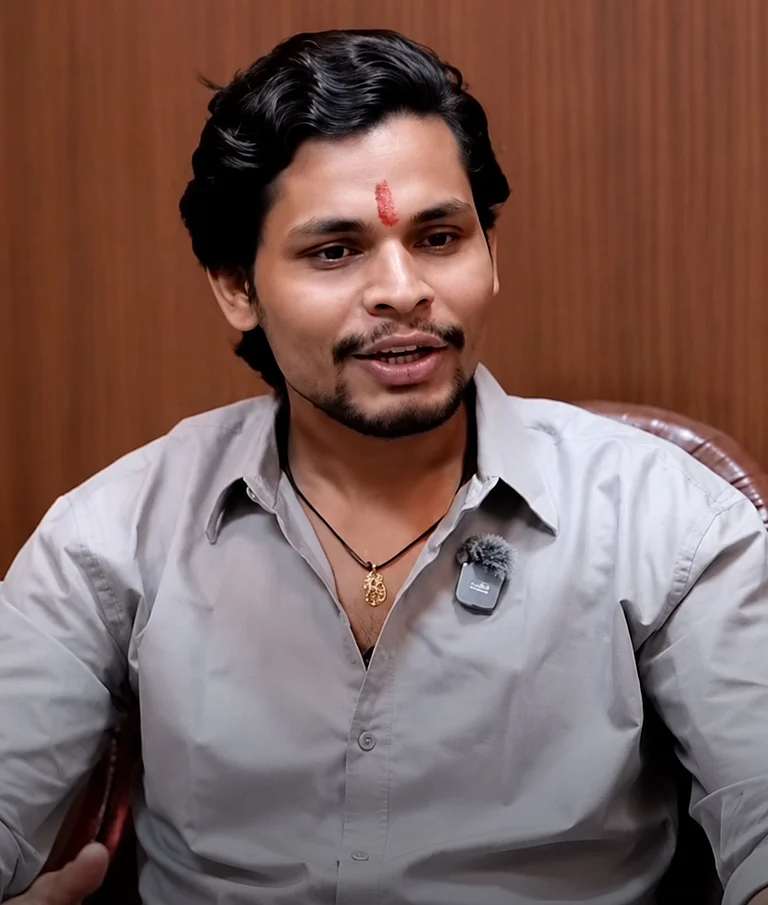
The latest and most disturbing case is that of Amritsar-based makeup artist and LGBTQ social-media influencer Mad Sandhu, who was shot dead on October 3. Sandhu had previously faced objections from a Nihang group over his clothing, older videos and social-media activity. He later said he had changed his content and alleged that old clips were being circulated to manufacture controversy.
However, this is precisely where reporting must resist the easy conclusion. Police have said the motive for Sandhu’s killing remains unclear and that multiple angles are being investigated. There is, as yet, no official finding connecting the earlier Nihang controversy to the shooting. A past confrontation may form part of the investigation, but it cannot be turned into proof of motive.
Advertisement
There is also a crucial distinction within the Nihang tradition itself. Sukhjeet Singh Kanhaiya, a mukh parcharak of Baba Budha Dal, described as the most revered Nihang jathebandi, said genuine Nihangs do not engage in such moral policing and warned that people can wear Nihang attire and claim affiliations that are not authentic.
Another Nihang leader, Baba Harjit Singh Rasulpur, has stressed that India has a constitutional government and that nobody is permitted to take the law into their own hands. Budha Dal has also publicly distanced itself from individuals involved in criminal controversies.
That leaves Punjab with an uncomfortable image: a phone held up to record a dance, a woman asked to cover her shoulders, a family ordered to apologise, a creator warned about his clothes — and, in the most extreme case, a woman allegedly killed over what her attackers called obscenity. The danger is not that every Nihang is a moral vigilante; the evidence does not support that.
It is that the symbols of a respected warrior tradition can be appropriated by individuals who appoint themselves guardians of public behaviour. In that space between religious identity and private authority, the question is no longer simply what Punjab considers obscene. It is who has the right to decide — and what happens when they believe they do.
Published At: