The Vatican has a long history of holding governments accountable in times of war.
In a rare rebuke, far-right Italian Prime Minister Giorgia Meloni called Trump’s remarks “unacceptable”.
US Vice-President JD Vance defended Trump’s action as a “joke”.
Trump Slammed Over ‘Jesus Healing’ Image: A Brief History Of Papal Showdowns With Presidency
What Happens when a Pope, a President and an AI Image Walk Into a War?

Summary
An all-new kerfuffle has erupted amid the Iran war, as US President Donald Trump and Pope Leo XIV engage in an escalating war of words. Trump’s god complex appears to be at an all-time high. On Sunday, the President posted an AI-generated image of himself depicted as a Jesus-like figure, an act that quickly sparked outrage.
This controversial move was the second sacrilege. Earlier, the President had lashed out at the Pope’s criticism of the war in Iran. “I don’t want a Pope who thinks it’s OK for Iran to have a nuclear weapon,” Trump said. Listing several other complaints, he described Pope Leo as “weak on crime” and “weak on nuclear weapons.”
The fallout was swift. These attacks have alarmed many of Trump’s right-wing Catholic supporters and drawn criticism from religious leaders across the world. Losing this support could prove politically costly, given that a significant portion of his base comprises white Catholics and Protestants. In a quiet retreat, the AI-generated image was later deleted. Attempting to explain, Trump told reporters he believed it depicted him as a doctor: "It's supposed to be like a doctor making people better," he said. "And I do make people better. I make people a lot better."
However, the damage has already been dealt, as leaders and religious figures across the world voice concern.
Conservative Pushback and Global Criticism
Among the pro-Trump conservative voices speaking against the President is Joel Webbon, founder of Right Response Ministries and senior pastor of Covenant Bible Church in Georgetown, who claims that the once God-chosen President has been “possessed by a demon”. Conservative Catholic leader Bishop Robert Barron, who serves on Trump’s Religious Liberty Commission, has called on the US leader to issue an apology: “The statements made by President Trump on Truth Social regarding the Pope were entirely inappropriate and disrespectful.”
Rev. Antonio Spadaro, undersecretary of the Vatican’s Dicastery for Culture and Education, termed Trump’s attack a “declaration of impotence”. He wrote on X, “When political power turns against a moral voice, it is often because it cannot contain it. Trump does not argue with Leo; he implores him to return to a language he can control,” defending the religious leader he added, “But the Pope speaks another language, one that cannot be reduced to the grammar of force, security, or national interest.”
Advertisement
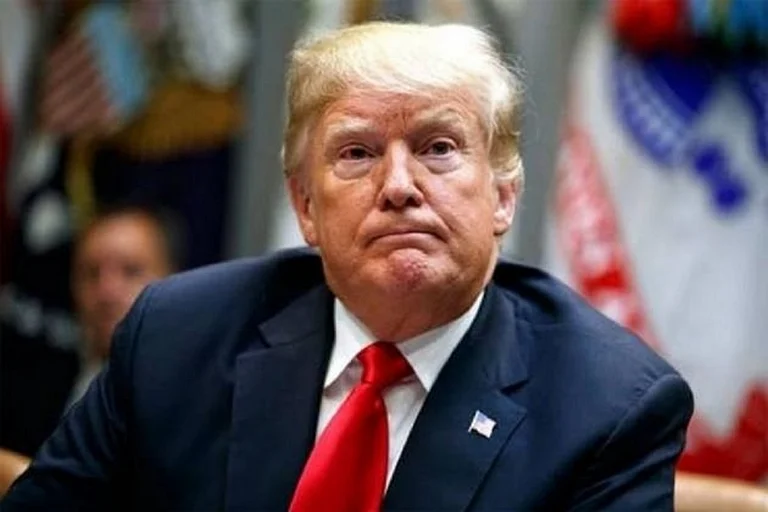
Archbishop Paul S. Coakley, president of the U.S. Conference of Catholic Bishops, issued a brief response, claiming he was “disheartened by the President”.
The Archbishop added, “Pope Leo is not his rival; nor is the Pope a politician. He is the Vicar of Christ who speaks from the truth of the Gospel and for the care of souls.”
The Vatican has a long history of holding governments accountable in times of war. Pope Paul VI was critical of the Vietnam War and even spoke directly to the US Presidents presiding over the war. Similar was the case during the Gulf War, Iraq War, and more recently the genocide in Gaza.
Cardinal Michael Czerny, the Prefect of the Dicastery for Promoting Integral Human Development, expands that the role of the Church during war is to send a message of peace, even if it is political. He says, “Political means taking responsibility for our world and for its problems. Especially as they affect those who are weakest, that’s politics, and everybody’s responsible for that.”
Advertisement
On a similar note, Cardinal Robert McElroy of Washington, D.C., says, “What we are seeing now is, it’s being counterpoised by the notion that might makes right. That is fundamentally incompatible with the founders’ vision of our country and what should be our moral vision as a nation,” says Cardinal Robert McElroy of Washington, D.C. “Might does not make right.”
Pope Leo XIV has responded to Trump’s threats, claiming, "I'm not afraid of the Trump administration or of speaking out loudly about the message of the Gospel, which is what the Church works for.''
The backlash has not been limited to religious circles. In a rare rebuke, far-right Italian Prime Minister Giorgia Meloni called Trump’s remarks “unacceptable”, stating, "I find President Trump's words about the Holy Father unacceptable. The Pope is the head of the Catholic Church, and it is right and normal for him to call for peace and to condemn all forms of war."
Advertisement
Iran’s President Masoud Pezeshkian too came out in support of the Pope, writing on X, “His Holiness Pope Leo XIV, I condemn the insult to Your Excellency, the desecration of Jesus, the prophet of peace and brotherhood, is not acceptable to any free person. I wish you glory by Allah.”
Former Rep. Marjorie Taylor Greene, a former Trump stalwart who left Congress after breaking with Trump last year, termed the Republican leader’s post a “blasphemy” and claimed it hurt Christian sentiments worldwide.
Meanwhile, in a news broadcast, US Vice-President JD Vance defended Trump’s action as a “joke”. He said, “I think the president was posting a joke and, of course, he took it down because he recognised that a lot of people weren't understanding his humour in that case.” He also added that the US continues to have good relations with the Vatican but will have some disagreements in policy.
Advertisement
This comment by Vance received mixed reactions on social media, with netizens claiming that the vice-President struggled to defend the President, and that some conservatives were beginning to lose faith not just in the President but also in his cabinet.
A Risk to Trump’s Supporters
This is not the first instance of Trump’s god complex. Just last month, in celebration of the Semiquincentennial, the US Mint approved a 24-karat gold coin bearing the image of the President himself with the words “IN GOD WE TRUST” engraved right below his picture. In yet another incident, Trump shared an AI-generated picture of himself as the Pope before the conclave.
While two of the most influential American leaders engage in this confrontation, the episode reveals a familiar pattern in how Trump responds to criticism. But this time, the consequences may extend beyond rhetoric.
For a leader who has already struggled to retain liberal support, alienating conservative Christian voters, particularly Catholics, could prove politically risky. What began as a war of words with the Vatican may well evolve into a deeper fracture within his own support base.
Published At: