Trump says he is inclined to resume military strikes against Iran after the New Year if no deal is reached
Qatar continues diplomatic engagement with Tehran, but formal negotiations with Washington have not begun
Iran's blockade dispute, military claims and incidents near the Strait of Hormuz have heightened regional tensions
New Year, New Iran Offensive? Trump Signals Return To Military Action If Talks Fail
The US president says he is inclined to resume military action after the New Year if negotiations fail, as Qatar-led mediation continues without formal talks and Tehran insists Washington first lift its naval blockade.

Summary
US President Donald Trump has indicated that he is inclined to resume military strikes against Iran after the New Year if Washington and Tehran fail to reach an agreement, escalating his warnings following the Democratic victories in the November 3 US midterm elections.
In an interview with Fox News on Sunday, Trump accused Iranian negotiators of using diplomacy to stall while escalating military activity. He described them as “professional tap dancers” and said Iran was “more aggressive now than before the election”. Asked whether Tehran might challenge the US naval blockade, he warned: “I hope they do, they'll all be at the bottom of the sea like the rest of the navy.”
Trump also claimed in a separate Truth Social post that Iran had launched more drones and missiles in the preceding week than at any point in more than a year, but that all had been intercepted without causing damage. These claims have not been independently verified.
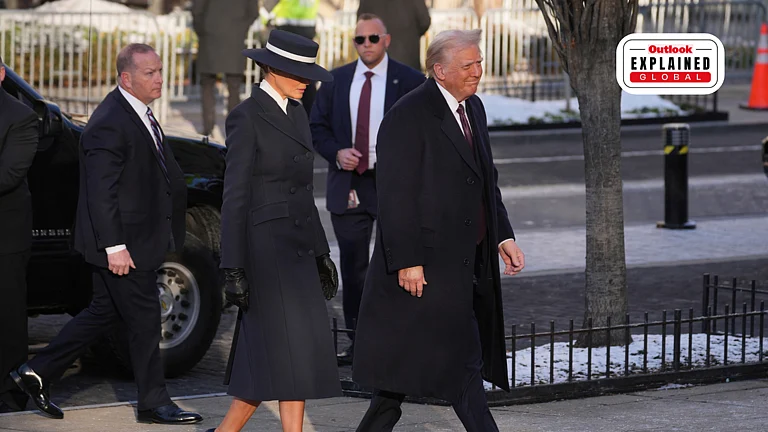
Trump's Post-Midterm Warning
The remarks mark a shift from Trump's November 19 position, when he said he was not rushing into a decision on further military action and would consider the situation after January 1. He had previously suggested that Iran would become more willing to negotiate after the US midterm elections, in which Democrats won control of both chambers of Congress.
Trump has also linked the conflict to Republican losses, which he acknowledged had been influenced by the war. His latest comments suggest that the prospect of renewed strikes remains on the table despite continuing diplomatic contacts.
Military Escalation Around The Gulf
Iran's Islamic Revolutionary Guard Corps (IRGC) claimed on Sunday that it had struck two US Patriot air-defence radar systems at military bases in Bahrain and shot down another American MQ-1 reconnaissance drone over the Strait of Hormuz. It said the drone was the fourth US reconnaissance aircraft destroyed within 24 hours.
Advertisement
Bahrain, meanwhile, said its air defences had intercepted Iranian aerial attacks, with debris causing minor damage. Its Interior Ministry separately reported a fire at an industrial facility targeted in an attack, injuring a Bahraini citizen and a Pakistani resident.
The UK Maritime Trade Operations agency has also recorded several incidents involving tankers near the Strait of Hormuz since November 20. The vessels were reportedly struck by unknown projectiles, with no casualties reported in the first three incidents. The IRGC Navy separately claimed on Monday that two supertankers had struck naval mines after ignoring its instructions. The available accounts do not establish whether these were the same incidents.
Tehran's Conditions For A Deal
Despite the escalation, diplomatic efforts continue through Qatar. A Qatari delegation visited Tehran on November 21 and held talks lasting approximately two hours, Iranian Deputy Foreign Minister Kazem Gharibabadi said. He added that formal negotiations had not begun.
Advertisement
Iran wants Washington to lift its naval blockade, end hostilities on all fronts, release frozen Iranian assets and ease oil-related sanctions. Tehran has proposed reopening commercial shipping through the Strait within 48 hours if the US meets key demands, but no agreement has been reached.
The central disagreement remains over sequencing. Trump wants a lasting agreement addressing Iran's nuclear programme, while Tehran insists that the blockade and other economic measures must be addressed before substantive negotiations. Iran has also maintained that its enriched uranium must remain within the country.
Trump's New Year warning is not a confirmed strike order or a fixed military deadline. But with the two sides yet to begin formal negotiations, the prospect of renewed military action adds pressure to Qatar's efforts to prevent another escalation.
Published At: