The Abu Dhabi negotiations produced an agreement in principle on a prisoner exchange but failed to resolve major disputes over territory and a ceasefire.
Hanna Shelest argues that Putin needs the war to consolidate domestic control and preserve his political position.
Russia's resistance to European participation in peace talks and uncertainty over US policy continue to complicate the prospects for a settlement.
‘Putin Needs This War’: Ukrainian Expert Explains the Kremlin’s Resistance to Peace
Ukrainian security expert Hanna Shelest argues that Vladimir Putin has a domestic political incentive to prolong the Ukraine war, even as negotiations in Abu Dhabi produce limited humanitarian progress but no breakthrough on territory or Europe's security

Summary
Peace talks have resumed, prisoners may be coming home, and diplomats are once again speaking of a possible settlement. Yet, beyond the negotiating rooms, the war in Ukraine continues to grind on. Russian drones and missiles keep striking Ukrainian cities, while Moscow and Kyiv remain divided over territory, security guarantees and the future shape of Europe. For Hanna Shelest, a Ukrainian political scientist and security expert, the explanation for this contradiction lies partly in the Kremlin itself: Vladimir Putin, she argues, cannot afford to end the war because the conflict has become central to the survival of his regime.
The latest round of US-mediated negotiations in Abu Dhabi offered a glimpse of what diplomacy can still achieve. Russian and Ukrainian negotiators agreed in principle to a major prisoner exchange and to continue discussions. But there was no breakthrough on the central questions of territory or a ceasefire. For Ukraine, even a humanitarian agreement carries significance: the return of captured soldiers and officers is a responsibility the state cannot abandon. Yet, as Shelest told Firstpost, a limited humanitarian outcome should not be mistaken for a change in Moscow’s political intentions.
The negotiations have also exposed a familiar disagreement over who gets to decide the terms of peace. Russia wants to discuss Europe's security architecture while resisting European participation in the talks themselves. That tension, Shelest argues, reveals how Moscow continues to view the continent through an outdated framework of great-power bargaining. The question is no longer simply when the fighting might stop, but whether the diplomatic process can address the political and security arrangements that helped bring the conflict to this point.

Abu Dhabi: A Prisoner Exchange, But No Peace Breakthrough
Shelest, director of the Security Studies programme at the Kyiv-based think tank Prism UA and editor-in-chief of Ukraine Analytica, identified three broad takeaways from the Abu Dhabi negotiations. The first was Russia's attempt to reshape discussions around European security while keeping European countries away from the negotiating table. In her assessment, Moscow is seeking to negotiate the future of a continent without giving its countries a meaningful place in the conversation.
Advertisement
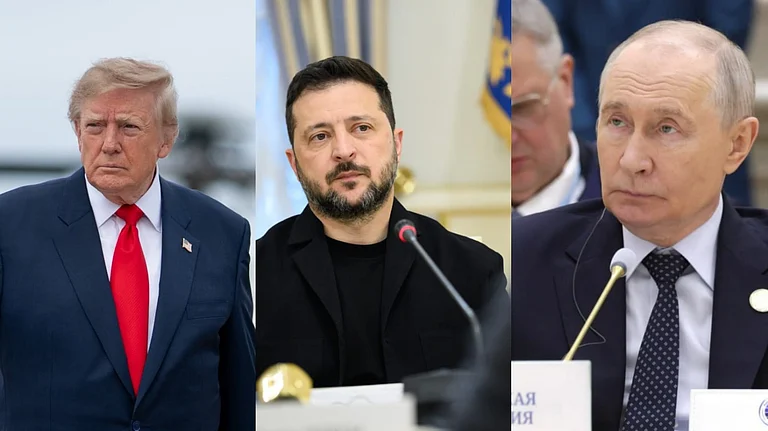
The second was what she described as Russia's reluctance to engage with mediation on specific issues, including energy and maritime ceasefires. Countries such as Turkey, Egypt and India have attempted to play mediating roles, she said, but Moscow has shown little interest in such functional arrangements. Instead, Russia appears more willing to pursue negotiations on what it considers the larger strategic questions, particularly with Washington.
The third, and perhaps the only tangible humanitarian gain, was the prospect of a large prisoner exchange. US envoy Jared Kushner described the agreement in principle as potentially the largest humanitarian release of prisoners during the war. But the talks did not resolve the territorial dispute, with Ukraine rejecting Putin's demand that it surrender the remainder of the Donbas region. The distinction matters: a prisoner exchange can ease individual suffering without bringing the two governments closer to a political settlement.
Advertisement
There was another complication after the talks. US envoys Steve Witkoff and Jared Kushner indicated that Moscow was willing to accept European participation in the next round. But on November 16, Kremlin aide Yuri Ushakov said Russia had not agreed to expand the format beyond trilateral discussions involving Russia, Ukraine and the United States. He said further rounds might be needed before European participation could be considered. The contradiction has underlined how fragile even the limited diplomatic progress remains.
Why Putin Needs The War To Secure His Regime
For Shelest, the explanation for Moscow's continued military campaign is not confined to the battlefield. She believes the war has become an instrument of domestic political control for Putin. Even after elections, she argues, the Russian president does not feel sufficiently secure and needs the conflict to justify a stronger security apparatus and tighter control over society. Arrests of opposition activists and the shrinking space for independent media are, in her assessment, part of this wider pattern.
Advertisement
Ending the war, in this reading, would mean confronting questions that the Kremlin has so far been able to defer: the human and economic costs of the invasion, the limits of Russia's military gains and the political consequences of a settlement that falls short of its stated objectives. Shelest argues that Moscow continues military operations to preserve its position and maintain leverage at the negotiating table. She also agrees with Ukrainian President Volodymyr Zelenskyy's assessment that Russian forces have struggled to achieve their objectives in Donetsk. These are her assessments of the Kremlin's calculations, rather than an independently established account of Putin's private motives.
The battlefield provides a parallel to this political argument. A July 2026 assessment by the Centre for Strategic and International Studies said Russian forces had suffered substantial casualties and that their territorial gains had slowed. It also reported that Russia had lost more territory than it captured during April and May. Such assessments do not mean Moscow has abandoned its military ambitions. Rather, they illustrate the high costs of a campaign that has failed to deliver a decisive victory.
Advertisement
Europe’s Place At The Negotiating Table
The dispute over European participation is more than a question of diplomatic protocol. Europe is among Ukraine's most important sources of financial, military and political support, and its governments will have a direct stake in any security arrangement that emerges from the war. Shelest argues that excluding European countries would weaken the negotiations and serve Moscow's effort to portray the continent as a secondary actor in decisions about its own security.
Russia's demands, she says, have not fundamentally changed since the run-up to the full-scale invasion in 2022. Moscow has repeatedly sought a reconfiguration of Europe's security arrangements, including demands concerning NATO's expansion and its military posture. Shelest believes Putin may begin with maximalist demands and later withdraw some of them, creating the impression of compromise without abandoning the larger objective.
Washington's approach adds another layer of uncertainty. Shelest believes the Trump administration wants to restore normal relations with Moscow and has not consistently addressed what Ukraine sees as the underlying cause of the conflict: Russian policy. She does not describe Washington as having abandoned Kyiv, but argues that its approach cannot automatically be seen as securing the best possible terms for Ukraine. A clash between the White House and Congress, she warned, would be particularly damaging for Kyiv.
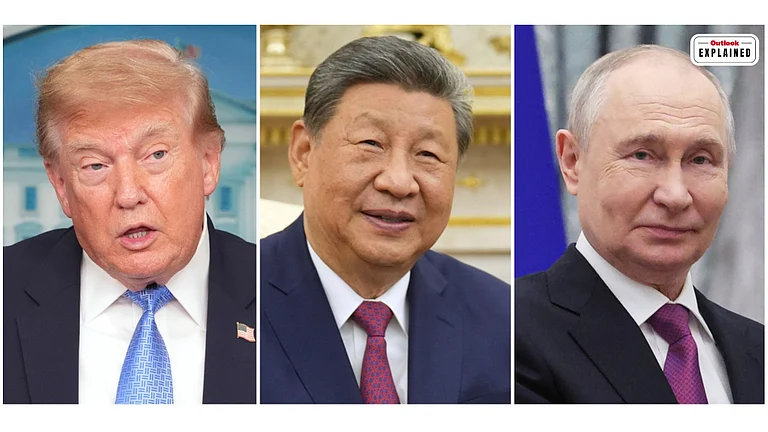
The Abu Dhabi talks may have reopened a diplomatic channel, but they have not resolved the question of what peace would require. A prisoner exchange can bring soldiers home; a humanitarian pause can give civilians a chance to leave danger. Neither, on its own, settles the future of Ukraine or Europe's security. And if Shelest's reading of Putin's political calculations is correct, the obstacle is not simply the distance between two negotiating positions. It is the possibility that, for the Kremlin, the war has become too useful at home to relinquish easily.
Published At: