Israel’s election exit polls show a deadlock between rival blocs.
Turnout reached 77.7%, the highest recorded since 1999.
Netanyahu vowed to form a right-wing government despite uncertainty.
Israel Election Exit Polls Show Deadlock Between Benjamin Netanyahu And Eisenkot’s Blocs
Israel election early exit polls show around 51 seats for both Benjamin Netanyahu’s and Eisenkot’s blocs, after a record voter turnout

Summary
After the highest voter turnout since 1999 in Israel’s general election on Tuesday, exit polls are showing around 51 seats for both the incumbent Prime Minister Benjamin Netanyahu’s bloc and Eisenkot’s bloc.
Early exit polls released by major Israeli television channels on Wednesday showed Netanyahu’s bloc and Eisenkot’s bloc winning around 51 seats each. Arab parties were projected to secure about 18 seats according to the Associated Press.
The results could lead to weeks of political negotiations before Israel forms a new government. If no bloc can secure enough support, the country may have to hold another election.
Netanyahu’s Likud Party could still emerge as the largest party, but the projections suggest his wider alliance may struggle to return to power. Voter dissatisfaction with his partnership with far-right parties and anger over exemptions from military service for ultra-Orthodox Jews appear to have weakened his bloc’s position in parliament.
Israel’s Central Election Committee said voter turnout in this year’s general election reached 77.7% by 10 pm local time (8 pm GMT), when polling stations closed. A total of 5,695,682 people had voted by then. The committee said this was the highest turnout recorded by that time since 1999.

Netanyahu Vows To Form Right Wing Government
Benjamin Netanyahu said on Wednesday that he would work to form a new government after voting in Israel’s election on Tuesday. He urged right-wing parties and supporters to unite behind his leadership.
“We must put in place a strong government of the right,” Netanyahu told his supporters. He also called for unity among the “Jewish and Zionist majority” and ruled out relying on Arab parties to form a government. “It is out of the question to have a government that is backed by Arab parties,” he said.
Netanyahu claimed that the right-wing bloc had enough support to secure a clear victory among Jewish and Zionist voters. “The right-wing bloc has a clear, decisive majority among the Zionist public, among the Jewish public and all those who support the state,” he said, according to the Times of Israel.
Advertisement
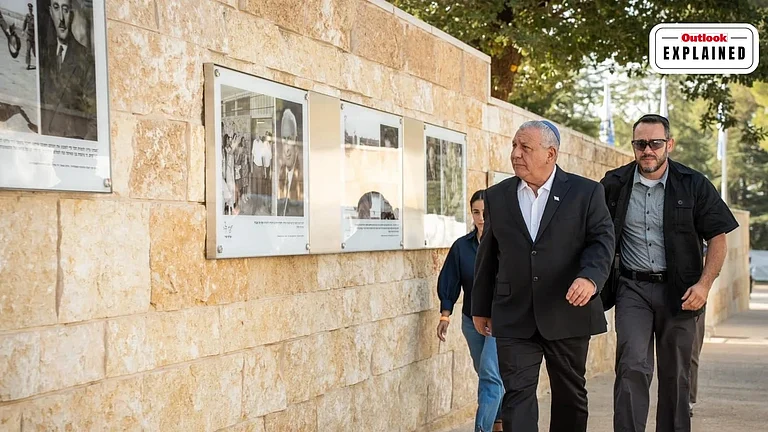
The election was widely seen as a test of Benjamin Netanyahu’s long rule, which has lasted nearly 17 years with few breaks. His leadership had already divided Israelis over several issues before the country faced the deadliest attack in its history.
The wars in Gaza, Lebanon and Iran, along with settler violence in the occupied West Bank, have drawn global criticism. They have also strained Israel’s ties with close allies and contributed to rising antisemitism.
The vote also reflected a wider debate over Israel’s future. Netanyahu and his nationalist and religious allies faced opponents who want to protect the country’s liberal and secular values.
Whoever forms the next government will have to deal with deep divisions between the political right and left, as well as between Jewish and Arab communities. These divisions have grown during Netanyahu’s years in power.
Advertisement
Published At: