Iran can reportedly produce around 50 ballistic missiles a month, half its pre-war manufacturing capacity.
Iran is believed to retain at least 1,700 ballistic missiles despite months of US and Israeli strikes.
Satellite imagery shows damage to major Iranian missile production facilities, while underground infrastructure remains under development.
Iran’s Missile Factories Hit, But Production Continues At Half Pre-War Capacity
Iran retains at least 1,700 ballistic missiles as damage to its military infrastructure fails to stop weapons production, according to a Western intelligence assessment.

Summary
Iran is capable of producing around 50 ballistic missiles a month, approximately half its pre-war manufacturing capacity, despite months of US and Israeli airstrikes targeting its military infrastructure, according to a Western intelligence assessment reported by Bloomberg. Tehran is also believed to have at least 1,700 ballistic missiles remaining in its arsenal, indicating that the military campaign has not eliminated its ability to replenish its weapons stockpile.
The assessment comes amid repeated US claims that its military operations have severely weakened Iran's defence industry and conventional military capabilities. While the strikes have damaged major missile production facilities, Iran continues to manufacture ballistic missiles and retains a substantial stockpile. The findings also raise questions about how quickly Tehran could rebuild its military capabilities if hostilities resume, particularly as it attempts to protect its missile infrastructure from further attacks.
Iran's Missile Production Continues Despite US-Israeli Strikes
Bloomberg reported that Iran can currently produce approximately 50 ballistic missiles every month, according to a Western intelligence assessment. This is around half its production capacity before the war, which began with joint US-Israeli attacks on February 28.

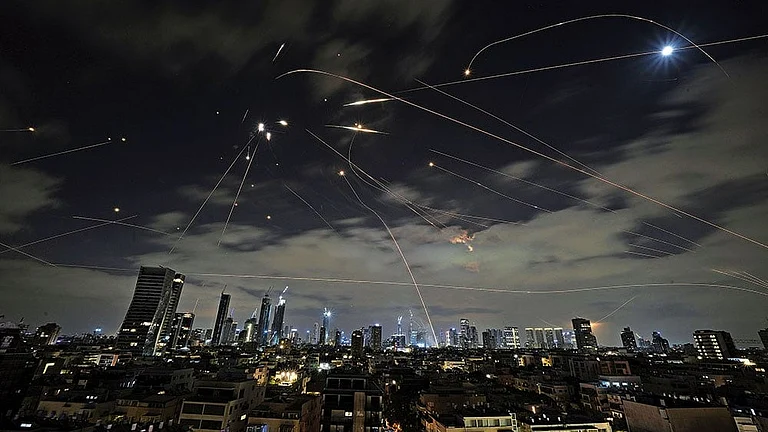
The assessment suggests that the air campaign has significantly damaged Iran's military infrastructure without completely dismantling its missile manufacturing capabilities. Although several major production facilities have been hit, Tehran appears to have retained the ability to manufacture new weapons.
The findings contrast with statements from the Trump administration about the extent of damage inflicted on Iran's military-industrial infrastructure. At a November 10 press conference, US Defence Secretary Pete Hegseth said, "More than 80% of their nuclear industrial base gone."
However, the Western intelligence assessment indicates that Iran has retained enough manufacturing capacity to produce dozens of ballistic missiles each month. The current rate is lower than before the war, but continued production could allow Tehran to replenish at least part of the weapons expended during the conflict.
Advertisement
Iran Believed To Have At Least 1,700 Ballistic Missiles
The same assessment puts Iran's remaining ballistic missile stockpile at at least 1,700, according to a Western official cited by Bloomberg.
Israeli open-source estimates had put Iran's pre-war ballistic missile arsenal at approximately 2,500, according to Bloomberg. However, the actual number of missiles Iran possessed before the conflict, as well as the number destroyed, launched or manufactured since then, remains uncertain.
According to Bloomberg's estimates, Iran has fired more than 2,200 ballistic missiles and over 4,900 Shahed-type attack drones since the war began. These figures indicate the scale of Tehran's weapons expenditure during the conflict, although they do not establish the exact size of its remaining stockpile.
Former CIA analyst Jim Lamson, a visiting research fellow at King's College London, estimated that Iran may also possess thousands of Shahed-type attack drones, although the exact number remains unclear.
Advertisement

The distinction between Iran's existing arsenal and its continuing production capacity is important. Even with a reduced manufacturing rate, a substantial stockpile allows Tehran to retain weapons for potential retaliation without depending entirely on newly manufactured missiles.
Iran Unveils Underground 'Missile City' Amid Efforts To Protect Military Infrastructure
The intelligence assessment comes as Iran attempts to protect its remaining missile infrastructure from further airstrikes. On November 10, the Islamic Revolutionary Guard Corps (IRGC) Aerospace Force released footage of what it described as a new underground 'missile city', showing ballistic and cruise missiles alongside their launch systems.
The facility's location and the number of weapons stored inside it have not been disclosed. The footage showed Armed Forces Chief of Staff Major General Ali Abdollahi and IRGC Aerospace Force Commander Brigadier General Majid Mousavi touring the complex, according to Iran International.
Advertisement
Abdollahi warned that Iran had further military capabilities to reveal, saying, "Surprises in a future war will be revealed one after the other."
According to Iran's Tasnim News Agency, IRGC spokesperson Brigadier General Hossein Mohebbi said the force had rapidly moved its missile and drone production lines from surface facilities to underground sites.
The footage showed missiles and launch systems but did not establish whether the facility is also used for manufacturing.
A separate October 14 assessment by the Foreign Policy Research Institute (FPRI), based on satellite imagery of missile production facilities at Parchin, Khojir and Shahroud, found evidence of underground activity but also significant damage to manufacturing infrastructure.
The researchers found that solid-propellant production facilities at Parchin and Khojir remained non-operational, with debris and damaged equipment still preventing a return to production. At Shahroud, Iran had continued excavating a tunnel complex, but reconstruction of the above-ground production facilities remained limited.
Advertisement

At the Shahid Boroujerdi complex near Parchin, however, researchers identified large containers outside the tunnel complex that could be used to store missiles, suggesting the site may have acquired a role in missile production or assembly.
The FPRI assessment also cautioned against claims that Iran had resumed underground missile assembly at Khojir's Shahid Movahed facility. Researchers found little evidence of activity there and said the available satellite imagery did not support that conclusion.
Iran's Missile Arsenal Raises Questions Over US Interceptor Supplies
Iran's continuing missile capabilities have also placed pressure on US and allied air defence systems. According to Bloomberg Economics' analysis, attacks involving more than 6,000 Iranian strike assets led to the use of at least 1,000 Patriot PAC-3 interceptors.
The annual production capacity for these interceptors is approximately 650, at an estimated cost of $4 million each, according to Bloomberg.
The figures highlight the resources required to defend US forces and regional allies against repeated Iranian missile and drone attacks. Although the United States retains substantial stocks of precision-guided bombs and cruise missiles, Bloomberg reported that drawing on these supplies has depleted inventories available in other regions.
The uncertainty surrounding Iran's remaining weapons stockpile adds to these concerns. Jim Lamson, a former CIA analyst and visiting research fellow at King's College London, told Bloomberg that Iran could continue assembling missiles using stored components, even with parts of its manufacturing infrastructure damaged.
Despite months of US and Israeli strikes, Iran continues to produce an estimated 50 ballistic missiles a month and is believed to retain at least 1,700 in its arsenal.
Published At: