Iran urges China to help end war and regional uncertainty.
Trump says Iran’s military is effectively defeated, but blockade continues.
Washington keeps military action on the table amid regional tensions.
Iran Calls On China To Help End War As Trump Keeps Military Option Open
Iran urges China to help end the war as Trump signals a continued US naval blockade of Iranian ports and keeps the option of renewed military action open

Summary
Iranian Parliament Speaker Mohammad Bagher Ghalibaf has called on China to play a bigger diplomatic role in ending the war and resolving the prolonged uncertainty gripping the region.
Ghalibaf said Beijing’s ties with both Iran and Arab nations, combined with its diplomatic efforts, allowed it to promote regional stability and help shape a new order in West Asia, according to the Iranian state broadcaster IRIB.
Earlier, US President Donald Trump suggested that the war between the US, Israel and Iran is effectively over, saying Tehran’s military capabilities have been largely destroyed. His remarks came after a meeting with Qatar’s prime minister in Washington, amid indications that regional allies want the fighting to end.
Speaking to reporters during a surprise briefing on Monday, Trump said, “Iran militarily is effectively over.” He added, “We’re just keeping it the status quo, and we’re doing that really at the behest of countries that are their neighbours.”
The comments followed a closed-door meeting involving Trump, US Vice President JD Vance and Qatari Prime Minister Sheikh Mohammed bin Abdulrahman bin Jassim Al Thani. The Qatari leader later described the discussions as positive in a social media post.
“We discussed the situation in the region and ways to progress the US-Iran talks,” he said. “Grateful for the positive discussions on reaching a deal and bringing peace to the region.”

Trump Signals Continuation Of Iran Blockade, Keeps Military Option Open
Trump said maintaining the current situation would mean keeping the US naval blockade of Iranian ports in place. It would also involve continuing the newly announced Task Force Iron Gate, aimed at restricting Iran’s trade routes by land and across the Caspian Sea.
He claimed that several Gulf nations, including Qatar, Saudi Arabia, the UAE, Bahrain and Kuwait, favoured this approach. “Qatar, Saudi Arabia, UAE, Bahrain, Kuwait and others would prefer the status quo, that we remain as is,” he said. “In other words, a continuation of the greatest naval blockade in the history of our country. Probably in the history of the world.”
Advertisement
Trump also made clear that Washington had not ruled out renewed military action against Iran if the situation demanded it.
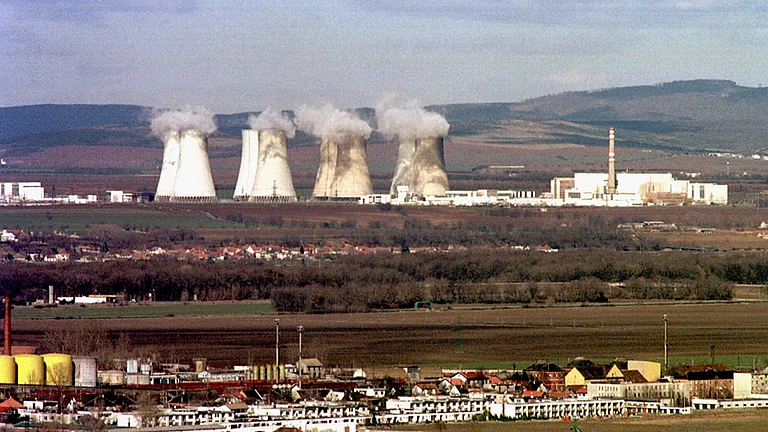
The war, which began on February 28, has spread beyond Iran and Israel, drawing in other countries and disrupting global trade.
Iran moved to block the Strait of Hormuz shortly after US and Israeli forces launched their attacks. The narrow waterway is a major route for international shipments of oil, natural gas, fertiliser and other goods.
Tehran also retaliated with missile and drone strikes against Gulf countries, including Qatar, Bahrain, Kuwait and the UAE. Several of these attacks targeted US military facilities in the region.
Iran's nuclear programme has remained another central issue in the conflict. After the Twelve-Day War in June 2025, Trump had claimed that US strikes had completely destroyed Iran's uranium enrichment facilities. However, he has since made preventing Tehran from advancing its nuclear programme one of the main objectives of the current war.
Advertisement
Iran has consistently denied seeking to develop nuclear weapons, maintaining that its uranium enrichment activities are intended for civilian energy purposes.
Published At: