India has intensified its campaign for a 2027-28 UN Security Council seat
Jaishankar's diplomatic tour spans the Gulf, New York and Brussels
New Delhi is seeking broader international support for its UNSC candidature
The outreach also strengthens India's strategic and economic partnerships abroad
India Steps Up Global Campaign for 2027-28 UN Security Council Seat
External Affairs Minister S Jaishankar has begun a multi-country diplomatic tour spanning the Gulf, New York and Brussels as India steps up efforts to secure support for its candidature for a non-permanent seat on the UN Security Council for the 2027-2028 term

Summary
India has stepped up its diplomatic campaign for election as a non-permanent member of the United Nations Security Council (UNSC) for the 2027-2028 term, with External Affairs Minister S Jaishankar embarking on a multi-nation tour that will take him across the Gulf before continuing to New York and Brussels.
According to the Ministry of External Affairs (MEA), Jaishankar's visit, scheduled from July 5 to July 15, covers Qatar, Bahrain, Kuwait, Oman, New York and Brussels. The ministry said the engagements are aimed at strengthening India's bilateral partnerships while advancing discussions on regional and international issues.
The tour comes as New Delhi intensifies diplomatic outreach ahead of the UNSC elections, with the government having already launched a campaign to mobilise support among UN member states for its candidature.
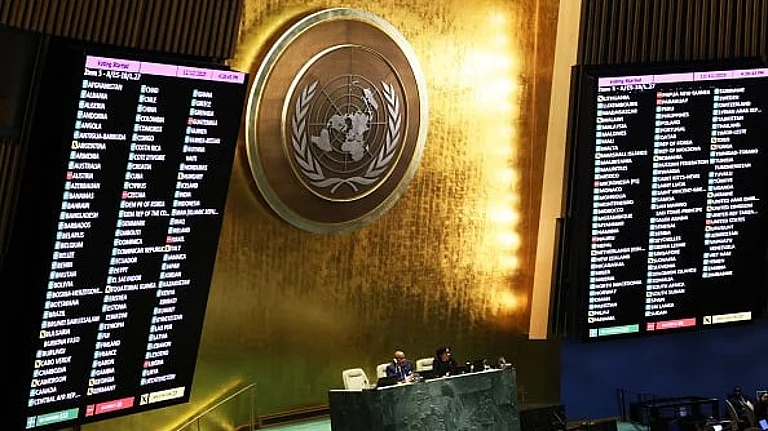
Qatar, Bahrain Mark The First Leg
Jaishankar began his tour in Qatar on July 5, where he met the country's leadership and held discussions on bilateral cooperation, regional developments and issues of mutual interest.
The minister then travelled to Bahrain, where he is on an official visit on July 6 and 7. His meetings are expected to review the full spectrum of India-Bahrain relations and discuss regional and global developments.
The ministry said the visits reflect India's growing engagement with the Gulf, a region that has emerged as one of New Delhi's most significant strategic and economic partners.
Following Bahrain, Jaishankar will travel to Kuwait and Oman before heading to New York and Brussels, completing the 11-day diplomatic tour on July 13.
India's UNSC Campaign
The diplomatic outreach comes as India seeks election to a non-permanent seat on the United Nations Security Council for the 2027-2028 term.
In a written reply in the Rajya Sabha during the Winter Session last year, Minister of State for External Affairs Kirti Vardhan Singh said the government was actively engaging member states to mobilise support for India's candidature.
He said India's campaign is rooted in its commitment to multilateralism, support for the rules-based international order and contributions to the maintenance of international peace and security.
Advertisement
The Security Council comprises 15 members, including five permanent members with veto powers and 10 non-permanent members elected by the UN General Assembly for two-year terms. The current elected members are Bahrain, Colombia, the Democratic Republic of the Congo, Denmark, Greece, Latvia, Liberia, Pakistan, Panama and Somalia.
India's Record At The Security Council
India has served as a non-permanent member of the Security Council eight times, making it one of the most frequently elected countries from the Asia-Pacific group.
New Delhi has consistently argued that its record in UN peacekeeping, growing role in global governance and longstanding support for multilateral cooperation strengthen its case for a greater role within the United Nations.
Broader Diplomatic Agenda
Beyond the UNSC campaign, Jaishankar's tour is expected to focus on reviewing India's bilateral partnerships across the Gulf and Europe.
Discussions during the visits will cover political cooperation, trade and investment, energy, connectivity and regional developments, while providing an opportunity to review progress in bilateral ties and exchange views on issues of mutual interest.
Advertisement
The visits also underscore India's continued diplomatic engagement with Gulf partners, which remain central to New Delhi's strategic, economic and energy interests.
Published At: