The custodians of power in the United States have spoken—and this time, they did not mince words. There seemed little concern about the implications, as President Donald Trump said that a “whole civilization will die tonight.”
US-Israel War On Iran: How We, The Reporters, Watched The War Live
Reporting the war from afar has a troubling paradox. While technology brings conflict closer, continued exposure turns human suffering into consumable content that is too easily scrolled past; even as journalists struggle to retain sensitivity and moral urgency.

Amidst warnings of evacuations, world leaders convened emergency meetings, fears of a nuclear war began to seep in, and in Iran, people formed human chains, ready to be martyred alongside their President. World peace was dependent on a deadline Trump announced, "Eastern Time."
At Outlook, we watch this unfold from a distance, yet closer than ever before—verifying, staying accurate, balanced, timely. Holding our ground in the face of a mammoth challenge, as giants like the US and Israel level Iran and Lebanon.
At the eleventh hour, a two-week ceasefire offered a narrow opening for negotiations. But this war in West Asia has unfolded in unsettling ways, AI-generated propaganda, erratic statements, and a flood of memes blurring the lines between reality, sensitivity and spectacle.
And we are covering all of it at Outlook. In our pages, we dissect the consequences of what is definitely the closest our world has come to a global war in decades, tracing not just the battles on the ground, but the narratives, the distortions, and the toll that keeps mounting.
A War That Is Live
Chinki Sinha
I can’t sleep. I have just seen images of people in Iran forming human chains around bridges and power plants knowing that they might be killed in the bombings by the United States and Israel. It is that suspension of disbelief as I watch the war online. Live. This is carnage. This is genocide. This is losing all innocence, all hope.
As journalists, we are to keep calm, to be objective but how does one deal with the onslaught to our own belief in institutions and in leaders. What are we to do? A handful of us are awake. We continue to scan and search news, updates, anything. All images of war can hurt. And we must be. We are humans and we are witnesses.
We are not a big team. We are a few of us. Maybe we are those few who care about news, about fairness, about those who are standing guard and watching the skies unleash horror on their country.
Advertisement
It is one of those rare moments in a newsroom when a lone person says she is about to close the blog and we ask for others to help and they all come and join in and the blog is up again with the conviction that that we are doing whatever we can to at least be around for whoever is reading, listening, watching.
This is a newsroom. All hands on deck moment. This is home. And to all my colleagues who are relentlessly updating the news, watching everything that can lead to distrust in the world leaders and institutions, witnessing injustice grow bigger in scale, and yet, unfazed they carry on for the sake of people, they are the ones who guard the sacred place that’s called a newsroom.
I am humbled that I have such courageous colleagues. We can at least say we were up that night when the war was waged against Iran to end a civilisation by the United States President Mr. Donald Trump and Israel’s Benjamin Netanyahu while the world watched in silence or in fear. We watched in horror.
Advertisement
The Precious Chain
Satish Padmanabhan
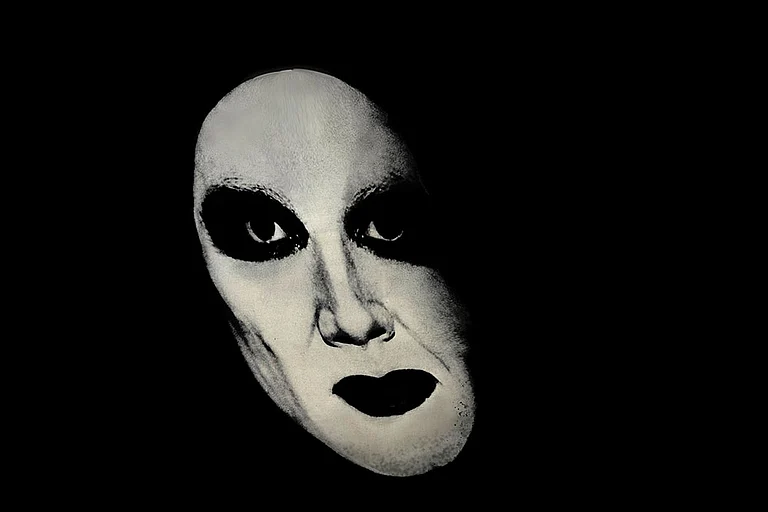
What must people go through to form a human chain around installations to protect them from enemy attack? To face bullets or bombs completely unarmed? What kind of patriotism does it call for? Is it bravado or blunder? What do they tell their families? What would a mother feel when her daughter tells her she is going to be part of a human chain? Or does the whole family go? And relatives? And friends and colleagues? What kind of grit is needed to willingly become fodder for missiles from the aggressors? How will the feeling of defiance be, the energy passing from hand to hand, to stand as one to face annihilation? How does the waiting feel, how long will it be? Do they talk to each other stand in their own thoughts? Will it be the rat-rat-rat of machine guns or one huge angry bomb? Will it kill all of them or a few will survive? Do some feel like running away a while? Are there defectors in a human chain? Or is the feeling beyond known realms of definitions? A cry for humanity against the brute force of a bully?
Advertisement
When Reporting Becomes Witnessing
Zenaira Bakhsh
Having grown up in Kashmir, where politics is not an abstraction but a condition of everyday life, places like Palestine, Lebanon, and Iran were never distant geographies to me, they were intimate, almost familial presences in the moral imagination I inherited. That proximity has only deepened over time, first as a young person trying to make sense of violence and loss, and later as a journalist documenting lives being steadily unravelled. What much of the Western and Indian mainstream media hesitates to name, we have watched unfold in fragments and testimonies that resist euphemism. To follow these stories is not a professional beat alone; it has become a ritual, waking and sleeping with a quiet, persistent prayer for people I have never met, yet feel bound to.
…In one recent exchange, a 24-year-old Palestinian I had interviewed sent me a message that read: “My heart is with you, your family, your people there.” It is difficult to articulate what it means to receive such generosity of spirit from someone living under relentless siege.
Advertisement
How Is Any Of This Real?
Anwiti Singh
The fact that the US killed over 160 schoolgirls in Iran and got away with it will haunt me forever. Surreal, absurd, like a kind of purgatory— that is what it feels like to report on the current US–Israel war on Iran.
Are we a simulation in some alien kid’s video game in a galaxy far away because is any of this real? War crimes being announced in advance, brown people being animals to justify their bombings by powerful White men?
How can a President of a country, albeit a powerful one, decide to kidnap another country’s president, kill a Supreme Leader, kill thousands, displace millions and still sit on a moral high horse?
The footage of Minab school does not leave me. Pink shoes, once white, now stained with blood. A child’s blown-up hand. A small bone jutting out of the ground. If it disturbs me this much, from a whole continent between us, how are Iranians living with it?
But we have to write, and report, and know the saying ‘a pen is mightier than the sword’ is wrong. Nothing is as powerful as man drunk on power, allied with a country hell-bent on ethnic cleansing and colonisation, armed with the world’s most destructive weapons and backing from all the other superpowers.
The War In A Pause
Agnideb Bandyopadhyay
What does it mean to cover war from a distance? To watch it unfurl in a maddening rhythm? I say rhythm because news follows a pattern - where I have often seen a pause dictate the flow. Where newsrooms across the world look at each other’s last updates, poking their correspondent to take the first jump. A regimented pause. Miles away from ground zero, the temporary lull between two breaking points would be a good time to cool down and remind yourself that you are doing your best to saddle the horse. And deal with the overwhelming nature of information. In a world desensitised to violence, what we often forget to do, is think. Think beyond the pegs, updates, the numbers, and reactions. Covering a war from afar made me think - of worlds so distant and yet so close. Of suffering so strange, and yet so numbingly personal. Of my life, so removed from cries and shrieks of children and women. Removed from the school which once heard girls laughing and yet attached. From the bridges which held promise, the roads which forged history.
The war reached me in the pause when every single person in the newsroom was negotiating with theirs. The war was not probably ours, but the pause was.

Don't let the world move on too quickly
Mrinalini Dhyani
This is a time when war no longer feels distant, even if it is unfolding thousands of miles away. We are living in such a time, a time when devastation arrives not through dispatches alone, but through the glow of our phone screens. Entire cities, broken homes, children pulled out of rubble, all of it fits into the palm of our hands. And yet, in the same moment, with the same thumb, we can scroll past it. That is perhaps the most unsettling reality of this age: war is both everywhere and frighteningly easy to move beyond. As a reporter covering this conflict from afar, that contradiction sits heavily with me every single day. There is a constant tension between proximity and distance. I am not on the ground hearing the explosions myself, and yet the sounds of war seem to echo through every video that reaches my phone screen. There are nights when I go to sleep after hours of watching footage of children being bombed, of families looking for their loved ones, of homes turned into ash. There is a sense of helplessness and an uneasy guilt — the guilt of witnessing suffering from the safety of a room far away, the guilt of knowing that for many, this is not an image or a headline but their lived reality. And still, there is another thought: that I must not allow this to slip out of my mind. In a world where tragedy competes with timelines, trends, and the next breaking notification, forgetting can happen too quickly. News cycles move on. Audiences scroll. Outrage fades. But war does not end because attention does. That is why, even from afar, the responsibility feels urgent.
Sometimes reporting from a distance means piecing together truth through voices, testimonies, footage, satellite images, official statements, and fragments of grief carried across borders. It means holding on to empathy while working through facts. It means carrying the emotional burden of witnessing without the ability to intervene. I am grateful that at Outlook, we have continued to hold space for these stories, to recognise that even when a war is geographically far, its human cost demands our sustained attention. In moments like these, journalism is not only about information; it is about refusing erasure.
"To not let the world move on too quickly.
And to keep telling the story in whatever way we can."
It is what it is, but should it be?
Ainnie Arif
When I read about the world wars in college, I imagined a world that had come to a halt, everyone drawn into the act of fighting, defending themselves and those they called allies. I pictured trenches where men took their last breaths, forgotten in the chaos, their names etched years later onto walls and memorials.
Now, as violence unfolds on my screen, that imagination feels almost naive. It is jarring—humiliating, even—to witness the brutality so closely: bodies broken, blood splashed across the faces of children. Sirens blare in countries miles away, and I receive updates in real time. And yet, I feel just as helpless. What are these wars for? The glory of men who sit far from the frontlines? Is it for oil, for power, for wealth they already have in abundance?
I cannot say. But what I do know is that this war is not foreign, and it should not be seen that way. There may be no hand-to-hand combat around us, but the battle is everywhere, in the propaganda that reaches all of us, from a daily-wage labourer in Noida to a finance broker in New York City. It touches us all, whether we realise it or not. And it is almost naive to convince ourselves otherwise.
In the newsroom, I find a strange calm amid the chaos, in colleagues who look past what those in power want us to believe, who see victims where others see threats. There is still sanctity in international law, even when global bodies do little more than “monitor the situation”. And then there are the headlines—calling a war an “escalation”, a careful choice of words that does little to soften the truth on the ground.
And as a journalist, I can say it has tested everything I have learned, what to trust, what to question, and how to keep telling the story without losing sight of the truth.
A World Needs Peace, Not A Barren Land
Jagisha Arora
When I sit in an office and see visuals of bombings and attacks on women, children, and innocent civilians, I am reminded of my own privileges. Safety is often taken for granted, but it becomes visible when you see the contrast to lives shattered elsewhere.
But beyond the horror and chaos, there is also a quiet longing for a world where leaders choose dialogue over destruction, where handshakes replace hostility, and where peace is not a temporary pause but a lasting commitment.
What we need is not another barren landscape shaped by war, but a future where children can dream freely, untouched by fear, and grow up in a world where their biggest concern is what game to play next.
I dream of a world beyond borders and shared by all people. Humanity over hostility.

No one wins a war
Apeksha Priyadarshini
Watching a war unfold from a newsroom is a macabre experience. People become numbers; missiles become a reflection of muscle power rather than the death and destruction they bring; and policy decisions become the next news update, while their consequences on a living, breathing population get lost in the noise. We tend to forget that no one wins a war; it is only our collective humanity that loses each time. As charged and urgent as a moment may seem, what remains crucial is to never lose sight of questioning what you're receiving on your phone and television screens, where it is appearing from and why the escalation began in the first place. Most importantly, it is imperative to keep empathy alive, at a time when those in power seek to numb your capability to see and feel the very real suffering of your fellow human beings.
Reporting a War I Cannot See
Mohammad Ali
There are no checkpoints for me to cross, no cratered streets to walk through, no smell of burnt metal or cordite to confirm what I write. Instead, I sit before screens—maps, grainy videos, satellite images, statements issued in the language of certainty. The war reaches me through fragments of a plume of smoke looping endlessly, a timestamp that may or may not be accurate, a voice message sent before the network goes silent.
This is what war reporting has become at a distance—an exercise in assembling truth from absence.
So we improvise.
We triangulate. We call sources who speak in lowered voices. We cross-check a missile strike against satellite imagery, then against hospital records, then against the testimony of someone who may themselves be guessing. Social media is both a lifeline and a minefield—full of immediacy, but also manipulation. Verification becomes the story behind the story.
To report from afar is to constantly doubt your own authority. You are aware that somewhere, someone else is closer to the truth—perhaps a local reporter, perhaps a civilian with a phone, perhaps no one at all. You are also aware that distance can flatten suffering. Casualties become numbers faster when you have not seen the faces.
There is a peculiar guilt in this: the safety that enables the story is also what distances you from it.
What, then, does it mean to bear witness?
Perhaps it means acknowledging the limits of what we know. It means resisting the urge to smooth over uncertainty with confident prose. It means naming the source, the doubt, the gap. It means writing sentences that do not pretend the fog has lifted when it hasn’t.
I am covering a war I cannot see.

None is immune to war
Ishfaq Naseem
None is immune to the impact of war. Reading about the closure of the Strait of Hormuz and its impact on the fuel supplies in Kashmir only showed how dependent the world is on each other. The global economy was in a tailspin, and the truce was cheered up by bourses across the world. And predictably, people erupted in joy over the ceasefire in Kashmir too. But on the day the US and Israel launched joint military strikes on Iran, leading to the retaliatory attacks from the country, thousands of people converged on the roads to express solidarity with the people of Iran. None really could have escaped from the war, and the truce came as a sigh of relief for people in Kashmir, too, some of whose loved ones are either working in Gulf countries or are studying in Iran.
Civilisations do not die on a deadline
Fozia Yasin
Tracking it from our homes as the clock ticked on Trump’s warning to erase a civilisation, each update carried the weight of something unimaginable. It could be nuclear, indiscriminate, anything. The world bit its nails. And then, just as the breath ran out, a ceasefire. The exhale was collective, but the dread did not fully leave.
I recognised it immediately. It is the same thing I have seen on the streets of Kashmir. Mass protests, an entire community thinking as one, not because they believe they can win by force, but because surrender was never an option. That is what faith does. It does not promise safety. It promises that you will not break.
All this week, I had been sitting with Iranian families. Chatting in offices, drinking tea in homes, laughing in university corridors, and absorbing stories of fear held upright by resolve. I come from Iran-e-Sageer, Little Iran, and just like that, we were no longer strangers. Conversations that felt like old friendships. I know what this inheritance feels like: helpless in power, but undefeatable in spirit.
The distance between us collapsed completely.
Civilisations do not die on a deadline.
A War A Day
SS Jeevan
The US-Israel war on Iran may go down as one of the most bewildering conflicts in recent history. There was no clear provocation—echoing the US invasion of Iraq, where the much-cited weapons of mass destruction were never found—yet Iran has been subjected to relentless missile strikes. What began as calls for regime change has escalated dramatically: after targeting and killing key Iranian leaders, the demand has now shifted to outright surrender. Even as a ceasefire is announced, the bombardment shows little sign of abating. More alarmingly, the conflict has begun to spill beyond Iran’s borders, drawing in other West Asian nations that were not initially part of the war.
Amid this turmoil, the Iranian people have displayed remarkable resilience. Despite immense pressure, they have not yielded, standing firm in defense of their pride, identity, and sovereignty. The scale of destruction evokes parallels with Gaza, raising fears of widespread devastation. As always, it is the most vulnerable—women and children—who bear the heaviest burden, their suffering reflected in the haunting images that dominate global media.
The repercussions are no longer confined to the region. Distant countries, including India, are beginning to feel the strain—seen in long queues for LPG cylinders and migrant workers returning to their villages as livelihoods are disrupted. These ripple effects raise a troubling question: are we entering an era where war is no longer an exception, but a constant presence shaping everyday life?
Transcending Boundaries
Anupam Sai Bollaboina
These days I think of war everyday.
It wasn’t always the case.
We wake up every morning to feed our brains war through our phones.
Far away, we are involuntary bystanders in this war.
But are we?
War crossed boundaries to reach our homes.
The rich wage wars and the poor pay the price.
Everywhere there is propaganda
We are not bystanders in this war
Resist getting consumed by despair
by divesting from Evil corporations and biased media
funding and being funded by wars
I am inspired, watching people resist the empire.
I hope to see a brighter future, in our lifetime
The Story is Iran, Its People
Priyanka Tupe
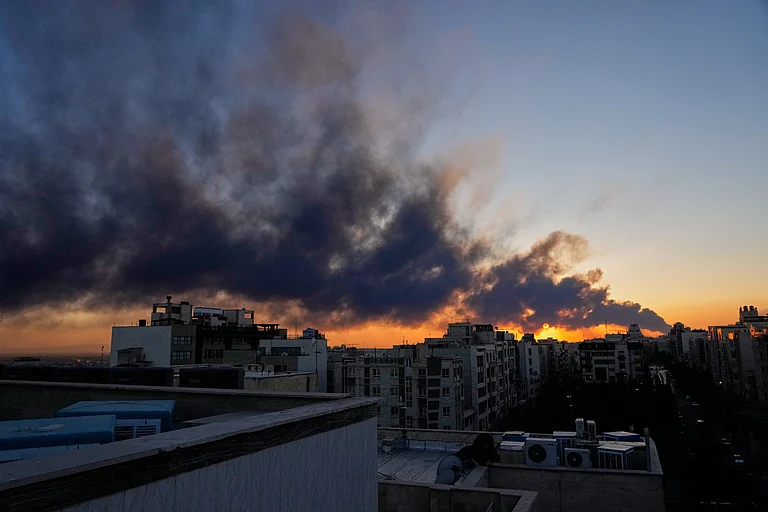
While writing a few stories about the war on Iran by the US and Israel from a distance, I became overwhelmed all the time with many things, but I strongly feel- I should not be the story as a reporter - the story is Iran, its people and the spiraling conflict in west Asia.
I learnt, war coverage can’t be ‘unbiased’ when the president of the United States talks about ending civilisation and with his unpredictable behaviour, the night of 7th April was not a usual one for many including me. Choosing humanity and peace over hate and genocide isn’t optional-it is the basic, bare minimum.
The USA and Israel killed young school girls during Ramzan. I can’t forget the photographs of mass graves and coffins of school girls, and no one should either. Life loss in wars is never meant to be forgotten, we should learn love, empathy, humility over hate and imperial political project of destruction.
Young kids from Jammu & Kashmir gave their piggy banks as a contribution for Iranian war victims, this gave me some hope in this dystopia. A singer who sat outside one of the powerplants protesting with music is hope! Iran showed how human chains, fearless acts of serving the nation, are more powerful than nuclear bombs. Like most of us I too was dealing with a question: are we going to witness another Hiroshima-Nagasaki? And Iranians answered - ‘NO! Our human chains will not only protect the nation, but humanity!
Where are the adults in the room?
Sudhanshu
As I was witnessing the daily episodic war scene I felt like those Trump memes floating around online are not far away from reality. Otherwise how can responsible adults engage in such whimsical and destructive acts? Multiple thoughts were swimming in my mind “Could it be to cover Epstein files” was just one of them. To me it revealed USA’s hypocrisy on human rights and laws of the war, and also its complete disinterest in persisting with diplomacy. As they say -when you have a hammer in hand everything looks like a nail.
Pendulum Heart
Saahil
We have all been witnesses to this gory war for weeks now, but the night of April 7, Trump’s deadline to Iran, felt especially heavy. One corner of my heart was feeling a sense of foreboding—an impending doom—while the other was hoping against hope. Unlike some, I, as a journalist, cannot afford to look away from this live and incessant imagery of destruction. Apathy is not an option. As a visual journalist, I was not only consuming such imagery but also making illustrations, trying to capture the zeitgeist of these crazy times. While this whole war situation was oscillating between ‘Deal’ or ‘No Deal’ everything was in a state of flux, so was I.
Human kind cannot bear very much reality
(Four Quarters 1: Burnt Norton by T. S. Eliot)
Subhashree Rath
For weeks, we have been seeing real time footage of buildings reduced to dust and images of unarmed civilians killed, their bereaving loved ones trying to make sense of what’s left. At what point does a human life become a statistic that can no longer be salvaged from the rubble of war? There are no gatekeepers of media now; the news of onslaught reaches within hours, sometimes even minutes. On our shiny screens we can choose to pause, mute, hide the notification and look away, come back to the edit after a pause, but we continue - sifting through page after page on wire agencies, fact checking and identifying whether something is fabricated by artificial intelligence or not. I am reminded “human kind cannot bear very much reality”, but we must bear witness, it's the least we can do. Not only to bear witness, but also to call a spade a spade. With so much information at our disposal and all of history to "learn" from, how is it that the same people, who can send astronauts to the moon, cannot stop killing?
Indifference Isn't An Option
Vineetha Mokkil
News comes flooding in all day, all night, but the line between facts and fakes blurs so fast, so often, that all your energies go into factchecking, verifying, separating speculation from truth, staving off an avalanche of slickly produced propaganda, crosschecking multiple news sources with a desperate urgency before sharing a post or a report. The world is on fire so it feels like it's on us to be extra vigilant about quoting sources with skewed agendas or sharing tweets and videos and reels that make misleading claims.
On February 28, the day the US-Israel strikes on Iran began, over 170 people were killed at the 'Shajareh Tayyebeh' girls' school in the Iranian port city of Minab. Those killed were mostly children aged seven to 12. Who will hold the perpetrators accountable; the question of accountability nags us every minute as we track the news trickling in from the war zone.
It's hard not to be overwhelmed by all the information that we are drowning in, and some days, it's hard to resist the impulse to tune out the war and the heartbreaking spectacle of human suffering that it has created. But indifference isn't an option. Bearing witness, even if from afar, seems like the least we can do at the moment. So, we write, we watch, we report. In words we trust.
Beyond War Politics, There Are People. Like you And Me
Swati Subhedar
My last message to Gia, 25, who lives in Tyre, a city in South Lebanon, was “be safe”. There has been silence since then. I got in touch with her on Instagram. She wrote a story for us; her displacement journey from Tyre to Beirut to escape Israeli strikes that intensified after February 28. The family, like millions of others, moved from one city to another, leaving their home behind, to find a safe haven. On that morning, Gia messaged me that her city was under attack and they had to run again. Silence. Similarly, I haven’t been able to get in touch with the “anonymous” girl from Tehran who wrote a story for us on the January protests across Iran. Silence. João Sousa, a photojournalist from Beirut, promised he will send a photo story. Silence. I check my WhatsApp every day to hear from them. Just to know they are okay. Because they are not professional contacts anymore. Over the past month, while sifting through photos, videos and stories, I thought about all these ordinary people trying to survive in extraordinary circumstances. As Trump’s deadline to “bomb an entire civilisation” neared, I came across wonderful stories of hope—a musician playing his instrument sitting amid ruins, a professor conducting virtual classes surrounded by debris left after the university was bombed, incredibly brave people forming human chains to protect their power plants. But in my heart, I knew not all would survive. That rebuilding will take years. That emotional scars will never heal. Watching a war unfolding live on television is like watching a tragic film. You feel all the emotions, but the sheer helplessness of not being able to do anything to rewrite the script or change the tragic ending is heartbreaking and frustrating. The present situation is making me emotionally numb. Because beyond war politics, there are people. Like you and me. And they are getting killed. For no reason. It’s sick. It needs to stop.
Hope Is Still Alive
Vikas Thakur
Mr. Trump began a war just after the Venezuelan president, Nicolás Maduro, was kidnapped in a single night. Then came Iran. We were all quiet—who can stop this brainless monster? Nobody can. No country dares to speak a word against him. We sit in our homes, sad and silent.
He murdered Iran’s Ayatollah Khamenei. His fear has silenced us; his taxation and tariffs have frightened us. One day, he may destroy the entire Middle East. We have evidence—Iraq, Syria, Yemen, Afghanistan, and more.
We are miles away from Iran—sad, devastated, and helpless. We assume we are safe, that war cannot touch or affect us. But reality is different. After a few weeks, the shadow of war reaches us—just like pandemics or demonetisation.
The first victims are always the poor: street vendors, hotel workers, dhaba workers, gig workers, and people living in slums. Panic spreads—gas cylinder prices shoot up, almost touching ₹400 per kg, while daily wages remain ₹400–₹500. How do they survive? People shift to wood fires and kerosene stoves. Even I bought an induction stove and spent money on utensils and cookware.
On the other side, Kashmiri and Shia Muslim communities teach us the value of solidarity—how to stand with people who resist oppression. Iran teaches us how to fight a dictator, a brainless ruler. You don’t need massive weapons or nuclear power—only solidarity and willpower to defeat the monster.

All Thinking People of Conscience Everywhere
Champak Bhattacharjee
Covering the US–Israel–Iran war from the newsroom felt heavy. We have covered wars in Outlook earlier also when we did a special issue on “Never Ending Wars”, but this war is different because we are covering it live. There was chaos, confusion, memes, AI-generated images and videos and verifying them was very difficult.
As a designer, selecting the best pictures from such disturbing visuals is very difficult. How can you choose when children, women, old people are under rubble?
What should I feel?
Saher Hiba Khan
Desensitised.
This is the only word that comes to mind when I am asked how I feel about wars that are being won at the cost of human lives. As students, we read about World War I and other wars in textbooks, but now reading updates about a live war has become a regular part of my life—especially after the Russia-Ukraine War began.
It has been nearly three years since Israel inflicted the Gaza genocide, yet many still refuse to call it a genocide. This choice makes everything clear. At this moment, I hate to admit that any reporting or writing will make a difference. But I hope against hope. Donald Trump’s statements about killing civilisations make it seem like a game, where lives lost are dismissed as “collateral damage,” as if human beings are nothing but an investment.

As I See, Trump Turns War To Business
Jinit Parmar
The first thing I can think of is Megadeth's 1985 album - "Killing Is My Business… And Business Is Good." And this is what Trump has been doing in Iran. He does what he wants, with whomever he wants, however he wants. The Congress, allies, law be damned. Soleimani was a message. The UN? Silent. Security Council? Paralyzed by US veto. Human rights bodies? Mumbling into the void. No condemnation. No red lines. Just the hum of drones and the stench of impunity. Trump made murder a transaction, and the world’s conscience checked out. Business, indeed, is booming.
The Wars We Inherit
Pritha Vashishth
If I were born somewhere in the middle of a conflict, the word “peace” would have been an oasis. But because I was not, I sit on my couch in front of the television, dripping my thoughts about who is right and who is wrong. I wonder: who holds the whip to tame, and who has the courage to become the resolute rebel?
Almost two years into journalism, and I feel concussions just thinking of war walking past my sleep. Yet, I have seen war since childhood through the lens of Studio Ghibli, a representation of war through a child’s eyes. I saw the fluttering fireflies illuminating the bombing of Japan. I watched the toddler stitched to her brother’s side saying, “I hate bomb shelters because they are hot.” Her only concern hovered around the fear that they would be hungry if they swam. Tears coil around your lashes as you are introduced to this world. Even Hayao Miyazaki, the studio’s most famous face, was only four when Hiroshima and Nagasaki were attacked, ending the Second World War. But a child refusing to swim because they might be hungry drops the jaw.
I had enough lines to place a cap of sympathy on Japan until I was introduced to The Rape of Nanking by Iris Chang. She writes of the 1937–1938 Nanjing Massacre, the mass murder and rape of Chinese civilians by the Imperial Japanese Army. Somewhere inside you, a voice pinches, “Well, they deserved it then,” even if you do not agree with it. Even though that statement has no ground to stand on, there is a butterfly effect. One thing leads to another. Yes, there are many causes for a bombing, but which bomb are we talking about here? Whose land was it dropped on first? The one tarnished years ago, or the one writhing in pain in West Asia today? We wear the lens of history we are handed by the people we live among. We are all predators of our actions, yet victims of our thoughts.
Today, Iran stands strangled by countries that brand it venomous, particularly the USA and Israel. The ripple effect has created tremors across West Asia. But history books will record this conflict in their own way.
And that is where my consciousness begins. Because when you write about war, you are not merely reporting events; you are writing history. History should not be bombarded with venom or dictated by the vicious cycle of revenge. It must ask how we tell the story, whose suffering we choose to remember, and whose we quietly erase. I cannot allow the words I write to become weapons themselves. If war already scars the land, the least a writer can do is ensure that the record of it is not poisoned by hatred.
Humanity Is Losing
Anupriya
Is life worthless in war? Do we need a society so cruel and violent that life itself seems meaningless? Some people will do anything to maintain their power and dominance. The life of an ordinary human being is lost to the greed and power of a few. This will affect every life on Earth for centuries. Humanity is losing, and we are all helpless.
When War Travels Home
Suresh Pandey
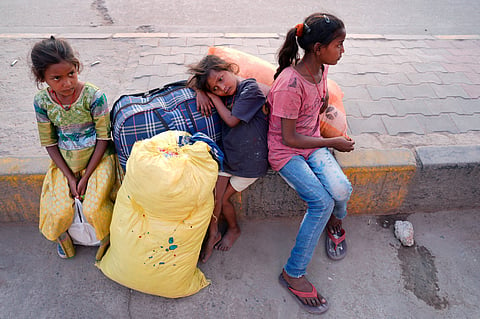
While reporting on daily-wage labourers migrating back to Bihar due to an LPG shortage, I came across three little girls who had packed their worlds into small bags, seams tearing under the weight. They said they had booked general tickets home, unsure if they would even be allowed to board the train.
It is all unfolding because of an unpredictable leader sitting in the United States. These girls have no idea who Donald Trump is, where Iran is, or what the geopolitics of this war means. All they know is that within a month, their shelter is gone and they do not have enough to eat.
The sight brought me to tears. I tried to help in whatever small way I could, but will it ever be enough? The situation will not change for them overnight. They will return home, still without a stable source of income, still caught in the same cycle.
They may not understand geopolitics, but Trump, as the president of a superpower, should understand how economic shocks ripple outward, always hitting the poorest the hardest, whether in the United States or in India.
The war has hit home, not in headlines or policy briefings, but in the quiet desperation of children forced to carry their lives in fragile bags, heading towards an uncertain tomorrow.
Suresh K Pandey
A discreet walk towards futility
Animikh Chakrabarty
As we head towards an uncertain future, strangled possibilities and a tectonic shift in the ever tumultuous 21st century world, watching it unfold live infront of my eyes makes me think of the fragility of life. How plans, hopes and gradual building up over decades can turn into a futile mess just because a couple of people thinks it to be a smart game of chess. A game which gets played with life a few thousand miles away, will we as well be pawns in a similar one soon? It makes me question my own aspirations from life, making me feel insignificant
Tough To Stay Objective When The Subject Is Trump
Aasheesh Sharma
All is fair unfair in love and war, or so went the age-old old adage. In 2026, the rules-based world order, as we knew it, is coming apart. As career journalists, we end up as chroniclers of unfair wars waged on the world, on the whims of a geriatric President. When one looks at the war waged on Iran by Trump and Netanyahu, the first tenet of journalism –objectivity – often flies out of the window. How does one stay objective after the massacre of schoolgirls in Minar? How does one report dispassionately about the bombing of Beirut, hours within the announcement of a ‘cease-fire’? Is all the talk of truce, a true lie? How does indeed, one hold back one’s opinions when attempts of negotiating peace in West Asia through diplomacy, albeit by India’s familiar foe Pakistan, are described as ‘dalali’? The spectrum of threats unleashed by Trump, from bombing out a civilisation, to tariff tantrums, to the predictable back-tracking, seem straight out of a reality show in which he has scripted himself as the protagonist. But in real life, in my ‘opinion,’ he is villain-comedian-peace dilettante rolled into one, unleashing an entire pantomime that the world is praying soon ends. However, he still has three years to go before he leaves the White House. Now, that’s so unfair!
What I Have Been Made To Witness
Humayun Kamran
I grew up in Uttar Pradesh in the 1990s, in a middle-class household where life moved at the pace of school runs, neighbourhood cricket, and the smell of my mother’s cooking. War was not a word that lived in our home. It belonged to textbooks, to distant centuries, to grainy black-and-white photographs of places that felt like fiction. The world I knew was ordinary, noisy, and safe.
My first real encounter with the idea of war, not as history but as something happening right now to real people, came when America invaded Afghanistan and Iraq. I remember watching it on television and not fully understanding the scale of what I was seeing. But I understood enough: a country was being bombed, people were dying, and nobody who had the power to stop it was stopping it.
What followed felt like watching dominoes fall in slow motion. Afghanistan and Iraq collapsed, followed by Syria, Libya, and Yemen. Each country was pulled into the same fire, and each time, the world watched, debated, and moved on. I was growing up alongside this, finishing school and starting a life, while somewhere else, other people’s lives were being ended.
Then came Gaza.
What I have witnessed since Israel began its assault on Gaza is something I do not have clean language for. I have watched it unfold, not through news summaries but in real time, on my phone, in my hands, in my home. Men, women, children. Families pulled from rubble. Hospitals bombed. Entire bloodlines erased. And behind it all, the full machinery of the most powerful military complex in the world, providing weapons, providing cover, providing the words to make it all sound like something other than what it is.
Then Lebanon. Then the war reached Iran. The region kept burning, and the burning kept spreading, and I kept watching because to look away felt like its own kind of betrayal.
I am not a soldier. I am not a politician. I am a person who grew up in a small, ordinary corner of this world, who was told that humanity had learned something from its worst moments. I no longer believe that.
Not Distant anymore
Snehal Srivastava
I don’t understand war. To me, it was never real—never part of my world. War belonged to history textbooks, reduced to dates and facts to memorise for an exam. I always thought that when my grandchildren asked me what the world I grew up in was like, I would be able to say, honestly, that it was an era of peace.
But with every day I log in, that illusion fades. This is not a “conflict” or a “crisis”—words that seem too small, too inadequate for what is unfolding. When I wake up to report on a school being bombed or read of a hundred airstrikes in minutes, war is no longer distant. It is immediate. It is real.
And yet, by the end of the day, as I return to conversations with friends, family, and the endless scroll of Instagram, it feels as though only a few of us are truly seeing it. The war goes on regardless—whether we are paying attention or not, whether we are awake or asleep.
The relentless churn of the news cycle is numbing. Even as we begin to accept war as a reality elsewhere, one question keeps surfacing: what is stopping it from happening here? What separates their cities from mine? What stands between their loss and my own—between their uncertainty and the possibility of me not knowing if my family is alive?
The world feels fragile, and those who wield power often seem distant from its consequences. As journalists, our responsibility is to keep asking the questions that matter. But increasingly, it feels as though the answers—when they come—change very little.
Hope amidst the chaos
Pritha Mukherjee
From studying about wars, tragedies and destruction in books to actually seeing them happen around me will always traumatize me.
It feels like the world is constantly teetering on a knife’s edge. Reading the headlines about Iran, Israel and the United States is truly exhausting. The strikes, the talk of regime change and the recent fragile two-week ceasefire, it is just so difficult to wrap your head around everything. The amount of destruction caused is hard to process- starting from broken bridges over the Litani River, hospitals in Tehran caught in the crossfire, displacement of millions of people who have now become homeless. The landscape has been fundamentally altered, leaving behind a trail of leveled industrial zones and communities that will take generations to rebuild.
Whenever we see a ray of hope that the war may finally stop, reports arrive claiming strikes in Kuwait and continued tension in Lebanon–it feels like we are just hitting a pause button rather than actually finding a way out. It feels like every time Donald Trump talks posts about a “workable” deal or Netanyahu makes a statement about Hezbollah, the reality gets more complicated.
The war has turned neighbourhoods into wreckage, and for many, there is simply no “normal” life left to return to. Over millions of children have been displaced and thousands killed or injured across Iran, Lebanon and Israel. Despite the ceasefire, there was a massive Israeli strike in Lebanon recently killing over 200 people, hence deepening the crisis.
The region has been pushed to a breaking point that no politics can ever fix. There are signs of trauma, displacement, and loss of faith in global stability.
We keep hope that the war is going to come to a standstill with no more destructions or killings or any harm caused globally. As a budding journalist , I feel claustrophobic when I hear about the amount of death and destruction that this war has brought and is continuing to bring. I really wish for all of this to cease down and people to live a peaceful life. THIS HORROR STORY SHOULD END.
The algorithm of war
Sredha TS
In school, we used to have anti-war rallies every August 6, we would make posters and walk around the grounds for five minutes. War was something that happened in faraway lands, something that happened in history books. It's not that there were no wars happening, in fact, the US had waged wars all over the planet, but it was always sugar-coated for us.
It is when you grow up, read up more than what you were told is the truth, that you realise war is nothing but history. I have sat through international relations classes where professors refused to call genocides what they are. distorting histories so we would swallow the lies without questioning. But we went on protesting, marked our dissent, got detained. And all this happened while war drew close to us.
Now we wake up with news of new war crimes committed by the 'world leaders'. We post about it, write about it, and watch how videos of lives being destroyed and countries being blown up get thousands of views. More bridges blown up equals more views.
We have all gone numb. But even in our dissociation, we feed on the perils of war. We are the vultures, and our gaze feeds the algorithm of war. It churns out more violence, more views, and then, more bloodshed. The performance, the theatre of war, goes on.
But then I see the people of Iran, Lebanon, Palestine. how they refuse to give up their fight, refuse to leave their homelands, even in the face of imminent death. Their resistance, their resilience, which has no audience, no algorithm to boost views, evades performability in this age of surveillance. And we yearn to see their smiles triumph over the bombs and missiles.
How to be objective?
Md. Asghar Khan
I try to look at war less as a reporter and more through the lens of humanity. A reporter is often bound by certain limits. Even when a clear act of brutality is visible in a war, they often cannot openly criticize it on social media because they are sometimes expected to uphold a hollow notion of neutrality. In the name of being “objective,” they find themselves unable to call injustice by its name, even when they are witnessing it with their own eyes. Looking at war from a human perspective, however, has at least one advantage: when you see cruelty, the warmth of humanity within you stays alive. It preserves the simple but essential feeling of being human.
The war between the United States, Israel, and Iran is still ongoing, and one of its most horrifying images emerged on the very first day itself—the attack on the Minab Girls’ School in Iran, where more than a hundred young girls were killed. Even though it was evident that the killing of children was an act of sheer brutality, it could not be openly described as such. Then, as now, their deaths were folded into the larger count of those “killed in the war,” reduced to numbers in casualty figures. But war, in whatever circumstances it is fought, ultimately leaves behind nothing except loss.
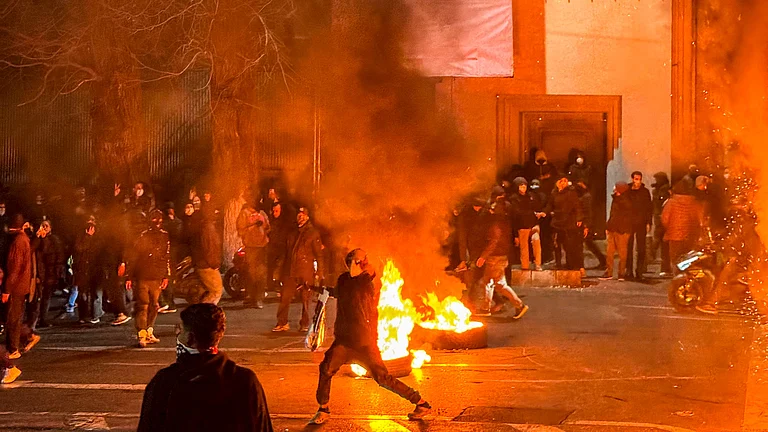
FRAME Vs Humanity During WAR
Tribhuvan Tiwari
To a photographer, the viewfinder turns the world into a silent puzzle of shadows, light, and that split second known as the "decisive moment." Their loyalty is to the frame. They move like ghosts, capturing raw images of human suffering so the rest of the world can no longer look away or pretend not to know. There is a strange, cold distance in adjusting a lens while a city burns; the camera acts as a shield, a glass barrier that tricks them into believing they are just a witness, safe on the other side of the shutter.
But behind that glass, the human being is in turmoil. This realization hit home years ago on the freezing, blood-stained peaks of **Kargil**. In that thin air, amidst the roar of heavy artillery, the internal struggle was a razor’s edge. A photographer's hands must remain perfectly still; if they shake, the focus blurs, and the sacrifice of those young men dying in the snow is lost to history. Yet, with every click, a piece of their spirit breaks. They might frame the agonizing grief of a mother standing before a coffin draped in the national flag, their mind calculating the "perfect shot" while their heart screams at them to drop the heavy gear and offer a hand.
Today, this suffering has no boundaries; it has leaked out of the trenches and into every corner of the globe. Through the lens, you see that war does not discriminate. It crushes the laborer who loses his daily bread and his humble roof, but it also shatters the wealthy, whose status and gold cannot buy back the peace or the loved ones they’ve lost. From the elite in high-rises to the workers in the streets, every class in every country is now tethered to this collective agony.
War as a photographer
Vikram Sharma
As a photographer, I've always wondered what it would be like to be on the ground, capturing the raw reality of war. Though I wasn't physically present in Iran, the stories and images that have emerged from conflicts around the world have left a deep impact. The bravery of those documenting the truth, the resilience of the people, and the devastating consequences of war are palpable. It's striking how often powerful nations justify invasions with flimsy pretexts - like the US-led invasions of Iraq (2003), Libya (2011), and Syria (2014), or historical interventions in countries like Vietnam, Chile, and Nicaragua. But what's equally notable is how the international community pushed back – France and Germany opposing the Iraq War to the UN General Assembly voting against US policies in Gaza. The global outcry may not always succeed, but it shows that many still stand for justice over might.
Perhaps this is the start of a new world order? One in which the most powerful countries cannot invade the weaker ones at the drop of a hat, and then justify their naked aggression with the flimsiest of logic?
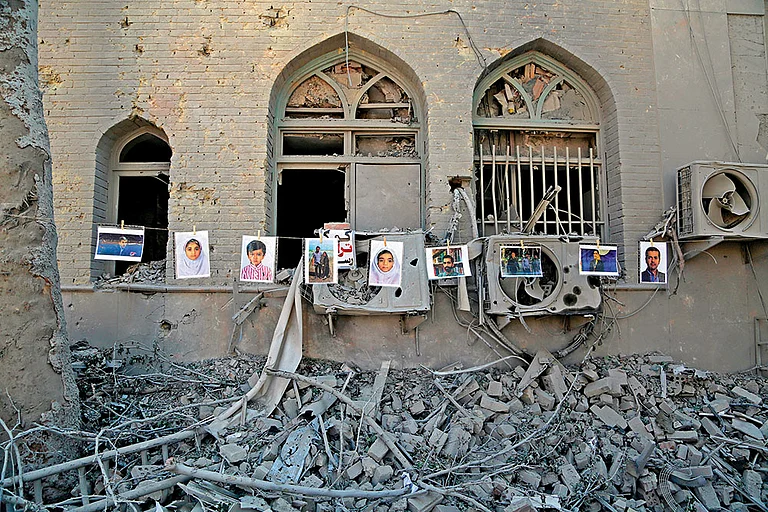
War Beyond Battles
Sandipan Chatterjee
Whenever I think about war, it genuinely scares me. The first images that come to my mind are destruction and innocent people losing their lives for no fault of theirs. If I try to put it simply, it feels like a fight for power between a few, while countless others end up paying the price.
What makes it feel even more real today is how closely we see it through our screens, and yet how easily we move on. In the recent Iran conflict, many innocent civilians have lost their lives, and even homes and everyday places have turned into sites of tragedy.
What stays with me most is the aftermath. People losing their families and having to start from nothing. In a way, for them, the war never really ends. It just becomes a different kind of fight.
Witnessing the Inevitable Cost of War From The Newsroom
Sakshi Salil Chavan
To witness war from within a newsroom is far removed from the simple act of holding a journalistic job. It unsettles the conscience, forcing it to look beyond the surface and confront what unfolds in everyday life. One steps out of their privileged air-conditioned office or home only to find queues for gas cylinders, overcrowded trains and buses packed with people heading back to villages in desperation of survival. A conflict may ignite in one region, yet its heat travels widely, settling most heavily on working-class lives.
As Israel’s genocide in Gaza persists over the years, Iran now stands at the centre of immense human cost while defending its territory against Western interference. Meanwhile, powerful men trade grudges and make “emotional” and volatile decisions even as they routinely assign that very label to women. The burden of these biases and ruptured moral frameworks falls on ordinary citizens, while those in positions of power remain insulated by security systems and glass-house privileges that prevent any real confrontation with the dehumanisation they enable.
For a journalist, the role extends to carrying voices across thresholds of visibility, aware that speaking becomes both duty and risk under pressure from ruling governments and their enforcers. There is a certain privilege in being able to amplify those who demand to be heard. At its core, war never detaches itself from human cost. One can only hope that journalism grounded in courage and clarity continues to endure and resist erasure.
Iran on Screen
Debanjan Dhar
Witnessing the war from afar, as nations lay ruin to each other with no accountability whatsoever, compounds the sheer absurdity of our times. The very fact a president can brazenly declare ending a civilisation overnight and get away with it is perhaps the most telling barometer of our desolate landscape. That Israel can bomb Palestinians for three years and yet people fumble and dither before calling out a genocide shows the very ends of humanity's moral rope. War has become so entrenched in everyday living we can no longer sift through the condemnable. To watch and write on how war is represented and chronicled is to battle the constant denudation of our senses, holding onto our unravaged souls.
Reporting War While the World Scrolls On
Aishani Biswas
As someone who lives and breathes visual art, perhaps the way I would look towards war is through Peter Capaldi's monologue in Doctor Who, which seems quite apt. Peter Capaldi's Doctor begs the viewers to understand the cost of war, saying, "...Because it's always the same. When you fire that first shot, no matter how right you feel, you have no idea who's going to die! You don't know whose children are going to scream and burn! How many hearts will be broken! How many lives shattered! How much blood will spill until everybody does what they were always going to have to do from the very beginning? Sit down and talk!" This was back in the early 2010s.
Back in the 1940s, at the height of the Nazi regime, amidst the genocides, Charlie Chaplin in the Great Dictator echoed a similar message in the final speech of the film "....The misery that is now upon us is but the passing of greed - the bitterness of men who fear the way of human progress. The hate of men will pass, and dictators die, and the power they took from the people will return to the people. And so long as men die, liberty will never perish…
Soldiers! don't give yourselves to brutes - men who despise you - enslave you - who regiment your lives - tell you what to do - what to think and what to feel! Who drill you - diet you - treat you like cattle, use you as cannon fodder. Don't give yourselves to these unnatural men - machine men with machine minds and machine hearts! You are not machines! You are not cattle! You are men! You have the love of humanity in your hearts! You don't hate! Only the unloved hate - the unloved and the unnatural! Soldiers! Don't fight for slavery! Fight for liberty!"
Gaza. Ukraine. The Middle East. Somalia. Congo. Tibet. Yemen. Whether it is the 1940s, the 2010s, or 2026, we have consciously chosen to commit the same horrors, time and again, sacrificing our humanity at the altar of greed and money. The paradox of watching a war unfold through the Fourth and Fifth Estates is the realisation that the very act of reporting itself is futile. There is nihilism in documenting the same wars, the same tragedies, the same brutality, only reshaped by time and geography. It feels as though we are forever reporting variations of the same story.
The so-called age of information has directly given rise to the age of indifference. Our Instagram algorithm moves seamlessly from a video of a puppy to footage of a war crime, followed by a meme. Nothing holds our attention for long enough to be fully felt. In this endless scroll, we have become insulated from the grotesque reality of war, slowly desensitised, detached, and dissociated.
In this 24-hour news cycle where everything is "breaking", as journalists, we break this news while stripping ourselves of our humanity. I am writing about war at this moment, and in the next, I will be writing about films, television shows, and actors. Our lives have taken on the contours of a Camus-esque absurdity. To theories' what war means for journalists sitting in ivory tower offices feels almost obscene, especially when, just last night, 250 Lebanese were pummeled to their deaths. While people die, we order coffee to our desks with a tap of a screen, relying on an underpaid, overexploited human to deliver it in the scorching heat. While people get killed, the rest of the world carries on, because how can it not? We tell ourselves that we care, but caring does not stop the violence. And if this sounds too nihilistic, perhaps it is time to wake up and smell the coffee, onwards to the next article.
Published At: