The Akalis see the alliance as an opportunity to regain lost political ground, while the BJP seeks to expand its footprint in Punjab.
Seat-sharing arrangements and unresolved issues stemming from the 2020 split will test how far the old partnership can be restored.
The reunion is part of a wider trend of former NDA allies returning to the BJP fold.
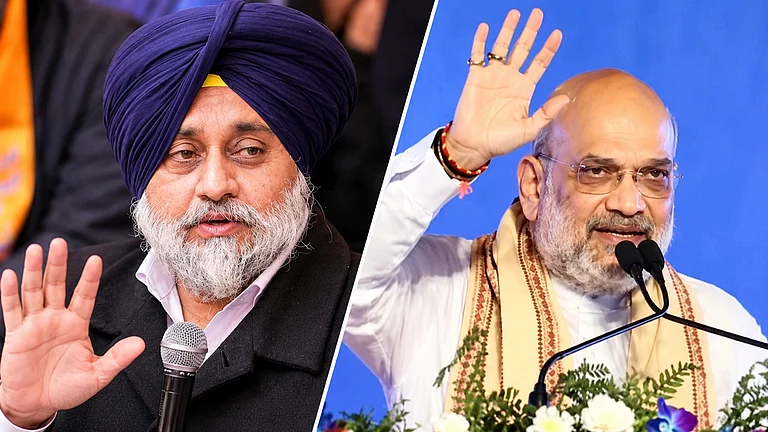
Punjab Polls: BJP And Akali Dal Reunite After Six Years With SAD As ‘Big Brother’
Six years after parting ways over the farm laws, the BJP and the Shiromani Akali Dal are back together. However, with the political fortunes of both parties having changed, the reunion brings new calculations over power, seat-sharing and Punjab’s electoral future

Summary
The Bharatiya Janata Party (BJP) and the Shiromani Akali Dal (SAD) have returned to the alliance that the Akalis walked away from six years ago over the farm laws. The reunion also comes as the two parties mark 30 years since they first came together in 1996 and contested elections jointly for the first time in 1997.
For the Akalis, led by the Badals, the 2027 Assembly election is crucial to their political survival and relevance. It will be their first joint electoral contest without Sukhbir Singh Badal’s father and former Chief Minister, Parkash Singh Badal, who died in April 2023.
The announcement followed weeks of speculation about the two former allies coming together. Union Home Minister Amit Shah described the return of the Akali Dal, the NDA’s oldest ally, as a matter of great happiness. He said the long-standing relationship between the Badals and the BJP symbolised Hindu-Sikh brotherhood, not just in Punjab but across the country and beyond.
Seeking to dispel any doubts over the power-sharing arrangement, Shah made it clear that the Akali Dal would be the “big brother” in the alliance, with the Chief Minister also coming from the Punjab party. In a lighter moment, he quipped that the two parties would contest all 117 Assembly seats.
At a joint press conference on Guru Nanak’s birth anniversary, Gurpurab, BJP president Nitin Nabin described the partnership as a “natural alliance” and said the two parties would work together to make Punjab a developed state.
SAD president Sukhbir Singh Badal stressed that the partnership went beyond electoral calculations, describing it as an “emotional alliance”. Recalling his late father’s words, he said the BJP and the Akali Dal shared an inseparable relationship built around the interests of Punjab and the Sikh community.
At the press conference, Badal said the two parties had agreed to sit together to resolve outstanding issues, leaving them for future discussions rather than reaching an immediate agreement.
Advertisement
New Equation In Punjab
The reunion, however, comes with its own contradictions. The alliance's success will depend on more than seat-sharing or the combined vote share of the two parties. After six years of contesting against each other, their workers will have to rebuild trust and campaign together.
When asked about the farm laws, over which the Akalis had walked out of the alliance, Shah said the issue was no longer relevant as the laws had been withdrawn. However, the question of Minimum Support Price (MSP) remains unresolved. Badal said the two parties would sit together to resolve outstanding issues after discussions with the Prime Minister and the Home Minister.
According to sources familiar with the discussions, the need for an alliance emerged after internal surveys suggested that both parties stood to benefit from joining forces. The alliance, they felt, could give voters greater confidence in their prospects and present a more credible electoral alternative.
Advertisement
It became evident that an alliance was in the works when Prime Minister Narendra Modi met Sukhbir Singh Badal in Parliament in August. Soon afterwards, Shah and other Union ministers began handling the subsequent discussions. Modi had also spoken to Badal’s wife and Bathinda MP Harsimrat Kaur Badal soon after he was attacked at a gurdwara in Nanded, Maharashtra.

The Battle For Punjab's Political Ground
In Punjab, the BJP is likely to have a greater say in seat-sharing, as neither party is returning to the same political position it occupied in 2020. For the BJP, Punjab offers an opportunity to expand beyond its traditional urban strongholds and reach a wider rural and Sikh electorate.
Its vote share rose to 18.56% in the 2024 Lok Sabha election from 6.06% in the 2022 Assembly elections, though it failed to win a seat. For the Akalis, the alliance offers a chance to recover lost political ground after a series of electoral defeats and internal divisions.
Advertisement
It could also contest nearly twice as many seats as before, when it fought 23. BJP state president Kewal Singh Dhillon said seat allocation would be based on “winnability”, with both parties contesting constituencies where they stood the best chance of winning.
Following the split in 2020, the BJP led a National Democratic Alliance (NDA) coalition alongside Captain Amarinder Singh's Punjab Lok Congress (PLC) and Sukhdev Singh Dhindsa's Shiromani Akali Dal (Sanyukt) where the saffron party fielded candidates on 73 seats for the 2022 election and won only two seats.
In 2022, the SAD contested 97 seats in alliance with the Bahujan Samaj Party (BSP), which contested the remaining 20 seats and where the Akalis managed to win only three. The SAD secured an 18.38 per cent statewide vote share in 2022, which became 13.48 per cent during the 2024 Lok Sabha election.
In 2022, Aam Aadmi Party had swept the state elections, when they got 42 per cent of the vote share and in 2024, they got 26.02 per cent.
Advertisement
Return Of The Ally
The Akali Dal's return to the NDA is part of a wider pattern of former allies finding their way back to the BJP. Nitish Kumar's JD(U), which left the NDA in 2022 to join the Opposition's INDIA bloc, returned in January 2024.
The Telugu Desam Party, led by Chandrababu Naidu, also renewed its ties with the BJP ahead of the 2024 Lok Sabha elections, six years after walking out of the alliance over the demand for special category status for Andhra Pradesh.
These reunions point to the BJP's focus on coalition-building as it seeks to strengthen its presence across states. For regional parties, too, the political calculations have shifted, with an alliance with the BJP seen as serving their immediate political interests. The Biju Janata Dal, which ended its long-standing partnership with the BJP in 2009, and Uddhav Thackeray's Shiv Sena faction remain notable exceptions.
Published At:
Tags