Chandrashekhar Azad’s ASP and Asaduddin Owaisi’s AIMIM have joined hands ahead of the 2027 Uttar Pradesh Assembly elections.
The alliance comes amid the BSP’s declining electoral fortunes: its vote share fell from 30.43% in 2007 to 12.88% in 2022 and 9.39% in the 2024 Lok Sabha elections.
The partnership could affect the SP-Congress alliance and the BJP through the redistribution of Dalit and Muslim votes.
UP Assembly Polls 2027: Can Azad–Owaisi Forge A New Dalit-Muslim Political Axis?
The partnership comes as the Bahujan Samaj Party (BSP), once the principal political vehicle of Dalit assertion in Uttar Pradesh, struggles to retain its electoral relevance

Summary
The alliance between Chandrashekhar Azad's Azad Samaj Party (Kanshi Ram) and Asaduddin Owaisi's All India Majlis-e-Ittehadul Muslimeen (AIMIM) ahead of the 2027 Uttar Pradesh Assembly elections brings together two parties seeking to consolidate constituencies that have traditionally shaped the state's opposition politics: Dalits and Muslims.
The partnership comes as the Bahujan Samaj Party (BSP), once the principal political vehicle of Dalit assertion in Uttar Pradesh, struggles to retain its electoral relevance. Azad's victory from Nagina in the 2024 Lok Sabha elections has given his party a parliamentary foothold, while Owaisi brings an established political identity among sections of Muslim voters.
Together, they are attempting to build a political formation outside the BJP-led National Democratic Alliance (NDA) and the Samajwadi Party (SP)-Congress-led INDIA bloc. The alliance is also invoking part of the old social coalition that once sustained Congress in Uttar Pradesh: Brahmins, Dalits and Muslims.
The BSP's Decline And The Opening In Dalit Politics
The BSP's decline provides the immediate political context for the new alliance. Under Mayawati, the party built a durable Dalit support base, particularly among Jatavs, while expanding its coalition to include sections of Muslims and upper castes. Its 2007 victory, when it secured 206 of the 403 Assembly seats and 30.43% of the vote, demonstrated the potential of this social engineering.
That position has weakened considerably. The BSP's vote share fell from 22.23% in the 2017 Assembly elections to 12.88% in 2022, when it won just one seat. In the 2024 Lok Sabha elections, its vote share declined further to 9.39%, and it failed to win any of the 79 constituencies it contested.
The emergence of Azad has given this decline a new dimension. In 2024, he won Nagina with 5,12,552 votes and 51.19% of the vote. The BSP candidate finished fourth with approximately 1.33%.
What AIMIM Brings To The Alliance
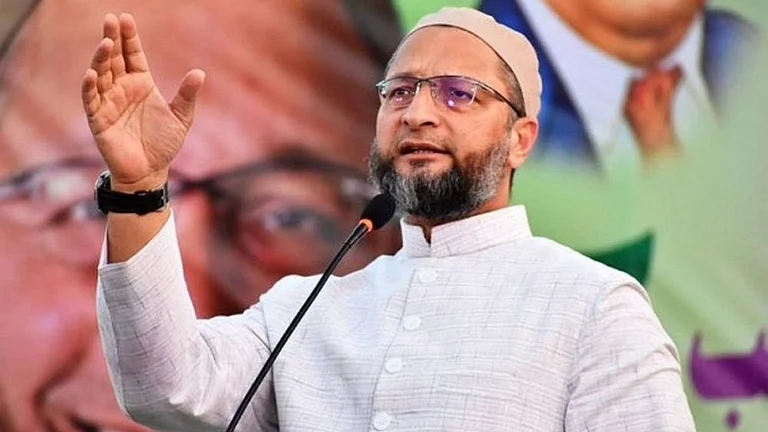
AIMIM's electoral strength in Uttar Pradesh is considerably smaller than its political visibility might suggest. In the 2022 Assembly elections, it contested 95 constituencies, received 4,50,929 votes and secured 0.49% of the statewide vote. It did not win a single seat.
The alliance combines Azad's emerging Dalit political appeal with Owaisi's minority-oriented political platform. According to the 2011 Census, Scheduled Castes constitute approximately 20.7% of Uttar Pradesh's population, while Muslims account for 19.3%. Together, they represent close to 40% of the state's population.
Advertisement
But demographic strength cannot automatically translate into electoral consolidation. Dalits are not politically homogeneous, with differences between Jatavs and non-Jatav Scheduled Castes influencing voting choices. Muslim voters, too, have frequently supported the party or alliance perceived to be best positioned to defeat the BJP.
The 2024 Lok Sabha election illustrates this. According to the CSDS-Lokniti post-poll survey, 92% of Muslim voters in Uttar Pradesh supported INDIA. Among Dalits, 56% of non-Jatav voters and 25% of Jatavs voted for INDIA. The new alliance will have to persuade voters to move away from established political preferences rather than simply appeal to community identities.
Can The Alliance Inherit The BSP's Electoral Space?
The BSP's previous results offer a reference point for assessing the potential electoral space available to the new formation. Its vote share fell from 30.43% in 2007 to 25.91% in 2012, 22.23% in 2017 and 12.88% in 2022. In the Lok Sabha elections, it declined from 19.43% in 2019 to 9.39% in 2024.
Advertisement
The party still secured nearly 1.19 crore votes in the 2022 Assembly elections and approximately 82.53 lakh votes in 2024. This residual support is what the ASP would need to attract if it hopes to establish itself as the BSP's successor.
Azad faces two major challenges: consolidating Dalit voters beyond his immediate support base and building an organisation comparable to the BSP's decades-old network. Mayawati's Jatav constituency, in particular, cannot be assumed to transfer to another party simply because the BSP has weakened.
More than 160 Assembly constituencies in Uttar Pradesh contain a significant number of Dalit and Muslim voters indicating the scale that the new combine could have influence over.
Implications For NDA And INDIA
The immediate challenge could be faced by the SP, which has expanded its traditional Muslim-Yadav support base to include non-Yadav OBCs and Dalits. The SP won 37 Lok Sabha seats in 2024, while Congress secured six as its alliance partner. The consolidation of Muslim, Dalit and OBC votes helped INDIA defeat the BJP in several constituencies.
Advertisement
AIMIM could attract Muslim voters who believe the SP does not adequately represent their political interests. Azad, meanwhile, could challenge the SP's attempts to attract Dalits away from the BSP. If the new alliance contests constituencies where the SP or Congress has a narrow lead, it could divide opposition votes.
For the NDA, the implications are more complicated. The BJP has traditionally relied on upper-caste voters, non-Yadav OBCs and sections of non-Jatav Dalits. If Azad attracts some of these Dalit voters, the BJP could face losses. However, if AIMIM draws Muslim voters away from the SP and Congress, the division could indirectly benefit the BJP.
The alliance's impact will depend on the constituency and the communities from which it attracts support. Its influence could be greater through the redistribution of votes than through the number of seats it wins.
Can The Alliance Replace The BSP?
The ASP-AIMIM partnership arrives at a moment when the BSP's decline has created space for the revival of another third front in UP Politics. Azad has demonstrated that he can win a parliamentary constituency with a substantial Dalit-Muslim population, while Owaisi brings an established political identity and the ability to mobilise sections of Muslim voters.
Advertisement
But the comparison with the BSP highlights the scale of the task. The BSP secured 30.43% of the vote and won 206 seats in 2007. Even in 2022, when it won just one seat, it polled nearly 13% of the statewide vote. Neither the ASP nor AIMIM has independently demonstrated comparable statewide support in Assembly elections.
The alliance will have to build an organisation across 403 constituencies and convince voters that it can represent their interests. Its influence could be significant even without a large seat tally, particularly if it contests constituencies where the principal parties are separated by narrow margins.
For the 2027 elections, the central test will be whether Azad and Owaisi can convert the demographic arithmetic of Dalit-Muslim unity into an electoral coalition. The BSP's decline has created an opening, but it has not automatically transferred its voters to the ASP.
Published At: