Jeelani Bano, a major Urdu fiction writer, passed away at 89, leaving a lasting literary legacy.
Her work focused on women’s struggles, social realism, and feudal society in Hyderabad.
She was among the last prominent voices of a golden generation of South Asian women writers.
An Enduring Literary Legacy: Farewell Jeelani Bano
A writer in four languages, she passed away on March 1 aged 89

Summary
The world of South Asian literature was still reeling with the loss of Vinod Kumar Shukla on December 23 in Raipur last year; Shukla being one of the most notable successors of García Márquez in Hindi and despite his two best-known novels being published in Urdu here in Pakistan, hardly anyone took notice of his passing here.
Such was hardly the case with Jeelani Bano, who died of old age in Hyderabad aged 89 four weeks ago this month on March 1, an otherwise auspicious day when her distinguished Pakistani contemporaries Mustansar Hussain Tarar and Ahmad Mushtaq turned 87 and 93 respectively.
She was very much part of the conversation at the Karachi Literature Festival this year, where while moderating a panel on Bano’s contemporary Jamila Hashmi, I mentioned the former as one of the last living representatives of that remarkable generation of women writers in Urdu, born between 1925 and 1940, which includes the novelists Qurratulain Hyder, Jamila Hashmi, Masroor Jahan, Altaf Fatima, Nisar Aziz Butt, Umm-e-Ammara, Khadija Mastoor, Perveen Atif, Khalida Hussain and Razia Fasih Ahmad; and the short story writers Hajra Masroor, Wajida Tabassum, Tasnim Manto and Afra Bukhari.
I was hoping to write a tribute for Bano’s 90th birthday later this year in July, also noting that her classic novel Aivan-e-Ghazal celebrates its golden jubilee this year as well. Alas!
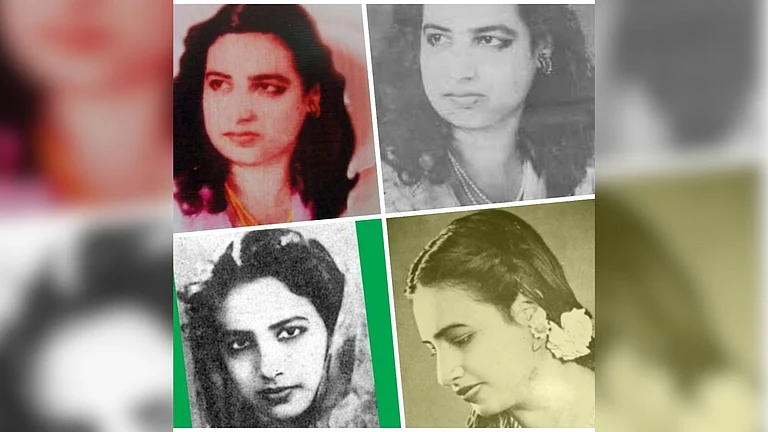
Jeelani Bano’s name is important in the history of Urdu fiction with reference to female artists from several angles. She was born on 14 July 1936 in Badayun, a historic city in Uttar Pradesh that had also given birth to her fellow-Progressive female writers namely Ismat Chughtai, Ada Jafri and Aziz Bano Darab Wafa before her.
Her father Hairat Badayuni resided in Hyderabad for employment so she also called Hyderabad as her home. She attained initial education at home, she was not a formal student of school and college. She passed all exams until M.A. Urdu privately. She began her literary career in the scholarly milieu of home. Her first short-story Mom ki Maryam (Touch-Me-Not) was published in the annual issue of Adab-e-Latif, Lahore. In addition to short-stories, her novels Aivaan-e-Ghazal (1976) and Baarish-e-Sang (A Hail of Stones, 1985) and novellas Jugnu Aur Sitare (Fireflies and Stars, 1965) and Naghme Ka Safar (Journey of Song, 1977) have been published. An autobiography titled Mein Kaun Hoon? (Who Am I?) came out in 2014.
Advertisement
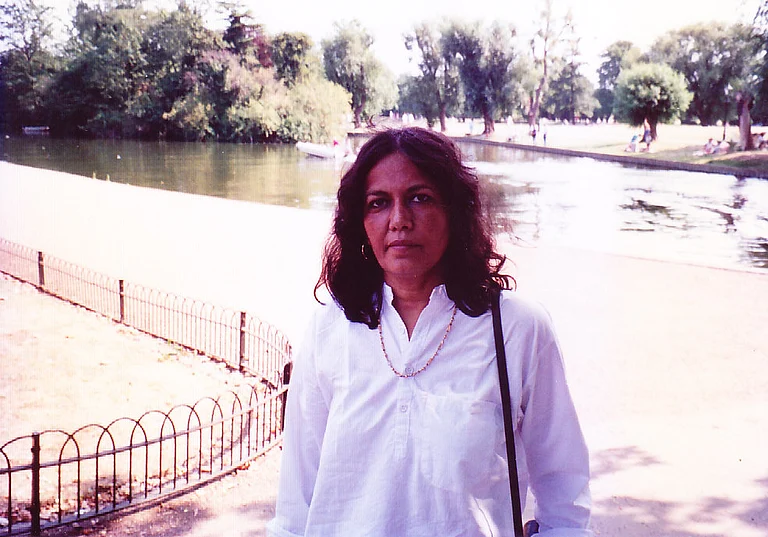
Jeelani Bano had been an active member of various literary and social organizations. She was also attached to radio and television. She received the Soviet Land Nehru Award (1985), Kul-Hind Award from the Maharashtra Urdu Academy (1988), the ‘Nishan-e-Imtiaz’ from Majlis Farogh-e-Urdu Doha (1998) and the Padma Shri from the Indian Government (2001). The Maulana Azad National Urdu University Hyderabad also bestowed upon her the honourary degree of D.Litt.
In the preface to her first short-story collection – titled Teen Lakeeren (Three Lines) - Jeelani Bano wrote: “I too haven’t written these stories, drawn three lines, so that all the Sitas of the world remain safe in the refuge of peace and safety and the Ravans of the entire world should be hung upside-down after stuffing their eyes with chillies.” (Roshni Ke Minaar (‘Lighthouses’), p. 17)
Therefore in her work sometimes grief and sometimes irritation is seen at parents’ preference of sons over daughters, dragging the wait for a suitable match without dowry and continuing to play with the feelings of women: ‘Father understood that to educate boys money has to be given on loan, to be received afterwards with interest.’ (‘Sati Savitri’, Nirvan, p. 79) ‘Now I am a red flag of danger – a horrible warning for the human skeleton, show people by tying me up on a bamboo.’ (‘Piyaasi Chidiya’, Ibid. p. 214-215).
Advertisement
But Jeelani Bano’s intellectual and artistic greatness is revealed in a fuller manner in two types of short-stories, one, those short-stories in which she has revealed the thought of psychologically-ill individuals with the technique of free association of ideas with great excellence; and secondly, the short-stories in which she has presented the severity of collective problems with such artistic feeling that to distinguish between the Indian and Pakistani hungry appears cruel.
See a few examples: ‘Where only the lights of the full moon settle, the pieces of whose sons are lying scattered on the hills, whose brothers have died from the clubs of torture by the landowner, whose husbands are presenting themselves for the deep ditches.’ (‘Roshni Ke Minar’, Roshni Ke Minar, p. 358). (After sale of the daughter for removing the hunger in the house) ‘The ditch of the belly is too great brother, it cannot be filled with the corpse of just one woman.’ (‘Mitti Ki Gudiya’, Ibid. p. 79) ‘You are collecting donations for the dance performance, but with what name should I apply for the fund for my father’s medicine, which appeal should I prepare.’ (‘Bhanvar Aur Chiragh’, Ibid. p. 131) ‘All day I used to pass beneath the open sky only two or three times for some special need, who cares if this sky be India’s or Pakistan’s.’ (‘Doshaala’, Ibid. p. 42-43)
Advertisement
With Jeelani Bano, generally, the ups and downs of the familial and collective life of middle-class Indians are presented, but as noted before, at a pure human level, although when she talks about divided families with reference to relations and traditions, or mentions the decline of feudal values, the milieu and class attitude of her characters emerges in front. ‘What with the creation of Pakistan, it took away in marriage all traditions, principles along with it.’ (‘Aik Anaar’, Ibid. p. 214). ‘To hell with this Raj which robbed our children’s peace and comfort, relegated us in our old age, today the days have approached that our children wander seeking the support of you and me.’ (‘Dreamland’, Ibid. p. 53)
.jpg?auto=format%2Ccompress&fit=max&format=webp&w=768&dpr=1.0)
Here semi-educated people have a delusion that mental anxieties are created by merely suppressing sexual attraction although poverty, unemployment and deprivation can very much make the whole society face psychological anxieties and one feels reading a relatively recent short-story of Bano Mein Aur Mera Khuda (Me and My God) that how she had united the two circles of her thought; the central character of this short-story is a hungry and unemployed person who has gradually become alienated from the sense which cannot solve the contradictions on the face of the earth, and neither could he succeed in the court of cognition.
Advertisement
Another of Jeelani Bano’s short-stories Kifayat Shiyaar (Thrifty) too is a living proof of her deep psychological foresight rather the characters and ambience of this short-story bring it opposite to any memorable short-story of Rajinder Singh Bedi. Jeelani Bano’s short-stories also seemed to fully express social realism. The background of most of her short-stories was the special feudal system of Hyderabad. The colour of Premchand was dominant upon her social realism; Aaina’s old mother under the influence of insensitivity and moral weakness created as a result of economically adverse circumstances fills her belly by stealing her sick paternal grandson’s food but like Madhu and Ghisu (Kafan), there is no knock upon any door of her heart and mind about a feeling of guilt. Dreamland, Nirvaan, Chhutkaara, Chammiya, Raat Ke Musafir, Chori Ka Maal, Sati Savitri and Talchhat are short-stories reflective of social realism.
The ordinary middle-class woman who is a victim of domestic politics was also the central character of Jeelani Bano’s short-stories, who is busy in the struggle for the attainment of her made and unmade identity in various eras. On one hand is a woman who appears to relate the woeful tale of her helplessness and inability and on the other hand there is a woman bearing socialist ideas raising a voice against injustice too. Her short-story Scooter-Vaala describes the mental confusion resulting from the superstitions and dispersed beliefs of women beautifully.
Jeelani Bano had crafted a short-story ‘Kedara’ (Nirvaan), in which she had fully demonstrated her acquaintance with music but the manner in which she had mixed this acquaintance with political and social consciousness in her most recent short-story Zill-e-Subhani (Shadow of God) is rarely found. See a few examples: ‘Moon, sun, all these very much are of use in stage dramas and cultural programs, so we have been ordered by Zill-e-Subhani that until he is not ready, the sun should not rise.’ (‘Alfaaz’, Afsana Number, p. 110) ‘Is there a famine in our country that these birds are moving towards the border, this will create disrepute of our country, Prime Minister, from tomorrow, all the birds flying towards the border should be killed.’ (p. 113). ‘The old musician had now reached there in the intoxication of the raag where there was light everywhere in the complaint, many a colour were scattering.’ (p. 113-114) ‘Suddenly it became dark in the whole country.
Because instead of the sun, the notes of Bhervi had come within range of the fire, which used to track the sun daily from the sky and the abyss.’ (p. 115) After Surendra Prakash’s short-story Bajooka this was the second short-story written by an Indian short-story writer in the past years which we felt had been written keeping in view our Ziaist situation.
In India, the attempt to demolish the Babri Mosque, the massacre of the Muslims of Gujarat and the increase in the feeling of lack of security of the Muslims there on a collective basis are topics upon which we Pakistanis had an ability to comment sympathetically a few decades ago, but we ourselves due to our violent societal tendencies do not have the right to opine upon someone’s narrow-mindedness or prejudice; however this is a reality that in the new short-stories of Jeelani Bano, the grief and frightened bitterness of the Muslims of India had been narrated, but at the same time she tried to raise some exemplary characters opposite the political forces sullying the democratic, secular and enlightened face of India.

See an extract from Dasht-e-Karbala Se Door (Far From the Karbala Desert): ‘I am actually that weak person who had been born in the time of Imam Hussain but did not have the courage to be part of the devotees going with him.’ (Sookhi Rait, p. 11) or then in her short-story Aik Poori (One Poori) even an inspector is protesting upon people being killed after terming them terrorists: ‘But sir, we cannot shoot them. We have very much captured and fetched them from homes. They are village folk.’ (Ibid. p. 75). But Jeelani Bano’s creative power was at her height at the time when she mentioned some child’s smile, a woman’s broken heart and the changed time in her home (Hyderabad), the doll and doll-house are two rather very much a single enchanting impression of her fictional universe.
See some parts of her recent short-story Gudiya Ka Ghar (The Doll’s House): ‘Sleeping under the mosquito-net of the moon and stars, upon the bedstead with gold and silver feet within the adorned bedrooms of the elevated porches, the delicate princesses wearing bell-bottoms and coatees, sitting upon the footpath of the road, were turning the pages of Marx’s ‘Capital’, and arriving bridegrooms wearing diamond necklaces for them, mounting elephants, wearing turbans of real pearls upon brocade shervanis, squandering gold coins with both hands; were repeatedly searching the empty pockets of their colourful bush-shirts in that could they buy a ticket for their girlfriend or not – if someone is happy then to let them be happy is the greatest virtue – poor Vanita has gone mad, didn’t you find out? Prakash did not marry Vanita.’
In both her novels, Aivaan-e-Ghazal and Baarish-e-Sang, Jeelani Bano has portrayed the social status of women and their circumstances and problems in the feudal milieu and society of the Hyderabadi state. She has described the tragedy of upper and middle-class women, where they live a life of helplessness, suffocation and oppression. Her female characters are different from the female characters of other novels. She gave central importance to female characters in her novels.
Jeelani Bano realistically portrayed the oppression and exploitation of these women in feudal society. The image of a woman which Jeelani Bano presented in her novels, according to it, she is like a strong rock. She knows how to combat every type of circumstances. She bears every type of misery for her husband and children after marriage, giving preference to their happiness and comfort by negating her desires. According to Jeelani Bano, a woman is not only compelled and helpless, rather she also knows how to raise her voice for her rights.
From Roshni Ke Minaar through Baarish-e-Sang to Raasta Band Hai (The Road Is Closed), her journey spread over more than half a century. It was a bright and grand journey in which she dominated the scene of Urdu fiction like few others since and after.
I would like to end this tribute with what she herself once stated why she wrote: ‘There is just one purpose of my writing continuously that a single line written by me should give someone the power to speak the truth, the spirit to call a thief a criminal.’
*All the translations from the Urdu are by the writer.
Published At: