Chitrangada Satarupa delivers one of 2026's strongest performances in Indian independent cinema.
Set across Mumbai and Frankfurt, the film explores acting, depression and emotional isolation.
Aditya Kripalani's 118-minute drama succeeds emotionally despite an uneven narrative structure.
Main Actor Nahin Hoon Review | Chitrangada Satarupa Leaves You Staring At The Screen Long After The Film Ends
Aditya Kripalani's chamber drama about acting, loneliness and self-worth works best when it stops trying too hard.

Summary
Sometimes, the loneliest people are the ones constantly performing for others. Not on stage, not in front of cameras, but in everyday life. Pretending to be fine. Pretending to be needed. Pretending to still have purpose. Main Actor Nahin Hoon understands that feeling deeply, and for large stretches, it captures it with remarkable honesty.
Written, directed and produced by Aditya Kripalani, the India-Germany co-production unfolds almost entirely through a video call between two strangers in Mumbai and Frankfurt. It sounds limiting on paper, but the format slowly becomes the film's biggest strength. The distance between the two characters starts to feel emotional rather than physical.
The story follows Mouni Roy, played by Chitrangada Satarupa, a struggling actor in Mumbai carrying years of frustration and exhaustion beneath her confidence. Opposite her is Adnan, portrayed by Nawazuddin Siddiqui, a retired banker in Germany battling depression. What begins as an online acting session slowly turns into something far more personal. Somewhere between acting exercises, awkward pauses and emotional breakdowns, the two begin to find pieces of themselves in each other.
The film constantly asks one central question: what does it really mean to be an actor? Not professionally, but emotionally. How much of survival itself is performance?
Kripalani explores this through long conversations and acting workshops that blur the line between therapy and performance. At times, the film genuinely shines here. There are moments where Mouni guides Adnan through emotional exercises and suddenly, the screen no longer feels like a screen. It feels intrusive in the best possible way, as though you are witnessing two people exposing parts of themselves they normally hide.
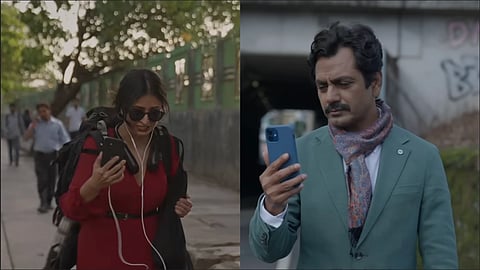
A Still From Main Actor Nahin Hoon YouTube
The Mumbai portions are particularly effective. The city is shown in two very different phases—one is crowded, restless and aspirational; the other feels lonely and boxed in. There is a recurring use of gridded windows and confined interiors throughout the film, which becomes one of the strongest visual metaphors in the narrative. These characters are trapped long before they realise it themselves.
Advertisement
Chitrangada Satarupa is extraordinary here. There is no other way to put it. Her performance carries an emotional sharpness that never feels rehearsed. She moves between anger, vulnerability, humour and complete emotional collapse with startling ease. Even in silence, her face is constantly doing something interesting. More importantly, she understands the exhaustion of being an artist who no longer knows where ambition ends and self-worth begins.

A Still From Main Actor Nahin Hoon YouTube
There is one particular quality she brings to Mouni that elevates the character beyond writing—dissociation. The feeling of existing outside yourself while still performing normally for others. It sits beneath many of her scenes, especially when she slips in and out of acting exercises so effortlessly that you begin to question where the character ends and the performance begins.
It is one of the strongest performances seen in an Indian independent film in recent years.
Nawazuddin Siddiqui, however, feels surprisingly restrained here. Not bad, but restrained. His performance works in parts, particularly during moments where Adnan's depression surfaces without explanation. You understand this man's loneliness almost instantly. But the character never fully develops beyond the emotional beats the script gives him. There are stretches where it feels as though Siddiqui could have pushed the role much further emotionally.
Advertisement
That becomes one of the film's recurring problems.

A Still From Main Actor Nahin Hoon YouTube
The writing often feels emotionally intelligent, but structurally uneven. There is very little build-up to certain revelations. Past trauma appears suddenly rather than organically unfolding through the narrative. The emotional transitions occasionally feel abrupt, as though scenes are missing between major moments.
The film also becomes slightly repetitive with its acting exercises. While the intention behind them is understandable, there are simply too many. At a point, the repetition starts to slow the emotional momentum rather than deepen it.
Still, the larger idea behind these scenes remains compelling. The film suggests that acting itself can become both an escape and a form of self-destruction—a game people play to survive reality. For Adnan, especially, acting becomes less about performance and more about temporarily escaping depression. Mouni becomes a teacher, therapist and emotional mirror all at once.
The film's strongest scenes emerge when it stops intellectualising itself and simply allows these two damaged people to exist together.
Advertisement
There is also an understated conversation happening around self-acceptance and addiction. Mouni's alcoholism is never overdramatised and that works in the film's favour. The sadness comes not from spectacle, but from routine. On the other hand, you find this man who has spent years disconnected from himself, now desperately searching for inspiration because, without inspiration, art becomes impossible.
And the film understands something many stories about artists fail to grasp: inspiration is not a luxury. For some people, it is survival.
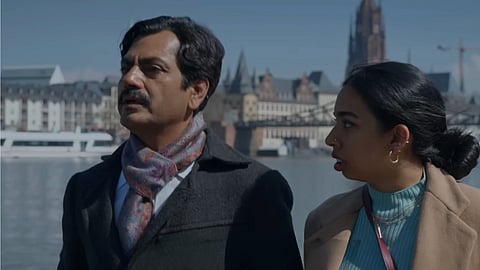
A Still From Main Actor Nahin Hoon YouTube
Visually, Main Actor Nahin Hoon keeps things intimate and stripped down. The camera rarely distracts from the performances. Instead, it stays close to faces, pauses and emotional discomfort. The Frankfurt and Mumbai locations also create an interesting contrast without romanticising either space.
The ending lingers, not because it offers easy closure, but because it leaves behind emotional residue. You keep thinking about these people after the screen fades to black.
Advertisement
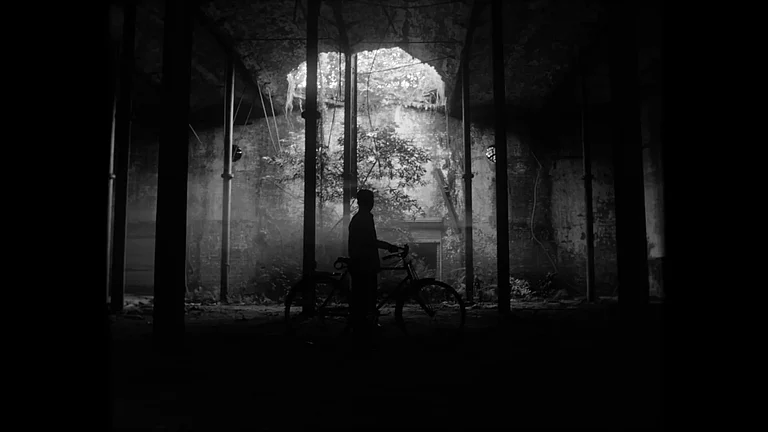
Main Actor Nahin Hoon is imperfect. The writing occasionally loses grip, and the emotional pacing can feel uneven. But when it works, it works beautifully. Anchored by a phenomenal Chitrangada Satarupa and an emotionally rich central idea, the film becomes less about acting and more about the exhausting act of being human.
Published At: