A Teacher (2020), The Tale (2018), An Education (2009), Haraamkhor (2017), Notes on a Scandal (2006) and Vladimir (2026) are some films and series that explore grooming and consent.
Even if the groomed don’t fully understand what they are consenting to, the groomer almost certainly does.
The question one must ask is why, in the absence of equality, the burden of responsibility is shifted onto the one who had the least power to begin with.
The Violence Of Being Chosen: Grooming And The Illusion Of Consent
The films and series that have foregrounded the act of grooming in the last couple of decades linger on the same uneasy question: what does it mean to be “chosen” by someone who already holds power over you?

Summary
In a university hearing, John (John Slattery), a professor on the verge of retirement, faces complaints from former students alleging sexual misconduct. His wife M (Rachel Weisz)—his colleague, and the flawed centre of the Netflix series Vladimir (2026)—keeps returning to a refrain: “It was a different time.” She insists that being groomed by a professor once passed as a kind of “casting call” when she was young. Standing before a hall full of undergraduates, she turns her defense into a provocation.
“Aren’t you adults?” she asks.
The question hangs there, loaded. Because if they are—if students in their late teens and early twenties can claim adulthood, autonomy, consent—then, by her logic, her husband’s actions begin to look less like abuse. She reframes the argument, dissolving the question of power altogether. When a student points out that her husband’s relationships with his students were never on equal footing, she responds: “But who is ever on equal footing?”—a question the series returns to and one this article cannot ignore.
Vladimir Still IMDB
The series offers a counter-narrative through Lila (Kayli Carter), one of the complainants who had to drop out of college following the so-called “consensual” affair. Now in her late twenties, Lila recalls, “I was ashamed of myself. I thought professors were gods. I was just a townie kid, and all I had was being good at school… I was so vulnerable back then, and him doing that, it wasn’t… kind.”
That is the thing about being young—you feel old enough to know what is good for you, but are too young to grasp the consequences. Even if you don’t fully understand what you are consenting to, the groomer almost certainly does. The life you imagine ahead can cleave apart in ways you never anticipated, while theirs often moves on, untouched.
To think this through, we must turn to A Teacher (2020, dir. Hannah Fidell), The Tale (2018, dir. Jennifer Fox), An Education (2009, dir. Lone Scherfig), Haraamkhor (2017, dir. Shlok Sharma), Notes on a Scandal (2006, dir. Richard Eyre) and, of course, Vladimir (2026, dir. Shari Springer Berman, Robert Pulcini, et al)—stories that linger on the same uneasy question: what does it mean to be “chosen” by someone who already holds power over you?
Advertisement
Haraamkhor Still IMDB
The Role of Gratefulness
For the groomer, crossing boundaries is a game with shifting checkpoints. They get to play God in a carefully constructed world of their own making, where narratives are controlled and reality is manipulated. Adoration is cultivated. Adulation follows. It is in the interest of such fragile gods to manage the lives of those they groom closely, lest they speak and undo the myth. Beneath the veneer of benevolence, however, lies a gnawing fear of exposure. To play God, after all, is also to risk everything. One misstep and the edifice collapses.
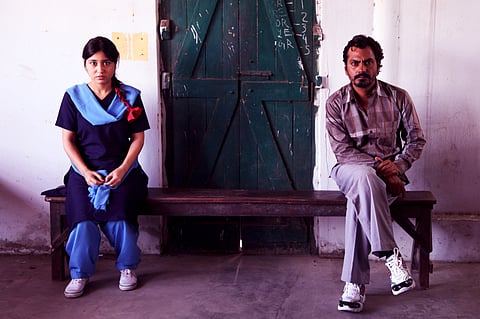
At the same time, gratefulness shapes these dynamics. 17-year-old Eric (Nick Robinson) in A Teacher is grateful that Miss Wilson (Kate Mara) tutors him for free and later bails him out of a house party raid. 13-year-old Jenny (Isabelle Nélisse) in The Tale feels grateful to be ushered into the world of adults by her horse-riding teacher, Mrs. G (Elizabeth Debicki) and her running coach, William (Jason Ritter). Sandhya (Shweta Tripathi) in Haraamkhor is grateful for attention from her math tutor, while her mother is dead and her father detached.
Advertisement
Notes on a Scandal Still IMDB
These relationships (for lack of a better word) begin on the precarious disadvantage of gratefulness, where the indebtedness of the young becomes the leverage of the old. Yet, when these relationships are exposed, those who groomed the child often expect the child to carry the blame—or even take it on their behalf, as if they were the adult. “But he is quite mature for his age,” Sheba (Cate Blanchett), a high school art teacher, confides to a colleague in Notes on a Scandal. “But he pursued me,” Mrs. Wilson tells her brother in A Teacher.
In these narratives, even the women struggle to accept responsibility. Sheba’s failing marriage and fractured family life, and Mrs. Wilson’s loneliness and difficult childhood, are real circumstances that offer context for their choices. However, excuses rooted in a troubled life, the fear of ageing or the sudden panic of middle age are never enough to justify the abusive bonds they forge with their students, defined by power, exploitation and conflict of interest.
Advertisement
Too Young for Old, Too Old for Young
Across these storylines, what remains constant is the child, the groomed, seeking validation. Often coming from troubled homes, they look for a way out, perhaps even a shortcut to growing up—a hypothetical place where it might hurt less. The affair, then, becomes a carefully guarded secret, limited in access and therefore seemingly precious.
One of John’s complainants in Vladimir voices this when she says, “I felt chosen.” Another claims, “I thought he was interested in me because he liked my writing.” Eric in A Teacher stands in front of the mirror, buoyed by the pride of being chosen by his English teacher, and says, “I am the man.” To be chosen is to be granted early entry into the world of adults.
An Education Still IMDB
But these relationships always end in disaster. Often, it takes a third party to expose the secret and the charade crumbles. What remains is the realisation that it is too late to be young again and too soon to be old. Time stands still for the student, as the world moves on.
Advertisement
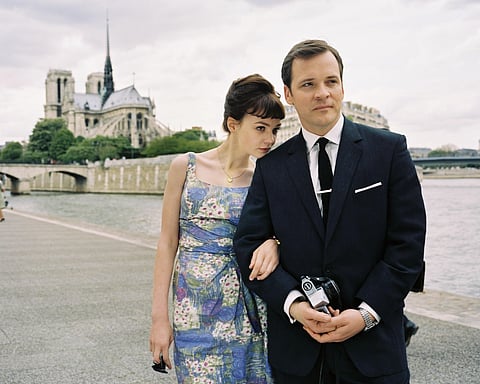
Jenny (Carey Mulligan), in An Education, after dropping out of school, meets her teacher to ask for a second chance. Reflecting on her experience of being involved with an older man, she says, “I feel old, but not very wise.”
You lose a great deal in this exchange, except perhaps the right to decide, on your own terms and in your own time, whether you were too young for it to be called anything but abuse.

The Aftermath
The most scathing portrayal of this dynamic appears in Hannah Fidell’s A Teacher. A decade later, Eric confronts Mrs. Wilson. Now a mother, she is eager to move on. Forgiveness, for her, becomes a means to forget. Even closure, she assumes, must arrive on her terms. But Eric, now an adult, marked by the years that followed, describes how the relationship pried him open. “I lost years,” he says, still trying to understand how he was made to feel responsible for something he did not initiate.
While Mrs. Wilson loses her job and serves time in prison and Sheba is hounded by the media when news of her affair breaks, the men in these stories often go unscathed. This disparity is not by accident—the man in power frequently operates within a system that shields him, sustained by networks of peers who either admire his audacity or are invested in preserving a culture of professional complicity, while women rarely enjoy the same protection.
The Tale Still Youtube
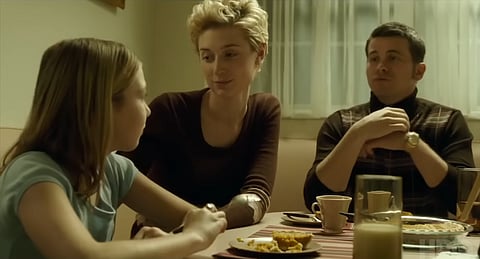
The students, on the other hand, pay the price in damaged boundaries. As Jenny in The Tale reflects, experiences like these warp one’s relationship with peers, with one’s body, with the self. It is the student who carries the burden of the relationship, often for life.
Coming back to M’s question, “Who is ever on equal footing?” one can argue that inequality is precisely why these relationships cannot be defended. Classrooms are not neutral spaces. To teach is to hold power—over attention, over evaluation, over a young person’s self-worth. When one person already holds institutional, intellectual and emotional authority over another, consent is inevitably shaped in the shadow of that imbalance. Equality may be aspirational, but prevalent power imbalances do not absolve the powerful from responsibility.
The question, perhaps, was never whether anyone is ever on an equal footing in a relationship. It is why, in the absence of equality, the burden of responsibility is so often, almost conveniently, shifted onto the one who had the least power to begin with.
Published At: