Stefan Borsos is a writer, curator, film & TV scholar and sinologist.
Since 2020, he has been the programmer for South Asia, since 2022 for Southeast Asia and since 2023 for genre films in general at the IFFR.
He has consistently pushed for sizeable representation of Indian cinema, particularly Tamil and Malayalam films, often bringing the work of lesser-known independent directors to a global audience.
Stefan Borsos Interview | "No Cinema Needs To Be Discovered Or Validated By Any Euro-Western Programmer"
Stefan Borsos, programmer of the International Film Festival Rotterdam, talks to Outlook about programming, funding, film festivals and Indian cinema.

Summary
Stefan Borsos is a writer, curator, film & TV scholar and sinologist. He founded the CineAsia film magazine in 2000 and started programming work with the first edition of the Cineasia Film Festival Cologne in 2001 being mostly responsible for Hong Kong, Singaporean and South Korean films. In 2004, he coordinated the German section of Europe’s first “Hong Kong Film Panorama”. After that, festival work focused on advising various film festivals regarding mainly Hong Kong/Chinese, later on South Asian films, helping to put up the International Film Festival Rotterdam (IFFR) showcase on recent Tamil Cinema, “House on Fire”, in 2018. Since 2020, he has been the programmer for South Asia, since 2022 for Southeast Asia and since 2023 for genre films in general at the IFFR.
He has consistently pushed for sizeable representation of Indian cinema, particularly Tamil and Malayalam films, often bringing the work of lesser-known independent directors to a global audience. He was responsible for bringing several Bengali films to the 2025 festival, continuing his work in highlighting Indian independent cinema.
In this conversation with P.K. Surendran for Outlook, Stefan Borsos talks about programming, funding, film festivals and Indian cinema. Edited excerpts:
What makes a good curator / programmer?
I guess that depends a bit on the role and the types of curation you're conducting. Different projects and (regional) areas may require different tools and forms of knowledge. In very general terms, a curator is hired for his/her knowledge, knowledge in terms of films and film history for example, but also knowledge in terms of someone's network, connections etc. For me personally, a good curator needs openness, broadness and, most importantly perhaps, the willingness to think out-of-the-box. They require the ability to use all the necessary, sometimes offbeat tools for achieving one's goals. For this, one also needs to stay as independent as possible. Of course, as a curator at one of the bigger film festivals, you need to negotiate the interests of various stakeholders. But it's crucial to keep an independent mind. In the best-case scenario, you also don't simply programme single films put together arbitrarily, but curate a regional selection across sections where you have (thematic etc.) links between certain films or, even better, refer to other parts in the whole programme (e.g. in Olaf Möller's Cinema Regained section). Much of this happens by chance and intuition. And while it's rarely obvious to the regular audiences, I consider it the beauty of programming.
Advertisement
According to you, what is the definition of a good film?
There's no such thing as a single definition of a 'good film'. But whatever type of cinema it is, hermetically abstract or unabashedly popular and everything in-between and beyond, it needs to connect in some way. So, it's a very personal process, which is sometimes hard to pin down intellectually. I also don't expect anything from any film, filmmaker, film culture or region. It doesn't have to perform any (cultural, aesthetic etc.) functions for me. A film is like it is. And as such it connects or it doesn't. Very simple. Of course, I have certain preferences, for certain aesthetic approaches for example, but even those are always relative.

PK Nair was the Director of National Film Archives of India. His philosophy was that even a commercial or ‘formulaic’ film deserves preservation because it tells us about the clothes people wore, the slang they used; in essence, their way of life. What are the criteria you use to select films?
Advertisement
First of all, I don't consider popular cinema in any sense inferior to any other form of cinema—and not only for its sheer sociological aspects. Popular cinema is an art itself. As for the selection criteria, of course, the film itself always comes first—how it communicates with you, how it touches you. As already pointed out, this is rather personal. Then, you want to present a variety of creative voices which offer an insight into a cinematic culture with a certain broadness at a given time, however limited it is for the sheer numbers of films made each year. Of course, a festival's programming framework circumscribes your possibilities meaning that films need to fit into certain sections. For example, our Limelight section is showcasing more accessible types of films like more mainstream-ish arthouse fare and popular films in general. So, an experimental film has no place there. Sometimes, people ask why programme popular films in the first place. Most importantly, I like and appreciate them. Secondly, you want to provide audiences with different experiences, including something fun. Finally, why should I leave the space of Limelight for example only to Euro-American films? Showcasing films there doesn't take anything away from the indies. It's about working the structure rather than selling out.
Finally and quite importantly, we always need to ask ourselves why we want to showcase a certain film (beyond its quality), to which purposes, and equally if and why a film would need IFFR. What does it gain from our platform? Does it really need us? To be self-reflective in such a way is paramount in my eyes. Of course, curating an archival programme in one of our focus programmes is a different game since you usually are not making/breaking/influencing careers in the same way.
Advertisement
Indian cinema was in spotlight at the IFFR 2023 with over 30 titles presented at the two-week event. The majority of these were part of a special section that you curated, titled “The Shape of Things to Come?” that explored whether "the institutional success of right-wing Hindu-nationalist groups and the persecution of dissenting voices a sign for the shape of things to come–and not only in India?” Please tell us about your views on the political situation and the status of Indian cinema.
From my very limited point-of-view, the international attention is gone for quite a while now, yet the situation for many minorities and for the freedom of speech seems to have worsened considerably. This is certainly also true for Indian cinema if we look at both institutional censorship and, probably even more importantly, self-censorship. And while I love maximalist cinema, I find the recent trend of combining the southern penchant for increasing cinematic violence with propagandistic action or war stories in Hindi cinema equally worrying and exhausting. If we look at indie cinema, especially documentarian works, it is clear that they need more international exposure. We at IFFR also need to look more closely at this gap. The discourse needs to be continued, needs to be visible internationally.
Advertisement
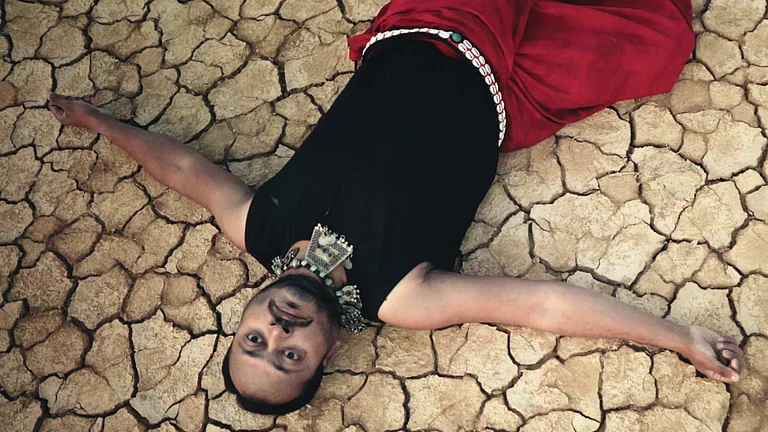
You have pointed out that South Asian cinema often appears to be influenced by a cinematic aesthetic reminiscent of that established by Apichatpong Weerasethakul, leading to a sense of fatigue among European film festival programmers. This constructive criticism is quite necessary, especially since many South Asian filmmakers, including those from Sri Lanka, tend to create with a European audience in mind, seeking acceptance. What are the implications of this trend for the future of South Asian cinema in European festivals?
I guess there's a slight misunderstanding. The reference was made explicitly to Southeast Asian cinema and a certain 'exotic mysticism'. But, of course, his influence is more far-reaching than only the Southeast. And there are festivals and programmers still reacting positively to this. Making a film in a certain tradition doesn't automatically mean that you're a copycat filmmaker or that you're catering to a certain trend. Maybe, it is simply a shared sensibility or inspiration. However, it can become a problem if programmers jump onto such a trend. As we all can see, the space for Southeast or South Asian cinemas is limited at the international film festivals. And, thus, the representation of a certain culture or region becomes even more limited and superficial if a certain type of film or mode or aesthetics is favoured over others. And let's not kid ourselves: programmers and curators always act as gatekeepers, whatever they say (and I'm not excluding myself here). That's a given. But you need to be conscious, clear and open about it.
I’d like to ask you about funding, coproduction, etc. Jean-Luc Godard once said that “order of money determines ordering of images”. If so, restrictions / conditions will be attached to capital. How do you respond to this?
I would like to refrain from pointing fingers to filmmakers. However, various funds, workshops, labs, markets and co-production models tuned towards the festival circuit and European/North American art house cinema distribution inscribe themselves in the films in some way or another. In fact, to no surprise. When talking to young filmmakers about this, I always suggest being very conscious—or at least try to be as much as possible. In the end, it's a choice—do I want to stay fully independent in an artisanal way (which hardly any filmmakers can afford nowadays) or do I want to engage with all these institutions at the risk of my own personal approach getting diluted. Having said that, not every outside influence needs to be negative. And for sure there are filmmakers, maybe with good producing partners who share their vision, who are successful in navigating the system, but keep their independence intact. However, the more stakeholders are involved, the more complicated things can get—and people rarely get involved without having their own preconceptions, opinions and expectations, naturally so.
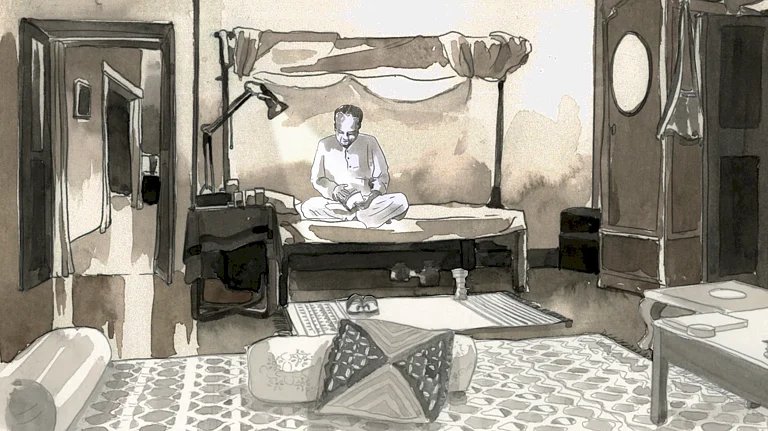
In the new world order, culture is no longer a source of spiritual enrichment; it has become commodified. As Avikunthak says, “funding bodies and production companies are not engaged in cultural philanthropy; they are investing in cultural products that will generate returns through festival circulation, art house distribution, and international sales. Therefore, the ‘independence’ of these productions is illusory." They are commercial ventures designed to serve specific market segments. Your comments, please.
Independence is always relative. And while we may have a vague idea of this independence, it makes sense to ask: Independence from what? In what sense exactly? And why? And, of course, funding bodies, production companies or distributors have never been in the business of sheer philanthropy. Meanwhile, it is certainly clear that the festival circuit has evolved into a whole ecosystem with attached institutions, markets and other business components. What has been getting increasingly lost in this process is the festival as a place for discovery. Of course, this expression has a whiff of the past, maybe even a certain negative, quasi-colonialist tint with the image of a white person finding the foreign cultural nuggets and presenting them as part of 'world cinema' to an equally white audience. Truth is, no cinema needs to be discovered or validated, certainly not by any Euro-Western programmer. Everything is there for everyone to see. You only need to look at it. Yet, despite the term stemming from the past, providing audiences, critics, other filmmakers etc. with the opportunity to make discoveries is essential for any film festival. But it seems that many programmers and critics alike have lost their curiosity and rather go by the book.
The International Film Festival Rotterdam (IFFR) gives significant importance to human rights, social issues, and marginalisation. The festival positions itself as a platform for challenging, independent voices that address urgent societal issues. Your thoughts on this?
Yes, there are various initiatives at IFFR. It is a founding member of the International Coalition for Filmmakers at Risk and there's the recently created Displacement Film Fund. In terms of the programme, there's a need and the clear mission to make all those issues visible. For example, last year, we took the 70th anniversary of the Afro-Asian conference in Bandung to present a focus programme which was both historic and contemporary and which stretched beyond the focus per se. Included was the world premiere of the restored version of the Indonesian classic Turang from 1957. And Turang was directed by Bachtiar Siagian. Siagian was a prominent leftist filmmaker who was persecuted in the Communist purge in 1965. And 1965 was a common theme in a number of other new films that year including Whispers in the Dabbas by Garin Nugroho, Shaping the Future by Putu Kusuma Wijaya, Gowok: Javanese Kamasutra by Hanung Bramantyo and a documentary on Siagian called Bachtiar by Hafiz Rancajale. So, we had these wonderful thematic connections across the whole programme. And this mix of very different films would give you a certain insight into the historical facts, but also what this event did and still does to the society and its people.
Recently, you have selected many Malayalam films of lesser known filmmakers like Krishnendu Kalesh (Prappeda) and Midhun Murali (Kiss Wagon). What is your opinion about Malayalam cinema compared to other languages in India or South Asian cinema in general? Lots of young filmmakers are making films on themes like gender, sex, religion, LGBTQ, etc., which were never discussed in Malayalam cinema earlier. At the content level, they may be ‘progressive’, but at the formal level, they are conventional.
I would argue that both Krishnendu Kalesh and Midhun Murali are exceptions to this, but otherwise, yes: themes, subject-matter, socio-political agendas often seem to come first, whereas form is secondary, almost arbitrary. And we're again talking about some form of realist cinema which is all over the place in Indian independent cinema in general. On the other end of the spectrum, and that seems to be a Keralese speciality, are films where its makers seem to lose themselves in formal quirks and playful surrealisms which hardly go anywhere—or which at least don't speak to me personally. That's why I appreciate Krish's and Midhun's work so much. In different ways, they use highly original, but equally meaningful approaches. Otherwise, if we talk about mid-budget genre-oriented films, a certain 'quality television fatigue' has crept into many examples of the recent wave of crime stories—be it in the cinema or television—meaning that their earlier success led to a respectable, but unexciting and rarely interesting classicism both in form and storytelling, with an unhealthy emphasis on plotting. I don't see this as an issue with the genre itself, but with the recent trend in which films don't take any risks, but rather follow the earlier successful templates.
You have travelled to India to scout for new talent. What was your experience? Earlier you have selected lots of Malayalam films, but recently, your attention has shifted to Tamil cinema.
My serious engagement with contemporary South Indian cinema started with master filmmaker Ram and his Kattradu Tamizh (after Mani Ratnam and Kamal Hassan) and my job trajectory at IFFR with P.S. Vinothraj's Pebbles. So, Tamil cinema was, is and will always be there in some way I guess. It has such a rich cinematic culture on many levels that you simply cannot ignore it (though most international festivals still do of course). Malayalam cinema is equally very exciting, maybe a better place to expect the unexpected. It's no wonder I consider both Prappeda and, especially, Kiss Wagon as high points in my time at IFFR so far—and I continue to be on the lookout. I guess I was simply unlucky in the past two years. Sometimes, films were already released in the Netherlands ahead of the festival (we always need a Dutch premiere at the minimum outside focus programmes); sometimes the timing was wrong; sometimes it was limited space; sometimes I was not totally convinced; sometimes the filmmakers were not interested. But I'm working on it for IFFR 2027.
At the same time, of course, you cannot plan those things. Neither our unofficial spotlight on Bengali cinema in 2025 nor the most recent one on Bangladeshi cinema were consciously planned. Sometimes, these things come together rather miraculously in the process. Of course, I'm always looking at various possibilities at the same time, including Northeast Indian cinema, Gujarati cinema, Kannada cinema, Telugu cinema, cinemas in Sri Lanka, Nepal, Bhutan or Pakistan. Curating is always a work-in-progress in some way and complacency is no option. Next year's edition is always knocking on your door earlier than you think. And that's another beauty of programming: while there may be certain continuities, you have the chance to try again and make up for gaps, blind spots and mistakes—maybe not always directly in the following year, but at some point.
As for my scouting trips, I strongly believe in direct engagement with filmmakers and the various filmmaking communities. And I always feel very welcome and very grateful and I can say only positive things about my trips and meetings. I only regret that my limited time doesn't allow me to stay longer and visit more places.
In the age of AI, what do you think about the future of cinema? What will be the shape of things to come?
I'm not sure if I can contribute anything meaningful to this question. As usual with anything new, it comes with chances and dangers and it doesn't seem to me entirely clear which way it'll go. I guess I'm rather skeptical than euphoric or excited, but I also don't know enough about its various aspects to have a fully formed opinion. What I do know though is that we need some form of regulation and not let it go wild in the hands of a few globally-operating, highly influential tech companies. As for cinema, I guess it's put to some interesting use here and there within the more experimental areas such as Alexander Kluge's two recent feature films. But I wonder how it's going to affect mainstream cinema, especially if we look at certain below-the-line areas of work. Meanwhile, I also wonder what part it's going to play in the larger ongoing and upcoming cultural and medial shifts, for example regarding media consumption.
Published At: