Midhun Murali is a recipient of the Hubert Bals Fund for Script Development and Research from International Film Festival Rotterdam.
Kiss Wagon is created entirely without cameras or physical actors, adopting the structural form of a shadow play.
The film narrates the story of Isla, a courier girl who must deliver a ‘kiss’ to the right recipient. She travels through a region ruled by military to find the true beneficiary of the kiss.
Midhun Murali Interview On Kiss Wagon | Turning Constraints Into Possibilities
Recipient of the Hubert Bals Fund for Script Development and Research from IFFR, Murali talks about the making of this experimental film, authenticity of art, formalist filmmaking and more.

Summary
It is likely that our rich heritage of ‘pre-cinema’ art forms that inspired filmmaker Mithun Murali to utilise the techniques of shadow puppetry in his film, Kiss Wagon (2024). Created entirely without cameras or physical actors, the film adopts the structural form of a shadow play. It differs from conventional animation, where figures are typically rendered with clear detail; instead, it relies on dark, silhouetted forms.
The film narrates the story of Isla, a courier girl who must deliver a ‘kiss’ to the right recipient. She travels through a region ruled by military to find the true beneficiary of the kiss. Here, the state’s presence is defined by oppression and rigid controls. Religion, with its dogmas and festivities, also holds significant sway and various forms of exploitation persist. The film Kiss Wagon—featured within the movie itself—is banned, only to later resurface through underground channels. Isla is being shadowed by several individuals, who may be agents of the state or religious factions.
The film encompasses many more themes and characters. We encounter fragments of the past lives of Isla and others, yet these narratives are far from linear; they frequently diverge, converge, and part ways again. Beyond mere personal histories, the movie presents contrasting perspectives on sexuality and gender.
The director has received Hubert Bals Fund for Script Development and Research from IFFR. Speaking to P.K. Surendran for Outlook, Midhun Murali explained the making of this experimental film, authenticity of art, formalist filmmaking and more. Edited excerpts:
Kiss Wagon is very different even from the regular festival films, which look alike visually, and in terms of performance and pacing, ultimately leading to aesthetic homogenisation. What inspired you to make the film?
Most indie filmmakers, at some point, fall into the trap of ‘film festival aesthetics’. Unlike other art forms, filmmaking is expensive and time-consuming; the more money and effort we invest, the stronger the urge to seek validation through festivals. I was guilty of this with my first feature, Grahanam (2015). By trying to make a "tailor-made" festival film, I abandoned the "madly experimental" methods of my earlier short films and ended up with a bad imitation of someone else's style.
I was ashamed of that film, but the disaster taught me a hard lesson: I cannot create to please anyone but myself. I immediately made Humania (2017), a deeply personal project with the raw, underground feel of the 80s. During a screening, an audience member complained about the "intolerable" audio and "absurd" shots. When I asked her if it was a bad film, she replied, "No, but it is not like other films we screen here."
That was my turning point. I promised never to deviate from my artistic vision again. Whether working on Kiss Wagon or any future project, the choice remains simple: you can do what everyone else is doing, or you can create something unique that carries your own signature. The latter comes with the risk of total rejection, but it is the only way to remain an artist.
Advertisement
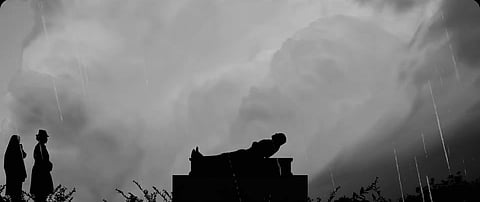
Kiss Wagon Still Youtube
I am eager to know the process and techniques used in the film.
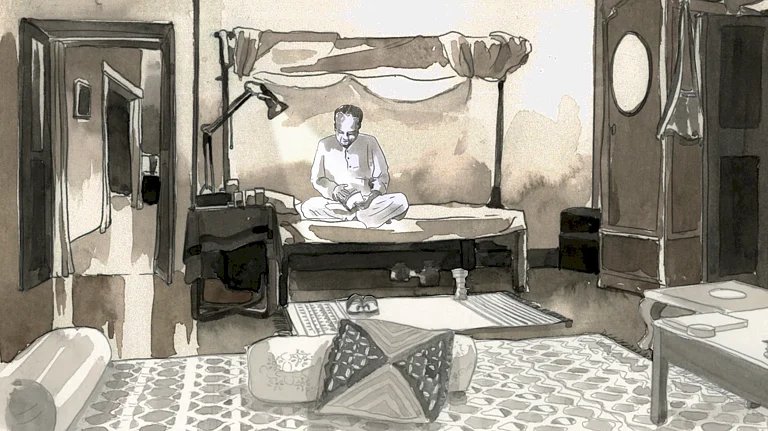
During COVID-19 lockdown, my creative partner Greeshma and I set out to challenge the actor-centric nature of cinema. We conceived Kiss Wagon, an experimental film that eschews ‘shooting faces’ to focus entirely on composition, editing and sound. Adapting a story from my Merchant Navy days, we spent three years meticulously crafting every element ourselves to ensure a purely personal vision. We composed and produced 14 songs and an original score in a bare-walled bedroom, embracing raw environmental sounds. Using a basic DSLR, we composited 3D-like images from cardboard cut-outs, mud and twigs. We bypassed our limited animation skills by using dynamic camera movements to create a sense of life.The final three-hour cut features over 2,200 shots, each built from 30–40 individual layers.
Completed in mid-2023, Kiss Wagon stands as a rigorous exercise in formalist filmmaking, designed specifically for the dedicated lover of experimental art.
Advertisement
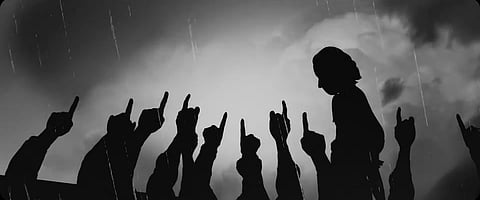
Kiss Wagon still Youtube
Although there is a primary narrative arc, it constantly bifurcates into various sub-stories as the film progresses, much like the sprawling branches and sub-branches of a tree. Doesn't this dense layering of narratives often leave the audience in a state of perplexity?
I believe religion is the root of most global conflict and, personally, it forced me to conceal my true identity for years. Kiss Wagon was conceived as a cinematic weapon to counter religious supremacy. To challenge the vast, meticulously constructed epics of holy books—which often rely on logical inconsistencies to enforce regressive ideas—I designed this film as an equally expansive 3-hour epic. It traces an ordinary girl’s evolution into a god-like figure through a fragmented narrative. Much like the audience, the protagonist starts in confusion, piecing together her identity through disjointed stories told by others. This structure places the viewer in the same search for meaning as the character. Unlike the religious texts it counters, Kiss Wagon is built with rigorous internal logic; there are no narrative contradictions or loose ends. Ultimately, the film serves as a ‘counter-holy book’—a massive, intentional work of art designed to confront powerful systems of belief.
Advertisement
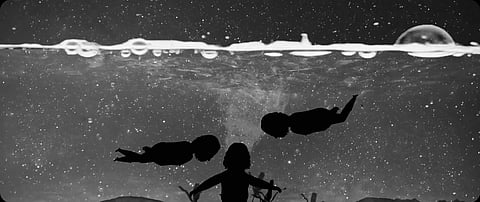
Kiss Wagon trailer Youtube
While we traditionally think of cinema as something we simply watch and hear, phenomenologists argue that it’s actually a ‘whole body’ experience. From this perspective, the screen isn't just a window; it's an environment that triggers our physical senses. Kiss Wagon gives such an experience.
I believe art—not just cinema—can transcend logic to create a visceral, subjective experience. Some viewers of Kiss Wagon felt ‘intoxicated’ by its sensory layer, even while the plot remained elusive. I relate to this; I often watch films by ‘switching off’ my brain to simply absorb the audio-visual textures. There are also filmmakers who consciously experiment with this idea. I have read about Gaspar Noé using a particular sound frequency throughout his film Irreversible (2002) to create a feeling of dizziness in the audience, combined with visuals that induce motion sickness. Jean-Luc Godard utilised 3D in Goodbye to Language (2014) not for spectacle, but to disrupt the viewer's perception of space, creating absurd perspectives that confuse the way we normally see and interpret images. While I love abstract, non-narrative films, my personal goal is to balance these radical techniques with a well-rounded narrative. However, I often find myself leaning toward style.
Kiss Wagon saw many festival walk-outs—not due to boredom, but because the audio-visual intensity became intolerable for some. I view this as a success; repelling an audience through sheer sensory power, without losing their respect for the craft, is a unique achievement.
Advertisement
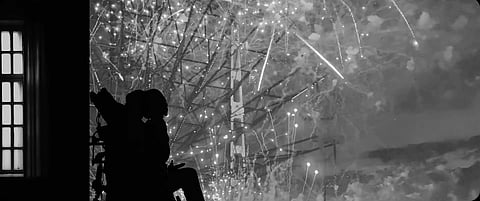
Kiss Wagon trailer Youtube
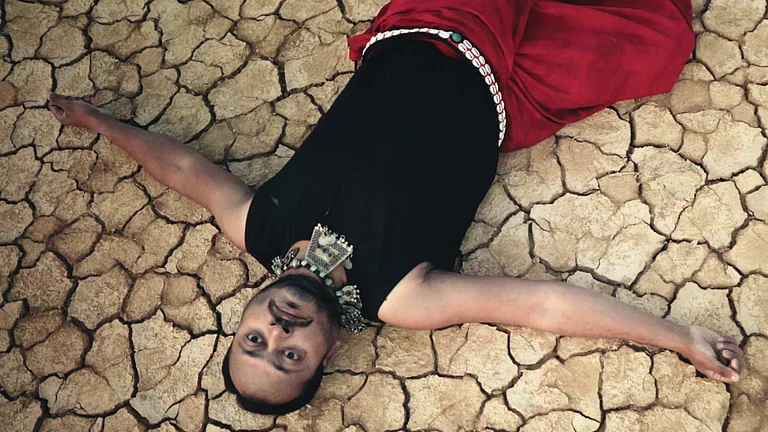
You use India’s storytelling tradition along with its shadow play image system. Are you trying to conceive an indigenous cinema? I ask this because our films are too Euro-centric.
We adopted the aesthetics of traditional shadow play in this film to reduce characters to silhouettes. By eliminating facial features, we forced the audience to look beyond the actors and engage with the broader artistry of the film. Creating an indigenous cinema, however, was not a conscious decision; I have never felt deeply rooted in one place. Instead, my style is a dialogue with nostalgia. The wonder I felt as a child watching mainstream Indian and Hollywood action films remains a core influence. By embracing those cinematic basics and filtering them through a radical, experimental lens, I’ve developed a personal language that honours the amusement of old-school cinema.
Many filmmakers cite lack of availability of funds as the reason for not making good films. How would you respond to this?
In 2026, digital accessibility means a filmmaker’s lack of funds is no longer an absolute barrier. If one is driven by a genuine love for the craft rather than industry glamour, remarkable work can be created with just a phone, a small team and a ‘run-and-gun’ approach. In fact, zero-budget filmmaking often grants an artistic freedom that mainstream productions, shackled by financial pressures, cannot afford. However, the reality is nuanced. While talent can overcome many hurdles, money eventually becomes a necessity for scaling a vision. Lack of funds remains a serious obstacle that often limits independent creators to ‘free’ locations like streets or forests, potentially preventing more complex cinematic visions from being fully realised.
Is it possible for films that challenge existing conventions of cinema to be screened in numerous screens and watched by a large audience?
Experimental films with radical styles or provocative themes usually need a ‘magic formula’ for box office success—casting an irresistible star. While recent hits like Poor Things (2023) and Kaathal (2023) proved this works, most independent filmmakers lack the resources to hire such talent. This creates a difficult dilemma—is it better to create a pure, uncompromising work that remains unseen, or to dilute the craft with ‘star power’ to reach the masses? Ultimately, we must ask: does a film exist for the critics and festivals, or does it only truly come alive when it reaches the public?
How do you visualise the future of cinema, especially in the age of Artificial Intelligence?
In the era of AI, everyone can feel like an artist. But I believe this fascination will eventually fade. AI lacks the capacity for genuine invention; it can only remix and repackage existing human creations. While machines may replace humans in other fields, true art will endure. AI-generated work is polished but binary—as lifeless as a plastic fruit decorating your table. Authentic art requires the intuition, unpredictability and even the flaws that only a human can provide to create something truly unprecedented.
Published At: