


Dussehra is celebrated all over India, but it doesn't look the same everywhere. The story behind it stays the same, good winning over evil but each region tells it in its own way. Some places burn giant effigies. Some worship a goddess for ten days. Some dance all night. Some carry a sword-wielding king through the streets on an elephant.
Here's a simple, region-by-region look at how India celebrates Dussehra, and what makes each tradition special.
What is Dussehra actually about?
Before we get into the regional differences, it helps to know the basics. Dussehra falls on the tenth day of Navratri and is also known as Vijayadashami. In most of North India, it marks the day Lord Rama defeated the demon king Ravana. In East India and parts of the South, it marks the day Goddess Durga defeated the buffalo demon Mahishasura. Both stories carry the same message: right wins over wrong.
So while the festival's meaning is shared across the country, how people mark it changes a great deal depending on where you are.
Northern India: Ramlila and the Burning of Ravana
In the north, Dussehra is all about Ramlila, a stage performance of the Ramayana that runs for several nights leading up to the big day. Actors play out scenes of Rama's exile, his battle with Ravana, and his final victory.
On the last night, things get dramatic. Huge effigies of Ravana, along with his brother Kumbhakarna and son Meghnad, are set on fire in front of large crowds. Cities like Delhi and Varanasi host some of the biggest Ramlila events in the country, drawing thousands of visitors every year.


In the hill town of Kullu in Himachal Pradesh, Dussehra takes a different shape entirely. Instead of burning effigies, the festival lasts for about a week and centres on Lord Raghunath, the local deity. Statues of village gods and goddesses are carried in a procession to the fairground at Dhalpur Maidan, making Kullu Dussehra one of the most unusual versions of the festival anywhere in India.
Eastern India: Durga Puja Takes Centre Stage
In West Bengal and much of the East, Dussehra isn't really a separate event, it's the final day of Durga Puja, the region's biggest festival. For ten days, elaborate pandals (temporary decorated structures) go up across cities, each housing a beautifully crafted idol of Goddess Durga.
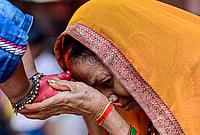
The last day, known as Vijayadashami, is an emotional one. Married women take part in Sindoor Khela, smearing each other with vermilion powder as a mark of blessing and farewell to the goddess. The idols are then taken in a procession to be immersed in a river or pond, symbolising Durga's journey back to her heavenly home. It's a mix of celebration and quiet sadness, since the goddess is being bid farewell for another year.
Southern India: Golu Dolls and Royal Processions
The South takes a gentler, more artistic approach to Dussehra. In Tamil Nadu, families set up Golu, a display of dolls and figurines arranged on tiered steps, often telling stories from mythology. Neighbours and friends visit each other's homes to see the displays, exchange sweets, and enjoy the festive mood together.
In Andhra Pradesh, a similar custom called Bommala Koluvu sees households arranging colourful figurines to bring old stories to life in a creative, homely way.
Karnataka's Mysuru Dasara is on a completely different scale. Declared the state festival of Karnataka, it's a grand, royal affair built around Goddess Chamundeshwari. The Mysuru Palace is lit up with thousands of bulbs each evening, and the festival closes with the Jamboo Savari, a procession where an idol of the goddess is carried through the city on a golden howdah atop a decorated elephant, escorted by dancers, musicians and cavalry. It remains one of the most photographed events in the country.
Western India: Garba Nights and Symbolic Leaves
In Gujarat, Dussehra practically merges with Navratri itself. The nine nights leading up to it are filled with Garba and Dandiya Raas, lively folk dances performed in circles with colourful sticks and traditional outfits. People dress in Chaniya Choli and Kediyu, dancing late into the night before the festival wraps up.
In Maharashtra, the day has a quieter, symbolic custom. People exchange leaves of the Apta tree, treating them as "gold" and offering them to elders, friends and family as a gesture of goodwill and blessings for the year ahead.
Meanwhile, in Chhattisgarh, particularly in the Bastar region, Dussehra becomes a tribute to nature and local heritage. The festival honours Devi Danteshwari, the region's presiding deity, and includes a famously long procession, one of the longest Dussehra celebrations in the country, stretching over several weeks rather than the usual ten days.
Why These Differences Matter
What's striking about Dussehra is that no single ritual defines it. A Ramlila crowd in Delhi and a Durga Puja pandal in Kolkata are marking the same festival, just through completely different lenses, one through story and fire, the other through devotion and farewell. Add in Kerala's book-blessing rituals, Karnataka's royal elephants, and Gujarat's all-night dancing, and you start to see just how varied Indian culture really is, even within a single festival.
Final Thoughts
Dussehra proves that one festival can hold many meanings. Whether it's an effigy going up in flames, a goddess being bid farewell by the river, dolls arranged on a staircase, or feet moving to a Garba beat, the underlying idea never changes: good will always outlast evil. If you ever get the chance to travel during Dussehra, try visiting a different region than you're used to, you'll come away with a completely new way of seeing a festival you thought you already knew.