Akal Takht declares Bhagwant Mann “Panth Virodhi” over viral video row.
AAP rejects allegations, calls controversy politically motivated.
Opposition parties intensify criticism, citing Punjab’s sacrilege history.
Why The Akal Takht Declaration Against Bhagwant Mann Has Triggered A Political Row In Punjab
Opposition parties attack Punjab CM after Sikh body’s “Panth Virodhi” remark over viral video, AAP rejects charges

Summary
The Akal Takht’s declaration against Punjab Chief Minister Bhagwant Mann has triggered political reactions from the Aam Aadmi Party and opposition parties, with statements exchanged over a viral video controversy that has drawn in the Sikh temporal authority and entered Punjab’s political discourse.
The Akal Takht declared Mann “Panth Virodhi” in relation to a viral video episode, stating that it cited forensic references during its proceedings. The Aam Aadmi Party has rejected the allegation, while the Congress, BJP and Shiromani Akali Dal have responded with criticism and questions over the Chief Minister’s position.
The statement, as reported, followed discussions within the Sikh high priesthood structure, where the viral video and related material were examined during the proceedings. In its assessment, the Akal Takht referred to forensic inputs while describing the video, and called for distancing from Mann in connection with the matter. Chief Minister Bhagwant Mann has maintained that the video is manipulated and has been used selectively in political discourse.
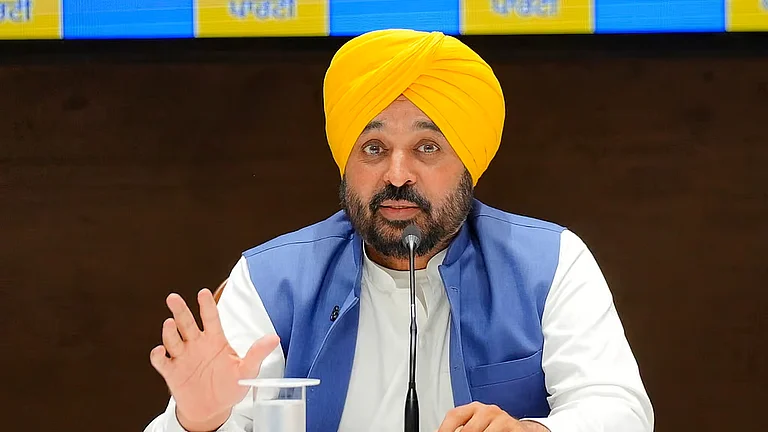
The Aam Aadmi Party has denied the allegation and said the interpretation being presented does not establish identity or intent. Party leaders have described the controversy as politically driven and have said the government’s focus remains on governance and legislative work in Punjab, including laws related to sacrilege cases. They have also stated that public discussion should not be shaped by what they describe as unverified interpretations of the video, and have emphasised that the matter is being viewed through a political lens by opponents.
Opposition parties have responded by criticising the Chief Minister following the Akal Takht statement. The Congress has raised questions about his position in office, the BJP has extended its criticism to the functioning of the state government, and the Shiromani Akali Dal has also commented on the issue within its broader engagement with panthic politics. The responses have come separately, with each party framing the issue within its own political positioning in Punjab, reflecting their distinct organisational and electoral interests in the state.
Advertisement
Sacrilege-related issues have played a significant role in Punjab’s recent political history. The 2015 Bargari incidents became a major political flashpoint ahead of the 2017 Assembly election, contributing to a wider anti-incumbency sentiment against the Shiromani Akali Dal. The issue remained part of political debate through the 2022 polls, with parties continuing to raise questions of accountability and justice in sacrilege-related cases. Over time, the issue has remained embedded in Punjab’s political narrative, often resurfacing in electoral discourse and public debate whenever questions of religious sentiment and governance intersect.
Currently, the exchange has remained limited to statements from the Akal Takht, the state government and political parties, with responses reported largely through institutional and political channels. The controversy has so far unfolded through official statements, public reactions and party-level criticism, rather than moving into a broader coordinated political mobilisation or sustained street-level campaign in reported developments. Each side has maintained its position through formal responses rather than joint action.
Advertisement
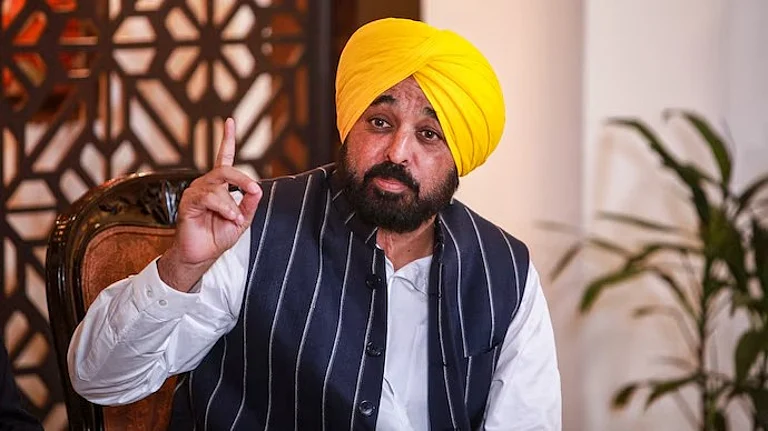
The Aam Aadmi Party government has continued to refer to its anti-sacrilege legislation and its stated approach to earlier sacrilege-related cases as part of its governance position in Punjab. This has been used by the party to frame its response to criticism arising from the Akal Takht’s statement and to emphasise its reliance on institutional and legal measures in addressing sensitive religious matters.
Opposition parties remain divided in their organisational strength in the state, with the Congress, BJP and Shiromani Akali Dal responding separately to the Akal Takht statement and pursuing their own political positioning within Punjab’s evolving political landscape. Their responses reflect independent political strategies, shaped by their respective support bases and organisational challenges in the state.
The Akal Takht’s intervention carries religious significance within Sikh institutional life, and its statements remain politically relevant in Punjab. The current controversy continues to be addressed through institutional statements and political responses from all sides, with attention from major parties but with responses continuing through separate party positions. The issue continues to sit at the intersection of religious authority and electoral politics in Punjab, where such matters have historically influenced political narratives and public discourse.
Advertisement
The matter remains open within Punjab’s political environment, where religious authority, party politics and historical grievances around sacrilege continue to intersect in shaping public debate and political communication across parties and institutions.
(With inputs from The Indian Express)
Published At: