The Cockroach Janta Party (CJP) was founded in May 2026 by Abhijeet Dipke as a satirical response to Chief Justice of India Surya Kant's comparison of unemployed youth activists to 'cockroaches'.
The immediate trigger is the cancellation of the NEET-UG 2026 medical entrance exam after a widespread paper leak was confirmed.
The government labelled the movement 'anti-national,' used police lathicharges against protesters on July 20 and 21, and forcibly hospitalised Sonam Wangchuk after his 20-day hunger strike.
Why India's Youth Protests Are Bigger Than The 'Cockroach' Debate
What began as a Supreme Court judge comparing unemployed youth to cockroaches has become the biggest public challenge to the Modi government in its third term: millions of followers, police lathicharges, Sonam Wangchuk hospitalised, and thousands camping at Jantar Mantar demanding accountability for a system that has failed them

Summary
In May 2026, Chief Justice of India Surya Kant made a remark during a Supreme Court hearing about unemployed youth activists that compared them, in tone and implication, to cockroaches — disposable, numerous, and a nuisance to be managed rather than a constituency to be heard. The Chief Justice later clarified that his comments had been directed at the lawyers misusing public interest litigation, not the unemployed youth themselves. By then, it did not matter. Within 78 hours of the remark, a satirical Instagram page had amassed three million followers.
Digital communications strategist Abhijeet Dipke founded the Cockroach Janta Party on May 16, 2026, as a political satire directly parodying the ruling Bharatiya Janata Party's name while making the CJI remark its founding statement. The name said: if the system sees us as cockroaches, we will be cockroaches. We will be everywhere. We will survive everything. We will not go away.
What Are The Protests Actually About?
The immediate trigger for the demonstrations was the cancellation of the National Eligibility cum Entrance Test (NEET), India's undergraduate medical school entrance exam, after its question papers were found to have been leaked. About two million students across India took the exam on May 3, but it was later scrapped, with about a dozen student suicides linked to its cancellation.
This was not a one-off failure. The NEET exam was similarly leaked in 2024, and no re-test was ordered at the time. Paper leaks have also compromised police constable recruitment exams and teacher eligibility tests in multiple states. The pattern is systemic: examinations that determine life outcomes for millions of young people are being routinely compromised.
The protesters are demanding the resignation of Union Education Minister Dharmendra Pradhan and Prime Minister Narendra Modi, reforms in the National Testing Agency, and broader accountability for the examination system's collapse.
Advertisement
Why Has The Debate Shifted From Issues To Personalities?
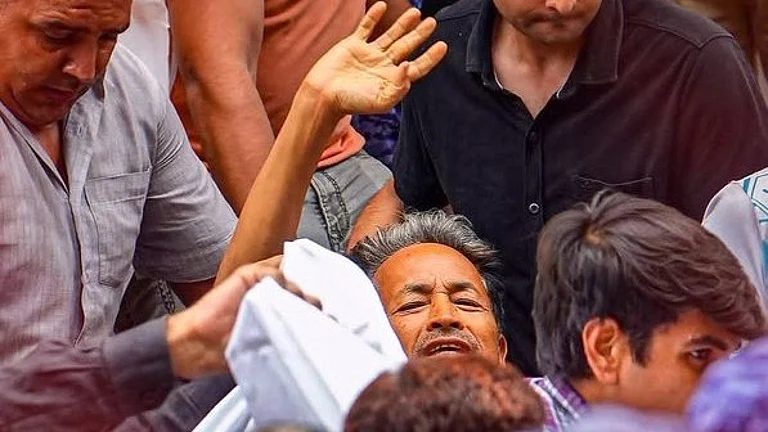
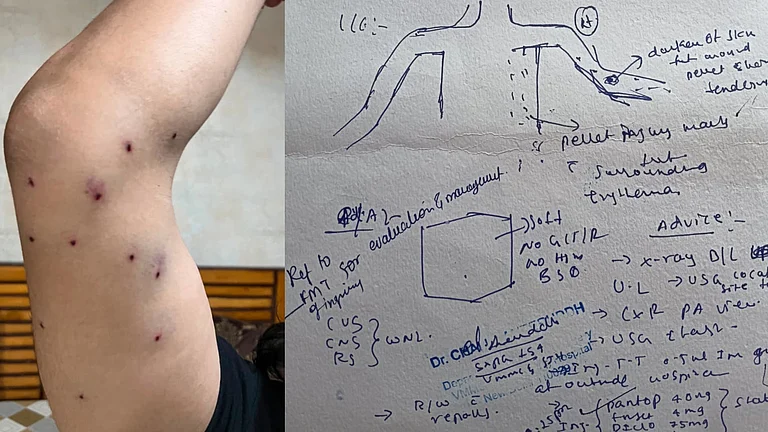
The government's own responses have driven the personalisation. The government labelled the movement 'anti-national.' When police used lathicharges against protesters marching toward Parliament on July 20 and 21 — the opening days of the Monsoon Session — video of young people being beaten and dragged spread instantly across social media. When Sonam Wangchuk was forcibly removed from the protest site and taken to a hospital after his hunger strike, the footage of that removal was more politically powerful than any speech.
Each government action has shifted attention from the examination system to the government's treatment of protesters. The movement has effectively demonstrated that in a social media environment, every act of suppression generates its own counter-narrative that reaches far more people than the suppression silences. The government's instinct to shut down the movement has functioned as the movement's amplifier.
Advertisement
How Did The 'Cockroach' Label Become A Political Identity?
Dipke picked up the CJI remark and reframed it: all of us unemployed Indian young people, all of us who are not getting justice, who have had mass cancellations of exams, we are cockroaches — and he wore it as a badge. The reclamation of an insult as an identity is a familiar political move, but rarely has it happened this fast or at this scale.
The movement rapidly gained a large social media following. CJP has grown to 22.5 million followers and taken its protests from social media to the streets of Delhi, Pune, Bengaluru, and Lucknow, channelling youth rage over examination paper leaks, graduate unemployment, and state accountability.
Why Are Paper Leaks And Unemployment Producing Wider Anger?
Protesters also came because there is large-scale unemployment — or massive underemployment or hidden unemployment — in India. For large categories of people, incomes are not rising as they should, and aspirations have gone up. There is also a sense that the government does not listen, talks down to us, and feels it keeps getting re-elected so it must be popular.
Advertisement
India has among the highest graduate unemployment rates in Asia. The expansion of higher education since 2010 has created a generation with degrees that the economy has not created matching jobs for. For this generation, government examinations are not merely tests — they are the primary route to secure employment, decent salaries, and social mobility. When those examinations are corrupted, it is not a bureaucratic failure: it is the theft of a future.
Is This A New Form Of Youth Politics?
In some respects, yes. The CJP does not have a conventional party structure, membership registers, or a manifesto. It has Instagram, an aesthetic, a founder who is a digital communications professional, and a cause that is simultaneously hyper-specific (the NEET paper leak) and structurally general (everything is broken and nobody is accountable).
The movement began as an online joke and has now spilled onto the streets of India's capital. What it has not yet done — and what will determine its longer-term significance — is convert its social media reach into durable political organisation.
Advertisement
The presence of Left-aligned SFI and AISA at the protest site, raises the question of whether the CJP remains a genuinely independent youth movement or becomes, over time, a mobilisation vehicle for established political forces that are already fighting for the same constituency.
What Happens When Institutions Stop Answering?
The question underneath all of this is the one the brief puts plainly: what happens when institutions stop answering? NEET was leaked in 2024 and no one was held adequately accountable. It was leaked again in 2026. The examination system did not fix itself. The accountability mechanism did not work. The courts, the ministry, the National Testing Agency — none of them produced the accountability that two million affected students and their families were entitled to expect.
What happens is that the accumulated anger finds a different container. This year, that container was a satirical name, an Instagram page, and a Chief Justice's ill-chosen word. Next time, it may be something else entirely — and potentially less civil in its demands and methods.
Published At: