Punjab 2027 is shaping up as a four-cornered contest.
AAP faces anti-incumbency and pressure to retain its last state.
Congress is trying to recover despite internal leadership tensions.
Punjab Election 2027 Battle Begins: Can AAP Survive The Opposition Push
AAP is fighting to retain its last bastion as Congress, BJP and SAD look to turn Punjab into a four-way contest.

Summary
Punjab is emerging as one of the most unpredictable political battlegrounds ahead of the 2027 Assembly elections, with the Aam Aadmi Party (AAP), Congress, Shiromani Akali Dal (SAD) and Bharatiya Janata Party (BJP) all preparing for a high-stakes contest.
The five-year term of the Bhagwant Mann-led AAP government will end in February 2027. Ahead of the polls, Punjab politics has already begun heating up, with the Opposition targeting the government over the anti-sacrilege law, the Congress battling internal divisions, the BJP trying to expand its footprint and the SAD looking to reclaim lost ground.
In 2022, the Aam Aadmi Party formed its first government in Punjab after winning 92 of the 117 Assembly seats. The Congress, led by Charanjit Singh Channi, was reduced to 18 seats. The Sukhbir Singh Badal-led SAD won just three seats, continuing its decline, while the BJP, contesting on its own, managed only two seats.

Do-Or-Die Battle For AAP
For AAP, the Punjab election is no longer just another state contest. After losing power in Delhi, Punjab remains the only state governed by the party, making the 2027 election a crucial battle for its national relevance.
Chief Minister Bhagwant Mann is expected to face anti-incumbency, but the party will hope to counter it through its welfare schemes and organisational strength. AAP’s performance in the recent civic polls has also boosted its confidence. The party won 958 of the total 1,977 wards, staying far ahead of the Congress, which won 397 wards. The SAD secured 192 wards, while the BJP won 172.
Mann has also sought to strengthen his position through welfare measures, including direct financial assistance of Rs 1,000 per month to women from general categories and Rs 1,500 per month to women from Scheduled Tribe categories from July 1 this year.
However, the Chief Minister now finds himself on the back foot over a sacrilege video controversy. The video, which purportedly shows a man resembling Mann involved in an objectionable act near photographs of Sikh Gurus, has triggered a religious and political storm in the state. The Akal Takht, the supreme temporal seat of Sikhs, has declared Mann “Guru Dokhi” and “Khalsa Panth Virodhi”.
Advertisement
Mann has maintained that the video is manipulated and has been selectively used for political purposes.
The controversy deepened after the Akal Takht asked the Punjab government to amend the recently passed Jaagat Jot Sri Guru Granth Sahib Satkar (Amendment) Act, 2026, also known as the anti-sacrilege law, arguing that it was passed without adequate consultation with Sikh religious institutions.
The Akal Takht has objected to the provision of a legally designated custodian, saying such a move could discourage devotees and religious volunteers from performing seva. It has also opposed the requirement for the SGPC to maintain a central register and assign a unique identification number to every copy of the Guru Granth Sahib, arguing that this undermines the sanctity of the scripture and interferes with matters under Sikh religious authority.
How Mann navigates these challenges will be crucial to whether AAP can retain its position in Punjab and remain relevant in national politics.
Advertisement
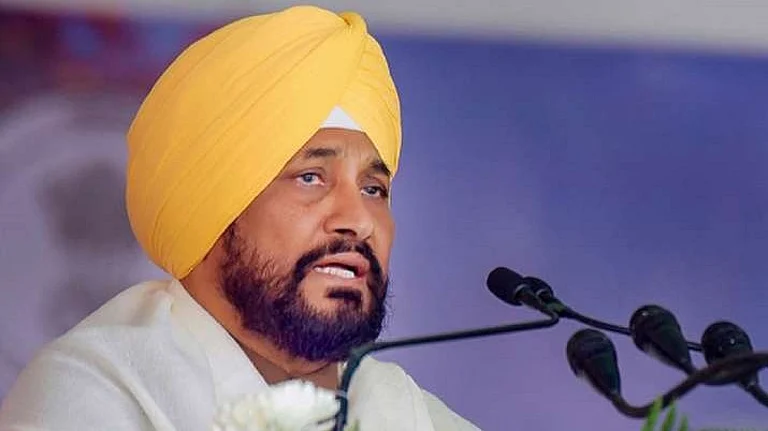
Congress Mount Challenge Amid Internal Rift
The Congress will be looking to recover after its humiliating defeat in the 2022 Assembly elections. However, months before the next election, the party is dealing with an internal power struggle that could overshadow its preparations.
Several senior Congress leaders are seen as chief ministerial aspirants, making the post of Punjab Congress president far more than an organisational role. The position has become central to the party’s internal leadership battle.
The tensions intensified after the recent local body polls. The Congress performed strongly in areas represented by former Chief Minister Charanjit Singh Channi, while its performance in regions considered Punjab Congress chief Amarinder Singh Raja Warring’s political turf was seen as underwhelming. This triggered speculation about a possible leadership change.
The party high command held several rounds of consultations before deciding to retain Warring as Punjab Congress president. At the same time, it tried to balance competing ambitions by giving key organisational roles to senior leaders.
Advertisement
Whether the Congress’ decision to back Warring will help the party present a united front in 2027 remains to be seen.
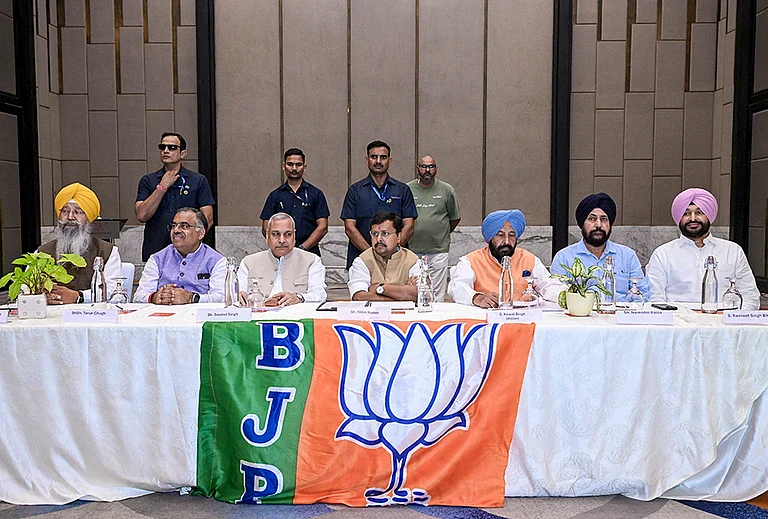
BJP’s Punjab Push And The Raghav Chadha Factor
The BJP is looking to replicate its successes in Odisha in 2024 and West Bengal in 2026, where it ended long-standing governments and formed its first government on its own.
For decades, the BJP in Punjab played second fiddle to its former ally, the Shiromani Akali Dal. When the SAD performed well, the BJP benefited. But after the alliance collapsed in September 2020 over the now-repealed farm laws, the BJP began positioning itself as an independent force in the state.
BJP president Nitin Nabin has announced that the party is preparing to contest all 117 Assembly seats on its own next year, making its ambitions clear.
Although the BJP won only two seats in 2022, its solo contest laid the groundwork for its long-term expansion plans in Punjab.
Advertisement
The party has also gained momentum after Raghav Chadha, considered one of the key architects of AAP’s 2022 Punjab victory, joined the BJP this year along with six other Rajya Sabha MPs. The group included Sandeep Pathak, a core AAP strategist for the last decade and the party’s Punjab co-incharge in 2022.
The MPs who quit AAP also levelled serious allegations against the party. Harbhajan Singh accused AAP of selling Rajya Sabha seats.
Whether the mass defection helps the BJP or triggers a backlash remains uncertain. But it has undoubtedly dealt a blow to AAP’s election planning.
SAD Fighting For Survival
The Shiromani Akali Dal is facing one of the toughest phases in its political history. Since walking out of its alliance with the BJP in September 2020 over the farm laws, the party has struggled to rebuild the social and electoral base that once made it a dominant force in Punjab.
For more than two decades, the SAD-BJP partnership worked as a powerful political formula. The Akali Dal drew support from rural Sikh voters, while the BJP helped consolidate urban Hindu votes. This combination powered the alliance to victories in 1997, 2007 and 2012.
That arrangement collapsed after the farm law protests, leaving the SAD without a key ally and exposing its shrinking ground presence. The party’s decline became clear in the 2022 Assembly elections, when it was reduced to just three seats.
The crisis is not only electoral. The SAD is also trying to recover from years of criticism over governance, allegations of centralised leadership and the erosion of trust among sections of Panthic voters.
For the Akali Dal, the 2027 election is an opportunity to regain political space by attacking AAP’s anti-incumbency, exploiting Congress’ internal divisions and projecting itself once again as a defender of Sikh political and religious interests.
The 2027 Punjab Assembly election is shaping up as a complex four-cornered contest where no party can afford complacency. AAP will fight to protect its last remaining state government, the Congress will try to overcome factionalism, the BJP will seek to expand beyond its traditional limits, and the SAD will battle for survival.
With religious issues, defections, welfare politics, anti-incumbency and leadership battles all at play, Punjab could deliver one of the most closely watched and unpredictable elections of 2027.
Published At:
Tags