The BJP has shifted from one-way messaging to Gen Z-focused Instagram content to reconnect with younger voters after recent political setbacks.
Political strategists say every election cycle has been defined by a dominant platform—from Facebook and Twitter to WhatsApp, YouTube and now Instagram.
Experts argue that changing the style of communication alone will not win over young voters unless issues such as unemployment, jobs and education are also addressed.
PM Modi’s Midnight Tryst With Gen Z: BJP’s Instagram Push Faces A Mixed Reality Check
As Instagram emerges as the next political battleground, the BJP is overhauling its communication strategy to reach Gen Z, with mixed results so far.

Summary
It was midnight on July 31, when Prime Minister Narendra Modi dropped his fourth reel addressing Gen Z “friends”. “I was abused, but also my dead mother. But such mistakes happen when you are young. I understand the anger in the society, but it is a cultural shock that our daughters are using such language,” said the Prime Minister.
The video was shot with light behind him, with Modi’s face appearing wide, and was framed to resemble a handheld selfie video or a familiar FaceTime call. It projected informality. However, if it was designed for relatability to the Gen Z audience, the comments, more than 1.1 million of them, underneath it showed that he didn’t clock it.
These videos are only one part of a broader social media push. The Instagram reels form part of a broader social media strategy reportedly encouraged by Prime Minister Narendra Modi, who urged Union Ministers and party leaders to engage more actively with younger audiences through short-form video content.
His first reel also garnered 303 million views in 24 hours and later climbed to more than 400 million. While these reels are meant to look like impromptu calls by the PM, social media is rife with videos showing that he is still using a teleprompter.
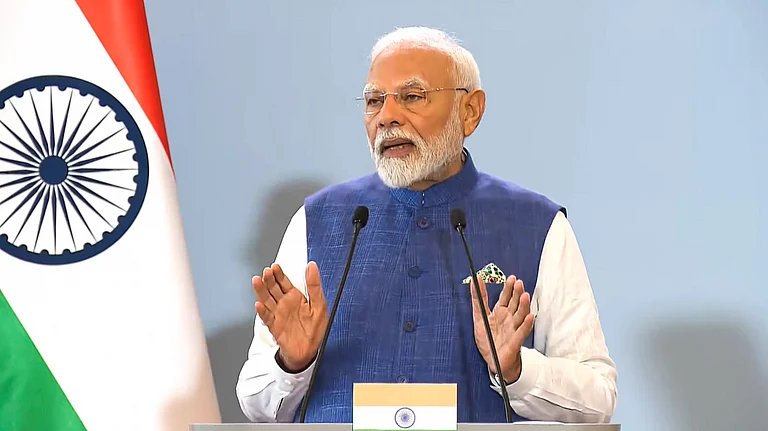
The campaign comes as the BJP steps up its efforts to reach first-time voters and students on Instagram, a platform that has become central to political discourse among Gen Z. The party's renewed digital push follows the widespread online support for the Cockroach Janata Party protests in the wake of the political fallout over the NEET-UG paper leak controversy.
Several Union Ministers, including Pralhad Joshi, J.P. Nadda, Jitendra Singh, Kiren Rijiju, Nirmala Sitharaman, Piyush Goyal and Annapurna Devi, have also intensified their Instagram activity, posting videos highlighting examination reforms and the proposed anti-paper leak legislation.
Advertisement
Within seconds of the PM putting out his video, thousands of comments appeared underneath it, where these “shararati bacchen” began picking apart a PR strategy that probably took crores.
Several users asked, "Skin care routine mention kar do, friend", "Aur lathi charge ka kya ba?", "What do you mean by hamari ladkiyan aisi bhasha kaise bol sakti hain?", “Sir, please address Manipur and the ethanol issue", "Modi, it's done bro", “Who gave this script to Modiji?", and "Tone policing should never be used to obscure structural accountability.”
Addressing the video, CJP founder Abhijeet Dipke: “Your skin is brighter than the country’s future.”
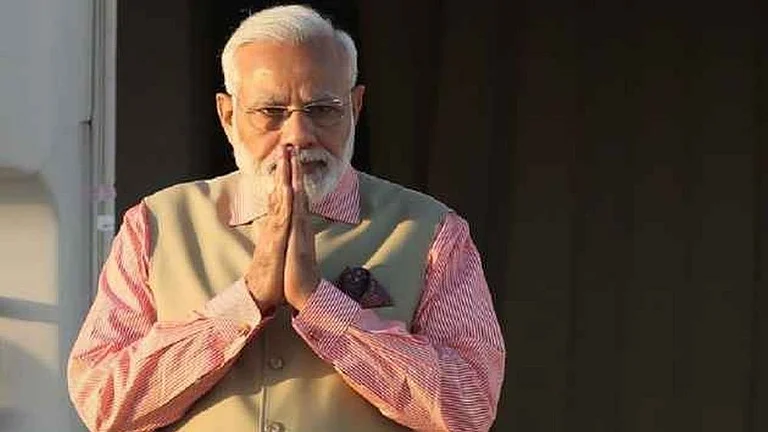
Earlier in the week, BJP's official Instagram account, @BJP4India, posted a reel set to the 90s Television show Friends title track. The caption of the reel was: “F.R.I.E.N.D.S… PM Modi is there for you.”
Advertisement
While Friends was a defining sitcom for many millennials, it doesn’t resonate with Gen Z. Comments from them included, “Dear BJP, Friends is millennial. Not Gen Z. Up your SM game”, “Please find new people for social media”, “Is this a satire or a dig on himself”, and “Janice was less embarrassing”.
For many millennials, the reel echoed AIB's satirical M.I.T.R.O.N. video, which was released in 2014 and parodied the BJP using the same theme tune to highlight the Modi government's first Cabinet.
On July 26, the party released a reel set in a gym in which two young people are discussing the Cockroach Janata Party-led protest at Janatar Mantar. “Did you go to Jantar Mantar? The vibe there was set,” commented a young girl in the video. But the young boy says, “It was completely anti-national.”
Here too they use Gen Z lingo, with the male trainer saying, “You haven’t even clocked out what India was like when you were 10,” and he goes on to add “without roots, you cannot have a strong future”. With the caption “Past vs Present: The Real Talk”, the video featured a young man stating that if it was such a strong government why the Education Minister Dharmendra Pradhan had to resign, only for the trainer to say, “The resignation doesn’t mean the win of Jantar Mantar protestors, instead it shows the strength of democracy. The government has solved all your problems so that you can look forward.”
Advertisement
BJP’s Digital Shift
Robbin Sharrma, founder of Showtime Consulting, who has worked on political campaigns in Maharashtra, Andhra Pradesh, West Bengal, Meghalaya and Punjab, believes, explains the party's recent pivot. With India home to the world's largest Instagram user base, he says it was only a matter of time before the platform became central to political campaigning.
For Sharma, the more significant development is not whether the Prime Minister's videos have attracted praise or criticism, but that the BJP has adapted its communication style. He believes Modi is making a conscious effort to speak to young voters in the language and format they are most comfortable with.
“Whether the sentiment is negative or positive, he's trying to communicate with the target audience in a way they understand, and I don't think anyone else has done that as effectively,” Sharma says.
He argues that direct communication can itself soften public anger. "If I'm angry with someone, and they start talking to me in a language I understand and am comfortable with, the anger starts coming down."
Advertisement
The BJP's official Instagram account has increased its output with reels focusing on examination paper leaks, parliamentary debates on anti-paper leak legislation, the government's response to student concerns, and criticism of the Opposition for disrupting discussions in Parliament.
Over the past few months, the party and government have been finding it difficult to be ahead of trends on social media. They have been reacting to narratives and not creating them. In last week’s Tuesday meeting of NDA allies, it was considered how to convey information about the government to the youth – about its achievements on India's free trade agreements through reels.
Changing Political Playbook
Political strategist and VoteVibe founder Amitabh Tiwari believes the BJP has now been caught off guard twice in quick succession. The first, he argues, was during the 2024 Lok Sabha election.
“We were told the Congress lacked an organisational structure. Then how did the narrative of Samvidhan Khatre Mein Hai (the Constitution is in danger) reach every nook and corner of the country? How did the BJP perform so poorly in Scheduled Caste reserved seats? And how did it fail to secure a majority on its own?" he asks.
According to Tiwari, the BJP's electoral success has long rested on its ability to dominate emerging communication platforms before its rivals. “The 2014 election was essentially a Twitter-Facebook election and the BJP had mastered it,” he says. “Rahul Gandhi wasn't even active on those platforms, so the BJP had a free run.”
By 2019, the battleground had shifted to WhatsApp. As rival parties strengthened their presence on Facebook and Twitter, the BJP moved to private messaging networks. “WhatsApp wasn't a public platform, but it became the next frontier.”
The 2024 election, however, belonged to YouTube. Tiwari argues that anti-establishment voices flourished there as traditional television and print media increasingly came to be seen as favourable to the government. “If the pro-government medium is television and print, anti-government voices naturally move to YouTube. It doesn't require heavy investment.”
Now, he says, politics has entered another phase. “2026 is the first Instagram election. We saw that with actor C Joseph Vijay-led Tamilaga Vettri Kazhagam’s win in Tamil Nadu.” With nearly 40 per cent of India's population aged between 18 and 40, Instagram has become the dominant platform for political communication among younger voters. And Instagram generally favours decentralised and seemingly unscripted content which is not how the party’s messaging model works; it is a top-down cascading approach.
The BJP Chhattisgarh’s official Instagram account also entered the fray, posting more than two reels that described young women dancing at the protest as “Babur ki virasat pe thumke lagane wale Gen Z” (Gen Z who celebrated the legacy of Babur), comparing them with a Chhattisgarh Gen Z boy who had won an award. The creator they were targeting responded with a reel of her own schooling them, with her opening critique being: “Your caption game is very weak” “Your ChatGPT isn’t giving you good responses”, “your logic isn’t logicing” and ended with “Vaasteguna Huiyaan”.
The shift is not only about platforms but also about style. Modi's communication has traditionally been formal, reinforcing the image of a decisive and strong leader. But social media increasingly rewards interaction over broadcast. “From here on, I think a leader who listens will succeed. One-way communication is not going to work,” added Tiwari.
The recent Instagram reels, Tiwari argues, are an attempt to project that change. “Initially they weren't speaking to the protesters. Now they are responding, and even Dharmendra Pradhan's resignation was discussed, something that would once have been unthinkable. They're trying to project the image of a leader who listens.”
In Sharma's view, Modi is also trying to appear less scripted and more accessible. Rather than speaking from a rally stage, he is attempting to engage young audiences through short, informal videos that feel more personal. “I think the PM is trying to be raw, authentic—not orchestrated—and communicating directly.” This is also probably why he has shifted to “friends” from “mitron” in his reels.
Political and social media communications strategist Ashubodh Deori agrees that the Prime Minister is experimenting with a new style, but questions how much of the online engagement reflects genuine support.
“What Modi is trying to do here is unique because the challenge before him is enormous,” Deori says. “A significant section of Gen Z appears to be moving away from the BJP. The reach we're seeing on Modi's account is not entirely organic. A substantial proportion of that engagement appears to come from bots.”
"Traditional media is no longer as effective as it once was. The BJP recognised this some time ago. If you go back 18 months, you'll see they had already begun experimenting with Gen Z-focused content because they knew their social media strategy wasn't working."
He points to the emergence of several new BJP-affiliated Gen Z-focused social media pages as further evidence of the party's attempt to rebuild its digital appeal among younger voters.
Yet Tiwari cautions that changing the medium does not address the underlying discontent of unemployment, lack of jobs, lack of growth in private-sector jobs, and the threat of AI. For the BJP, Instagram may be a new political battleground, but speaking the language of social media is only one part of the conversation. The larger test is whether the party can address the issues that brought young people online.
Published At: