Stunting among children under five fell from 35.5% to 29.3%, while severe wasting dropped from 7.7% to 5.2%, indicating progress in nutrition and maternal-child health interventions.
Overweight or obesity increased from 24% to 30.7% among women and from 22.9% to 27.3% among men. Diabetes prevalence also rose significantly, reaching 17.8% among women and 20.9% among men.
Bihar, Jharkhand and Madhya Pradesh continue to struggle with high levels of child undernutrition, while southern states such as Kerala, Tamil Nadu and Karnataka report some of the country's highest obesity and diabetes rates, highlighting India's growing dual burden of disease.
India’s Double Burden: Malnutrition Declines as Obesity and Diabetes Climb
The latest National Family Health Survey shows significant gains against child undernutrition, even as obesity and diabetes emerge as major public health challenges across several states

Summary
India has made significant progress in reducing child malnutrition over the past five years, with rates of stunting and severe wasting among children showing notable declines. However, the latest National Family Health Survey (NFHS-6) paints a contrasting picture of the country's growing burden of lifestyle diseases, revealing a sharp rise in obesity and diabetes among adults.
The findings, released by the Union Health Ministry on Friday, indicate that India is undergoing a rapid nutritional transition, moving from a long-standing struggle against undernutrition to a dual challenge that now includes rising overweight, obesity, and non-communicable diseases.
The NFHS-6, conducted in 2023-24, is the first nationwide health survey carried out after the COVID-19 pandemic. The survey provides a comprehensive snapshot of population health, nutrition, and family welfare indicators across the country.India has made significant progress in reducing child malnutrition over the past five years, with rates of stunting and severe wasting among children showing notable declines. However, the latest National Family Health Survey (NFHS-6) paints a contrasting picture of the country's growing burden of lifestyle diseases, revealing a sharp rise in obesity and diabetes among adults.
The findings, released by the Union Health Ministry on Friday, indicate that India is undergoing a rapid nutritional transition, moving from a long-standing struggle against undernutrition to a dual challenge that now includes rising overweight, obesity, and non-communicable diseases.
The NFHS-6, conducted in 2023-24, is the first nationwide health survey carried out after the COVID-19 pandemic. The survey provides a comprehensive snapshot of population health, nutrition, and family welfare indicators across the country.
Among children under five years of age, the prevalence of stunting, a measure of chronic undernutrition that reflects low height for age, fell significantly from 35.5 per cent in NFHS-5 (2019-21) to 29.3 per cent in NFHS-6.
The proportion of children suffering from severe wasting, a marker of acute malnutrition, also declined from 7.7 per cent to 5.2 per cent. Overall wasting dropped marginally from 19.3 per cent to 19 per cent, while the percentage of underweight children fell only slightly from 32.1 per cent to 31.8 per cent.
Advertisement
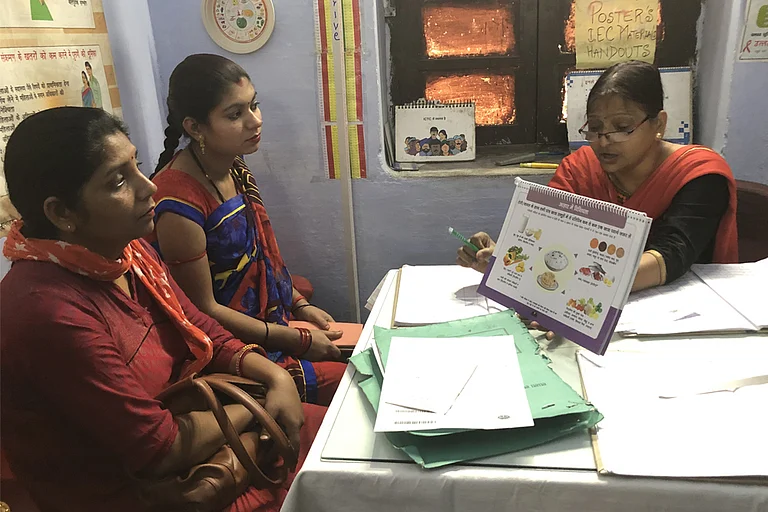
The improvements suggest gains in maternal and child health interventions, food security measures, and nutrition programmes implemented over the past several years.
At the same time, the survey highlights an emerging public health challenge.
The proportion of overweight or obese women increased sharply from 24 per cent in NFHS-5 to 30.7 per cent in NFHS-6. Among men, the figure rose from 22.9 per cent to 27.3 per cent.
The prevalence of high blood sugar levels or diabetes treatment also increased substantially. Among women, the share reporting high blood sugar or taking medication for diabetes rose from 13.5 per cent to 17.8 per cent. Among men, it climbed from 15.6 per cent to 20.9 per cent.
The findings underscore the growing burden of non-communicable diseases in India, even as traditional indicators of undernutrition continue to improve.
The rise in obesity and diabetes comes at a time when the Centre has begun treating obesity as a major public health challenge. In February 2025, Prime Minister Narendra Modi launched a nationwide anti-obesity campaign through his monthly Mann Ki Baat address, warning that obesity cases had doubled in recent years and urging Indians to reduce their edible oil consumption by 10 per cent. He also nominated several prominent public figures, including industrialist Anand Mahindra, author Sudha Murty, actor Mohanlal and Olympic medallist Mirabai Chanu, to spread awareness about healthy lifestyles and dietary habits.
Advertisement
The government's push extends beyond awareness campaigns. Under the National Programme for Prevention and Control of Non-Communicable Diseases (NP-NCD), India has expanded screening and management of obesity-linked conditions such as diabetes, hypertension and cardiovascular diseases through district NCD clinics and primary healthcare facilities. The Food Safety and Standards Authority of India (FSSAI) has also urged states to promote healthier diets by reducing oil and sugar consumption, while encouraging schools and public institutions to display information on the sugar, fat and calorie content of commonly consumed foods.

Dr Arun Prasad, senior consultant in gastrointestinal, bariatric and robotic surgery, who spearheaded the proposal for dedicated obesity centre at Apollo hospital and was a part of the expert groups from the Endocrine Society of India and the Obesity Surgery Society of India that developed treatment algorithms for obesity management in India (Published in various acclaimed medical journals), said the country's growing obesity burden is rooted in a mismatch between genetics and modern lifestyles.
Advertisement
According to Prasad, Indians have historically evolved with what scientists often describe as "thrifty genes"; genetic traits that favoured storing fat during periods of food scarcity. While these traits may have been advantageous during times of famine and deprivation, modern lifestyles have rendered them counterproductive.
"Our genes are meant to save us from famine. But there is no famine today, especially in urban populations. The lifestyle has changed, but our genes have not changed. So this rise in obesity was inevitable," he said while speaking to Outlook.
Prasad noted that eating patterns have undergone a dramatic transformation over recent decades, with people increasingly consuming larger meals late in the evening, remaining sedentary for long periods and engaging in less physical activity.
"Food is available 24 hours a day. People often skip proper meals during the day and eat heavily at night. But our hormones and biological clocks are not geared for that. Whatever we eat late in the evening tends to go into storage, and that contributes to obesity," he explained.
Advertisement
He said reversing the trend would require lifestyle changes including regular exercise, adequate sleep, protein-rich breakfasts and lighter evening meals.
According to Dr. Meenakshi Jain, Principal Director and Head of Internal Medicine at Max Super Speciality Hospital, Patparganj, Asian Indians tend to accumulate more body fat, particularly abdominal fat and fat deposits in organs such as the liver and pancreas, even at lower body weights, increasing their susceptibility to diabetes.
“Asian Indians are biologically more vulnerable,” she said, adding that maternal undernutrition followed by rapid “catch-up” growth in early childhood can predispose children to obesity and diabetes later in life.
The obesity epidemic is also closely linked to India's growing diabetes burden. Prasad explained that unhealthy dietary patterns and weight gain contribute to insulin resistance, a condition in which the body's cells become less responsive to insulin. This triggers higher insulin production, promotes fat storage and increases the risk of fatty liver disease.
"It becomes a vicious cycle. Diabetes leads to insulin resistance, which contributes to obesity, and obesity further worsens insulin resistance, increasing the risk of diabetes," he said.
The relationship is so strong that obesity and diabetes are often discussed together under the term "diabesity", he added. Among children, the long-term implications are particularly worrying. "Nearly 25 per cent of obese children will develop diabetes as adults," Prasad said.
State of the states
The national averages, however, mask stark regional disparities.
The country's traditional malnutrition hotspots, Jharkhand, Rajasthan and Bihar, continue to bear the heaviest burden of child stunting. According to NFHS-6, Jharkhand recorded the highest prevalence of stunting at 41.1 per cent, followed by Rajasthan (39.7 per cent) and Bihar (35.7 per cent), underscoring the persistence of chronic undernutrition in some of India's poorest states.
A similar pattern emerged for underweight children, with Jharkhand (41.1 per cent), Madhya Pradesh (39.7 per cent) and Bihar (35.7 per cent) reporting the highest rates.
For wasting, which reflects acute malnutrition, Madhya Pradesh topped the list at 23.8 per cent, followed by Jharkhand (22.3 per cent) and Odisha (22.1 per cent).
At the same time, several states recorded notable progress. Nagaland registered the largest decline in stunting, with prevalence falling from 32.7 per cent in NFHS-5 to 25.1 per cent in NFHS-6; a reduction of 7.6 percentage points. Maharashtra followed with a decline of 5.7 percentage points (35.2 per cent to 29.5 per cent), while Odisha improved by 4.2 percentage points (31 per cent to 26.8 per cent).
The survey also points to an emerging "nutrition transition" among children. While undernutrition remains a challenge, childhood overweight is becoming more visible in some states. Mizoram reported the highest prevalence of overweight children at 8.9 per cent, closely followed by Arunachal Pradesh (8.8 per cent) and Sikkim (6.6 per cent). In contrast, Rajasthan (0.6 per cent), Bihar (0.8 per cent) and Punjab (1.8 per cent) recorded the lowest levels.
Another less-discussed indicator, minimum acceptable diet among children aged 6-23 months, revealed worrying gaps in infant and young child feeding practices. Goa emerged as the best-performing state, with 33 per cent of children receiving an adequate diet, followed by Arunachal Pradesh (24 per cent) and Sikkim (22.2 per cent). At the other end of the spectrum were Mizoram (8 per cent), Rajasthan (8.7 per cent) and Maharashtra (9.3 per cent). The figures suggest that even in the country's best-performing states, only about one in three children receives a diet considered nutritionally adequate for healthy growth and development.
Published At: