India aims to increase its launch cadence from a historical average of about five orbital missions a year to 50 launches annually by 2030.
New infrastructure includes a third launch pad at Sriharikota and a dedicated small-satellite spaceport at Kulasekarapattinam, while private firms such as Skyroot and Agnikul expand launch capabilities.
The target will depend on scaling rocket manufacturing, engine testing, launch-site turnaround, regulatory clearances, airspace coordination and sustained demand for missions.
India's 50-Launch Space Ambition: What Will It Take To Get There?
The target is as much an infrastructure and industrial challenge as a policy statement, touching everything from launch pads and rocket factories to satellite demand, airspace clearances, and the fortunes of India's young private launch companies

Summary
India wants to go from launching a handful of rockets a year to launching one almost every week. On September 6, 2026, Pawan Goenka, chairman of the Indian National Space Promotion and Authorisation Centre (IN-SPACe), set out a target of 50 space launches a year by 2030 — a nearly tenfold jump from the country's historical average, to be achieved within just four years. His comments came days after nine ISRO employee associations sought clarity from the agency's leadership over how much of its manufacturing and operational work might shift to private industry as part of that scale-up.
The target is as much an infrastructure and industrial challenge as a policy statement, touching everything from launch pads and rocket factories to satellite demand, airspace clearances, and the fortunes of India's young private launch companies.
Where Does India's Launch Capacity Stand Today?
In a post on X, Goenka said the decision to open India's space sector to private players five years ago was meant to let ISRO focus on new frontiers while private industry built capacity of its own — and that scaling up launch cadence was now "the real test."
The scale of that test is considerable: space analyst Jatan Mehta's count of India's orbital missions found just 51 launches across the PSLV, GSLV, LVM3 and SSLV combined between 2016 and 2025 — an average of only slightly more than five a year.
That record has also been shaken recently by two consecutive PSLV failures, with the PSLV-C61/EOS-09 mission in May 2025 and PSLV-C62/EOS-N1 mission in January 2026 both ending in launch failures. ISRO chairman V. Narayanan has said the agency is targeting seven more launches within the current fiscal year and aims to triple its spacecraft production within three years.
How Many Launch Pads Does India Have, And What's Being Built?
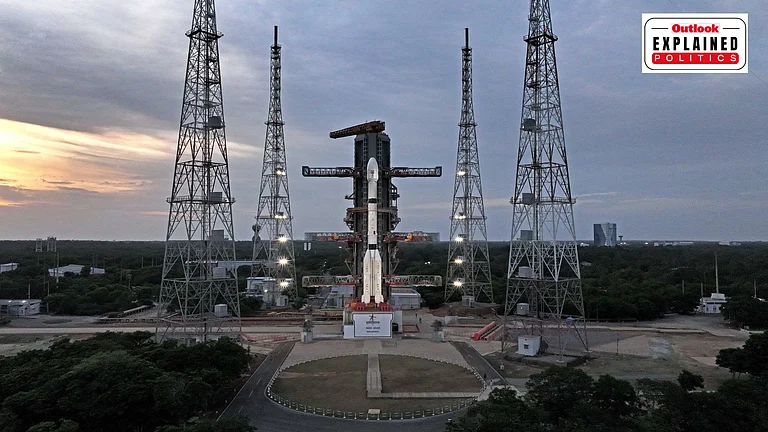
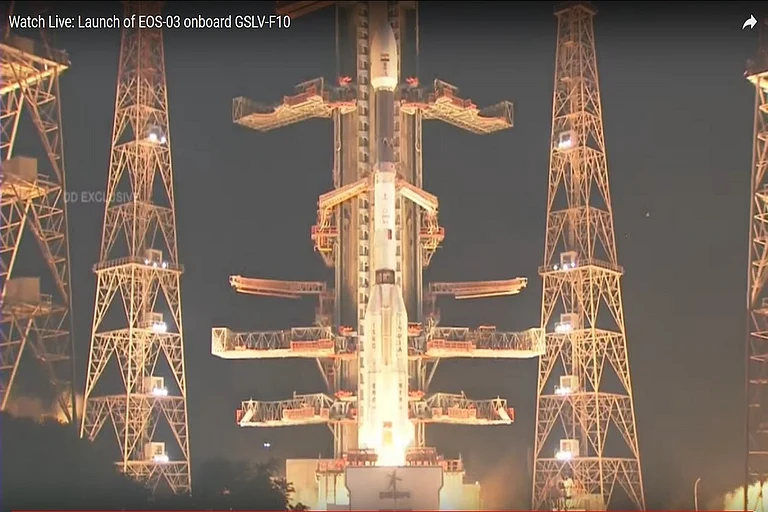
India's primary spaceport, the Satish Dhawan Space Centre in Sriharikota, has two operational launch pads: the First Launch Pad, active since 1993 and used for PSLV, SSLV and Skyroot's Vikram-1 flight, and the Second Launch Pad, operational since the mid-2000s, used for GSLV and LVM3 and serving as a partial backup for PSLV.
Advertisement
A Third Launch Pad, approved by the Union Cabinet in January 2025 at a cost of Rs 3,984.86 crore, is being built to support the upcoming Next Generation Launch Vehicle (NGLV) and upgraded LVM3 configurations with semi-cryogenic stages; the government has told Parliament it is expected to become operational only by March 2029, with civil works, propellant systems and launch-pad facilities completed in stages through 2028.
Separately, ISRO is building a dedicated small-satellite spaceport at Kulasekarapattinam in Tamil Nadu, with Rs 985.96 crore sanctioned for the project; the site is intended primarily for SSLV missions and non-government launches, offers more efficient trajectories for polar and sun-synchronous orbits, and is targeted for commissioning within the 2026-27 fiscal year, with a stated capacity of 20-25 launches a year once fully operational. A separate private facility, the ALP-01 "Dhanush" pad, has already hosted Agnikul's 2024 suborbital test flight.
Advertisement
What Role Could Skyroot And Agnikul Play?
Hyderabad-based Skyroot Aerospace, founded in 2018 by former ISRO scientists, became the first Indian private company to reach orbit when its Vikram-1 rocket lifted off from Sriharikota on July 18, 2026, placing two satellites into low Earth orbit and making India only the third country after the United States and China with a private orbital launch capability.
The company has since crossed a $1.1 billion valuation following a $60 million funding round backed by Singapore's GIC and Sherpalo Ventures, alongside debt financing from BlackRock, and now employs more than 1,160 people.
Chennai-based Agnikul Cosmos has taken a different technical path, developing 3D-printed, single-piece engines fed by electric pumps that allow near-instantaneous thrust adjustment, and which the company says can be manufactured in as little as seven days — a design aimed at rapid, on-demand small launches.
What Are The Less Visible Bottlenecks In Manufacturing And Testing?
Launch pad count is only part of the equation — actual cadence is set by whichever stage of production is narrowest. A rocket fleet nominally capable of 20 launches a year cannot sustain that rate if engine manufacturing can only support 12 vehicles, stage integration can handle 14, or launch-site processing can only turn around 10.
Advertisement
Cryogenic and semi-cryogenic engine testing is one such constraint: it requires extensive, costly ground-testing infrastructure, and India's dedicated facilities — including the ISRO Propulsion Complex's cryogenic engine test stands and its 51-metre-tall Semi-cryogenic Integrated Engine Test Complex — remain limited, shared national assets rather than facilities built for high-frequency use.
Is There Enough Regulatory, Airspace And Maritime Coordination In Place?
IN-SPACe already operates as a single-window regulator for non-government space activities under the Indian Space Policy, 2023, authorising launch vehicles, satellites and ground systems under its 2024 Norms, Guidelines and Procedures.
But coordination gaps persist elsewhere: satellite communication approvals still require both an IN-SPACe authorisation and a separate Department of Telecommunications licence with spectrum allocation, and as of August 2026, three foreign-backed satellite operators; Starlink, Eutelsat OneWeb, and Jio's Orbit Connect India venture with SES had cleared IN-SPACe and DoT authorisation but still lacked security clearance and allotted spectrum, with the government only now considering a genuine inter-departmental single-window system spanning DoT, the Ministry of Information and Broadcasting, and IN-SPACe.
Advertisement
Every individual launch also requires its own airspace and maritime coordination, issuing Notices to Air Missions and maritime danger-zone notifications, a process IN-SPACe formalised further in August 2026 with new guidelines specifically covering the controlled re-entry of satellites and rocket stages, which require operators to secure an advisory note from IN-SPACe and meet third-party liability and insurance conditions. Scaling from roughly five launches a year to 50 will require this range-safety and clearance machinery, built for occasional, carefully choreographed missions, to function at a far more routine and rapid pace.
Does India Have Enough Customers To Sustain A High Launch Cadence?
The demand picture has genuinely strengthened: India now counts more than 450 registered space startups, spanning launch services, satellite manufacturing and space applications. But most of these firms build components, software or ground systems rather than operate their own satellites, so startup numbers do not translate directly into confirmed launch orders.
On the government side, the mission queue is substantial and growing — Earth observation replacement, NavIC navigation satellite replenishment, an expanding Gaganyaan human-spaceflight programme, the planned Bharatiya Antariksh Station from 2035, and the Chandrayaan-4 lunar sample-return mission, which alone requires two separate LVM3 launches under its approved architecture — all competing for the same limited heavy-lift capacity.
Government finances add a further constraint: the Department of Space's requested outlay of Rs 15,604.80 crore for 2026-27 was trimmed to Rs 13,705.63 crore by the Finance Ministry, about 88 per cent of the request, while a parliamentary panel noted that actual spending through January 2026 had lagged even the revised budget estimate for the previous year.
Published At: