India on Tuesday criticised Pakistan Defence Minister Khawaja Asif over his remarks that Islamabad “will go to war” over the suspension of the Indus Waters Treaty, calling the comments a “desperate attempt” to divert attention from Pakistan’s own failures.
“Attempts to Cover Up its Failings”: India Hits Back at Khawaja Asif Over ‘War’ Remarks on Indus Waters Treaty
Ministry of External Affairs (MEA) spokesperson Randhir Jaiswal criticising Islamabad’s policies in Pakistan-occupied Kashmir (PoK) categorically rejected Asif's claims "with the contempt they deserve”

The response from Ministry of External Affairs (MEA) spokesperson Randhir Jaiswal came after Asif claimed that India’s stance on the treaty posed a threat to Pakistan’s “national security”.
Speaking at the weekly media brief, Jaiswal said, “Regarding the comments made by the Pakistani Defence Minister, we have seen reports on the matter. Such remarks are desperate attempts by Pakistan to cover up its own failings and divert attention away from its human rights abuses. We categorically reject these fabricated claims with the contempt they deserve.”
Jaiswal also criticised Islamabad’s policies in Pakistan-occupied Kashmir (PoK), saying the recent protests in the region were a “direct consequence of Pakistan’s decades-long policy of systemic economic exploitation, denial of fundamental rights and administrative oppression in areas under its illegal and forcible occupation”.
The MEA spokesperson further alleged that the Pakistani government had treated civilians in a “condemnable manner”, citing reports of police brutality, the blocking of essential supplies and medicines, internet shutdowns, and the use of lethal force against unarmed civilians.
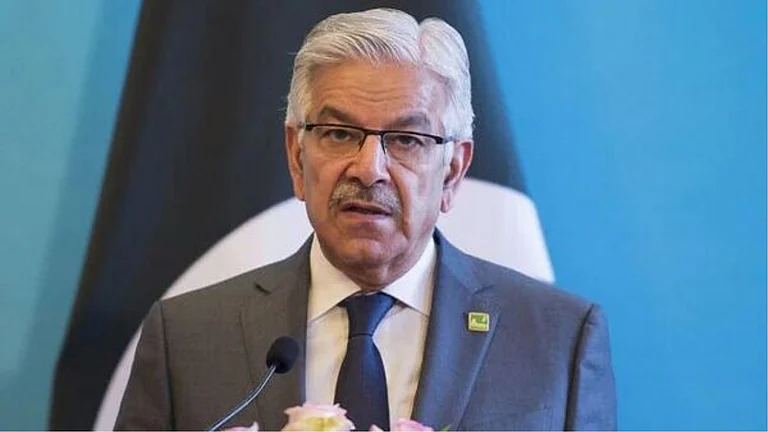
Pakistan Minister’s Remarks
Amid ongoing protests in PoK, Asif attempted to shift focus by raising the issue of the Indus Waters Treaty, which India placed in abeyance following the terror attack in Pahalgam, Jammu and Kashmir, in which 26 people were killed.
Speaking to ARY News on Saturday, Asif said, “The moment we feel that our national security — and water is part of our national security — is being threatened, we will go to war against India. Definitely.”
He further warned that Pakistan could resort to military action if Islamabad obtained evidence that India was rapidly moving to disrupt its water supplies.
Asif accused New Delhi of “weaponising water” by altering the flow of the Chenab River and withholding crucial hydrological data.
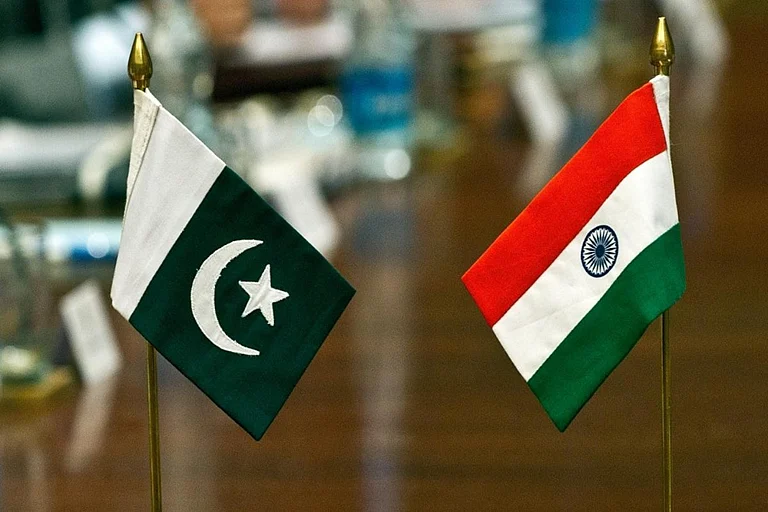
Indus Waters Treaty
The Indus Waters Treaty, brokered by the World Bank, established a framework for water-sharing and information exchange between India and Pakistan concerning the Indus River system and its five tributaries.
Advertisement
Under the agreement, Pakistan was granted rights over the western rivers — the Indus, Jhelum and Chenab — while India received unrestricted access to the eastern rivers — the Ravi, Beas and Sutlej.
India is also permitted limited use of the western rivers for domestic consumption, irrigation, non-consumptive purposes and hydroelectric power generation.
The treaty currently remains in abeyance as part of the measures taken by India in response to the Pahalgam terror attack.
Published At: