Developing countries must push for public climate finance commitments.
Blended finance can mobilise private investment through public capital.
Strong institutions and clear policies are key to scaling up climate finance.
Column | The Missing Link In Climate Finance After COP31
As public climate funding remains uncertain, developing countries need stronger institutions to bring private capital into the transition

Summary
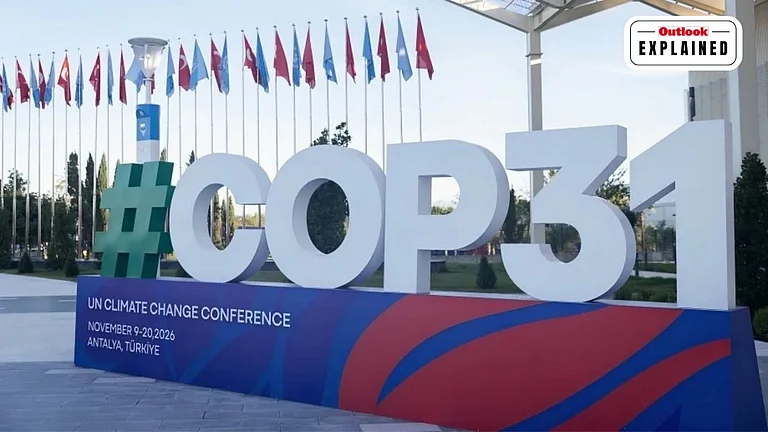
At the just-concluded COP31 in Antalya, Article 9 of the Paris Agreement on climate finance proved to be a major aspect of negotiations. Much of the debate pertained to a dedicated work programme on climate finance. Developing countries pushed for the programme to specifically focus on Article 9.1, which obligates developed countries to provide public capital to developing countries.
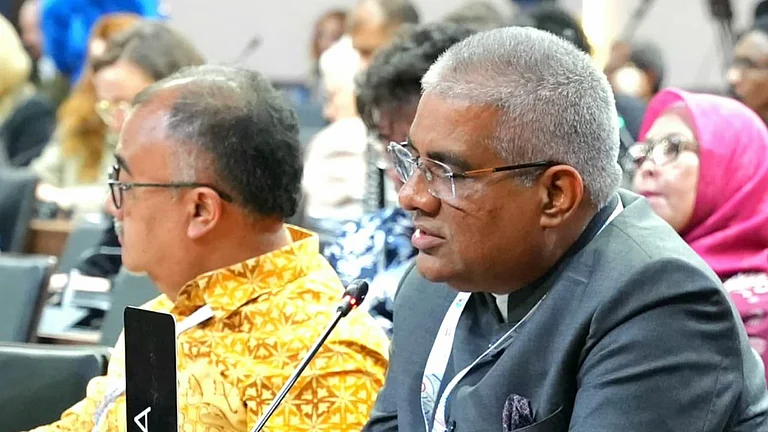
India set the tone on the opening day, calling on developed countries to meet that obligation. Developed countries pushed for a broader scope, which developing countries fear would dilute the focus on developed-country obligations. In a disappointing outcome, the desired dedicated focus on public capital remained elusive.
The summit, the longest on record, ended without agreement on an overarching outcome, with the final draft text leaving developing countries' call for at least $120 billion to triple adaptation finance unresolved.
While developing countries must continue to negotiate for more public capital on concessional terms, it is now equally critical to ensure that every scarce public dollar has maximum impact.
Blended finance, where international public capital mobilises additional private finance, is how that could happen. This matters because the Independent High-Level Expert Group (IHLEG) on Climate Finance estimates that private finance needs to grow 16-fold from external sources and nine-fold from domestic sources in developing countries.
The COP31 Presidency’s Climate Implementation Bridge initiative reinforced the role of blended finance. India’s own Economic Survey 2025-26 highlighted the importance of blended finance for climate finance mobilisation on both domestic and international fronts.
Here are four essential steps to develop an effective blended finance ecosystem.
Sizing The Requirements
The IHLEG estimates the climate finance requirement for developing countries (excluding China) at USD 3.2 trillion per year by 2035, including USD 1.3 trillion per year from external sources.
However, developed countries continue to be silent on the public capital component of the “at least USD 300 billion per year” they committed to for developing countries at COP29.
Advertisement
Against this backdrop, blended finance can help make every scarce public dollar that is ultimately delivered go a bit further.
For India, a recent study by the Council on Energy, Environment and Water (CEEW) and Tata Sons estimates that USD 10 billion in concessional capital could mobilise up to USD 50 billion in investments in low-carbon technologies.
However, sizing is only the first, albeit essential, step.
Turning Potential Into Pipelines
The Climate Implementation Bridge is built around converting national climate plans into investable portfolios. India also has working examples.
The India Green Finance Facility (IGFF), a blended finance facility backed by the Asian Development Bank (ADB) and the Green Climate Fund, offers technical assistance for building robust clean energy project pipelines.
These are steps in the right direction, but project pipelines that blended finance could unlock remain unavailable at scale. Institutional structures focused on blended finance could help further develop pipelines and enable capital deployment.
Advertisement
Building Bespoke Institutions
While the international development finance architecture offers blended finance, current business models constrain its effectiveness. OECD data show that for every dollar of international public climate capital, only 30 cents was mobilised in private finance for developing countries in 2024.
Even more concerning are signs of prominent institutions and banks watering down their climate commitments. South-South cooperation is vital here. Regional green banks in international financial centres could help channel climate finance across the Global South.
Developing countries could also benefit from strengthening their own domestic development finance institutions, as proposed by the Economic Survey 2025-26 for India. Strengthening could be taken a step further by setting up a dedicated national green financing institution, as proposed by NITI Aayog.

Advertisement
Developing A Conducive Policy Environment
The International Financial Services Centres Authority, which regulates GIFT IFSC, now permits funds to issue junior units that absorb losses ahead of senior investors, the core structure of a blended finance fund.
That could make GIFT IFSC a base for blended funds serving developing countries. Domestically, SEBI also allows funds to issue units with differential distribution rights to entities like sovereign wealth funds and multilateral development banks.
The missing piece is India’s climate finance taxonomy, which remains under development. Once released, it could become a common definition and a force multiplier for all climate finance, including blended finance.
We have listed four vital steps for building an effective blended finance ecosystem. But the ecosystem also needs a catalyst. Public climate capital is that catalyst, without which blending just does not work. Despite the disappointing COP31 outcomes, developing countries must keep pressing developed countries to hold up their end, even while sharpening the machinery to make every dollar work harder for the climate.
Advertisement
(Views expressed are personal.)
Published At: