There was a time when Delhi was a filmmaker's favourite winter destination. Its soft winter sunlight, sprawling avenues, imposing monuments and the gentle haze that settled over the city made it an irresistible outdoor studio.
Column | Growing Up Gasping: Delhi's Children Pay The Highest Price For Toxic Air
For a child growing up in North India, the consequences may extend far beyond a bout of coughing or a seasonal respiratory infection

From the romance of Chandni Chowk to China to the urban landscapes of Rang De Basanti, Fanaa, Delhi-6, Vicky Donor, and classics like Waqt, Chaudhvi Ka Chand and Basant Bahar, the capital has long given Bollywood a setting as much a character in the story as the actors themselves. The old lanes, India Gate, Connaught Place and the grand avenues of Lutyens' Delhi offered filmmakers a city that looked particularly beautiful in winter. The camera loved Delhi in December. Its people did too.
Today, that same winter haze has acquired a sinister character. The city that once offered filmmakers a picturesque backdrop has become an unforgiving, smog-infested landscape where visibility is measured in metres, breathing is an exercise in caution and stepping outdoors can feel like an act of recklessness. The romantic mist has given way to a toxic smog. The morning walk has become a health hazard. And for millions of children growing up in Delhi and the National Capital Region, winter is no longer a season to look forward to. It is a season to survive.
Delhi's battle with pollution is hardly new. For decades, the city has fought one enemy after another, often with the urgency of a government responding to a crisis rather than the foresight of one preventing it. There was a time when diesel vehicles became the principal villains in the capital's pollution narrative. The Supreme Court's interventions, the conversion of public transport to CNG and restrictions on older commercial vehicles were celebrated as decisive steps towards cleaner air. Delhi demonstrated that when institutions act together, change is possible.
But successive governments, led by three ideologically different political parties, have squandered that opportunity. Instead of building on those interventions, they have allowed the problem to become more complex and the response increasingly ritualistic. Every winter, the political establishment rediscovers pollution. Ministers hold press conferences, emergency meetings are convened, committees are formed, construction bans are announced and neighbouring states are blamed. There is no shortage of announcements. What remains conspicuously absent is a sustained, measurable and accountable effort to make the air breathable.
Advertisement
The political blame game has become an annual spectacle. Delhi points fingers at Punjab and Haryana over stubble burning by farmers. Neighbouring states cite local sources of pollution and meteorological conditions. The Centre announces coordination mechanisms, while state governments defend their records and question those of their predecessors. Political parties that were vocal critics of pollution when in opposition often find themselves making similar excuses when in power. The faces change, the governments change, but the air remains toxic.
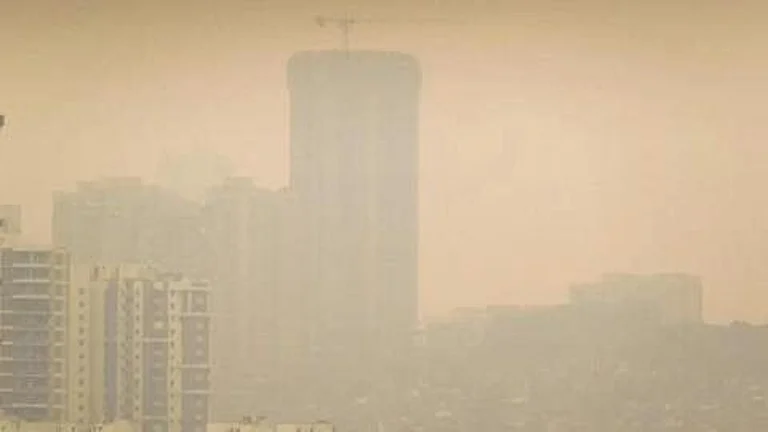
It would be convenient to hold one government or one political party responsible. But that would be an incomplete reading of a crisis that has outlasted several administrations. The Centre, the successive governments of Delhi and the governments of Punjab, Haryana and Uttar Pradesh must all answer for their part in allowing this public-health emergency to become an annual ritual. None among them can claim innocence simply because the crisis predates their tenure, nor can an incoming administration escape responsibility by blaming its predecessor.
Advertisement
The problem demands regional cooperation, sustained funding, enforceable targets and, above all, accountability that does not disappear when winter ends. Every government must be judged not by the number of meetings it holds or promises it makes, but by whether children can breathe easier under its watch.
This is not merely a failure of governance. It is a failure of political responsibility.
A problem that has been documented for decades cannot continue to be treated as an unforeseen natural disaster. Stubble burning does not suddenly appear on the calendar in October. Vehicular emissions, industrial pollution, construction dust and waste burning are not mysterious phenomena. Their sources are known, their health consequences are documented and the solutions have been debated for years. What has been missing is the political will to implement them consistently, even when doing so is inconvenient or electorally unappealing.

Advertisement
Governments cannot keep invoking weather conditions to explain away their failures. They cannot blame farmers without providing viable alternatives, blame motorists without improving public transport, or announce construction restrictions without ensuring compliance. Nor can they expect citizens to compensate for administrative inaction by buying air purifiers and wearing masks.
Most disturbing is the absence of a credible sense of accountability. Who is answerable when air quality repeatedly crosses hazardous thresholds? What happens when pollution-control plans fail? Are officials evaluated on measurable improvements in air quality? Are the budgets allocated to pollution control being spent effectively? And why does the political urgency surrounding the issue diminish the moment the winter inversion lifts?
The answers matter because this is not simply a question of uncomfortable mornings or reduced visibility. It is a question of children's health.
Children's bodies are developing, their lungs are still growing and they breathe more air relative to their body weight than adults do. They spend considerable time outdoors, whether travelling to school, playing in neighbourhood parks or participating in sporting activities. Their developing respiratory and immune systems make them particularly vulnerable to polluted air.
Advertisement
For a child growing up in North India, the consequences may extend far beyond a bout of coughing or a seasonal respiratory infection. Exposure to fine particulate matter, particularly PM2.5, has been associated with asthma, impaired lung development and other serious health complications. Research has also raised concerns about the effects of prolonged exposure on cognitive development and cardiovascular health.
Consider the unfairness of that equation. A child does not choose where a family lives, which school they attend, or what quality of air surrounds their playground. They cannot demand cleaner fuel, regulate industrial emissions or persuade neighbouring states to coordinate their agricultural policies. They cannot summon a municipal commissioner to ask why construction sites remain uncovered or why garbage continues to be burnt in their neighbourhood. Yet they are paying the price.
For parents, the choices are equally distressing. Do they allow their children to play outdoors when the AQI enters the severe category? Should schools suspend physical activities? Is wearing a mask enough? Can an air purifier in the bedroom compensate for the pollution encountered during the school commute? These are questions that should never have become part of the everyday vocabulary of childhood.
And the problem is not confined to Delhi. The pollution belt stretches across the National Capital Region and large parts of the Indo-Gangetic plains. Cities such as Gurugram, Noida, Ghaziabad, Faridabad, Lucknow, Kanpur and Patna have repeatedly experienced hazardous air quality. The crisis is regional, but the political response remains divided along administrative boundaries.
The rich may be able to buy air purifiers, install filtration systems and move their children temporarily to cleaner destinations. The poor have no such escape. Children living near highways, industrial clusters, construction sites and landfill areas often face an even greater burden. For them, pollution is not merely a seasonal inconvenience; it is a daily reality shaped by economic inequality.
There is also a larger question that deserves attention: what kind of childhood are we creating? Playgrounds replaced by indoor activity centres, morning assemblies cancelled, sports days postponed and outdoor excursions reconsidered. Children are increasingly being asked to remain indoors because the outdoors has become unsafe. The very idea of a healthy childhood, one built around fresh air, physical activity and open spaces, is being compromised.
Air pollution is not an event that begins with Diwali and ends when the temperature rises. It is a year-round public-health emergency whose most vulnerable victims are often the least represented in policy discussions. Monitoring stations can tell us how polluted the air is. They cannot, on their own, tell us what it means for a generation's future.
That requires listening to paediatricians, pulmonologists, environmental scientists, teachers, parents and, most importantly, children themselves. It requires examining the science without exaggeration, confronting official claims with evidence and asking why interventions that appear effective on paper repeatedly fail to deliver lasting improvements on the ground.
The problem requires coordinated action on transport, energy, industry, construction, waste management and agriculture. It demands sustained cooperation between the Centre, state governments and local authorities. It also requires a change in public priorities. Clean air cannot remain an election-season promise or an emergency response triggered by a particularly alarming AQI reading.
For the city, this transformation is heartbreaking. The same streets that served as cinematic backdrops are now traversed by children wearing masks. The same sunlight that once gave Delhi its winter charm struggles to penetrate the haze.
Perhaps the greatest tragedy is that children are growing up believing this is normal. That winter means staying indoors. That coughing is routine. That an inhaler and a nebuliser are essential. That the sky above their homes will remain grey for weeks.
It is not normal. And it must never be accepted as such.
A city should be judged not merely by its flyovers, expressways, economic growth or architectural ambitions, but by the quality of life it offers its youngest residents. If a child cannot safely step outside to play, if a morning walk is a health risk and if breathing clean air has become a privilege rather than a basic right, then something has gone fundamentally wrong with the idea of development.
The question before us is no longer simply when Delhi will get its blue skies back. It is how much of an entire generation's health we are willing to sacrifice before our political leaders decide that enough is enough.
Because the air may clear by March. But the consequences of breathing it may last a lifetime.
(Views expressed are personal)
Published At: