Self-identification replaced with medical and state certification.
Guru–chela and other chosen family networks remain unrecognised.
Legal changes threaten documents, safety, and everyday support for trans people.
Bloodlines Against Soulness: When the Law Undermines Trans Lives and Chosen Families
The 2026 Amendment strips self-identification and ignores chosen kinship, putting trans people and their support networks at risk.

Summary
“My name is Rio. My pronouns are he/they. I am a non-binary, trans masculine person.”
At 25, Rio is the sole earning member of a family of five. They work a corporate job in Delhi, hold an MBA from IIM Kashipur, and carry responsibilities that extend far beyond themselves. Stability, for Rio is something they have negotiated and protected every day. Their home is part of that stability. “My mom is my biggest supporter. Our home in Delhi will always be open for queer and trans kids,” says Rio.
Even within that support, there are negotiations. Pressures are absorbed quietly. Silences go unspoken. “There is always a middle ground we find when dealing with society. It is not easy.” Family functions, they say, are often the hardest. “But we show up with all our existence.”
Now, that existence feels uncertain again. “I wanted to go for surgery in the future. I don’t know what that will look like now. The new change takes away my right to self-identify completely. It criminalises my parents for supporting me. It collapses my support system and my safe space,” Rio says.
On March 25, Parliament passed the Transgender Persons (Protection of Rights) Amendment Bill, with the Rajya Sabha clearing it by voice vote a day after the Lok Sabha. What was once a threat on the horizon is likely to soon become the law of the land. The Amendment removes self-identification as the basis for legal recognition, replacing it with a system of medical and state certification.
For Rio, this means their identity is no longer something they can assert on their own terms. Any future transition is now tied to institutional approval and access to medical systems that remain out of reach for many. The law also places their supportive family under potential scrutiny.
Noor remembers the weight of the bag she carried when she first arrived in Delhi. A few clothes, some documents, an admission letter to a journalism programme. But it held everything she owned, and hoped for. “It carried the emotional residue of a life I had been forced to leave behind,” she says.
Advertisement
She had left Pampore, a town in Kashmir better known for its saffron harvests than stories like hers. Growing up, the discomfort came in small, persistent corrections. Her gestures were policed. Silences followed when she tried to speak about who she was. At school, classmates mocked her voice and mannerisms. Teachers rarely intervened. At home, conversations about gender were either shut down or met with anger. Silence became a survival strategy, and leaving an act of necessity.
Delhi was supposed to be a place where she could exist without explanation. What she found instead was a different kind of endurance test where landlords asked questions she could not safely answer. Employers evaluated her existence, and not her work.
What saved her was a chosen family of transgender and queer individuals who had also fled homes that could not hold them. They shared rent, meals, warnings about unsafe spaces, and moments of joy that felt hard-won.
Advertisement
In 2014, the Supreme Court’s landmark ruling in National Legal Services Authority v. Union of India, the NALSA judgment, recognised gender identity as a matter of personal autonomy and dignity, grounded in fundamental rights under Articles 14, 19, and 21. Individuals had the right to self-identify. The state did not have the authority to define who they were.
Five years later, the Transgender Persons (Protection of Rights) Act, 2019 gave that principle legislative form. It defined “transgender person” broadly, encompassing trans men, trans women, gender-queer individuals, intersex persons, and those with socio-cultural identities, including hijra, kinnar, aravani and jogta. A person could obtain an identity certificate through a self-affidavit and an Aadhaar card. The individual remained at the centre of the process. The 2026 Amendment dismantles that centre.
The revised definition narrows recognition to those with specified socio-cultural identities—hijra, kinnar, aravani, jogta—or congenital intersex variations. Those who identify based on self-perception are removed. Trans men, trans women outside recognised groups, and gender-queer individuals risk being excluded from legal recognition entirely. Raghavi Shukla, recognised as one of India’s first trans lawyers to practise before the Supreme Court, calls this the Amendment’s most contested change: “deceptively simple in language, but seismic in implication.”
Advertisement
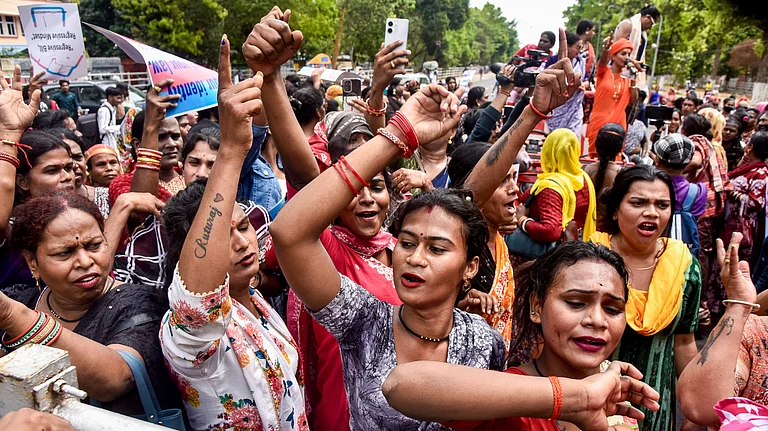
Who qualifies as “transgender” under Indian law? The law, it states, “was and is not to protect each and every class of persons with various gender identities, self-perceived sex/gender identities or gender fluidities,” but only those facing exclusion “due to biological reasons for no fault of their own.”
For trans men, the exclusion has a particular quality of erasure. Unlike hijra communities, which carry long-established socio-cultural structures and histories of recognition, trans masculine identities in India rarely correspond to specific cultural labels. With the exception of a small Manipuri community known as Nupamanba, trans men have no widely recognised socio-cultural identity in India. If legal recognition depends on belonging to such a category, an entire segment of the community simply vanishes from the law’s imagination.
Activists also warn that the Bill’s proviso, stating that persons with self-perceived identities “shall never have been so included”, puts existing identity cards at risk. For Noor, who fought to obtain her legal documents, this means the stability she painstakingly built could vanish overnight.
Advertisement

The question of what counts as family has long been central to transgender policy in India. Hijra communities, often excluded from natal families, build their own kinship systems through the guru–chela structure, where care, responsibility, and belonging are redefined.
The 2019 law recognised family only through blood, marriage, or adoption, effectively excluding these lived support systems. The current amendment does little to resolve this gap. The guru–chela system, despite being a primary source of support for many, remains legally unrecognised.
“This patriarchal, exclusionary bill seeks to impose Hindutva on us, but our fight continues,” says Grace Banu, a Dalit and transgender activist.
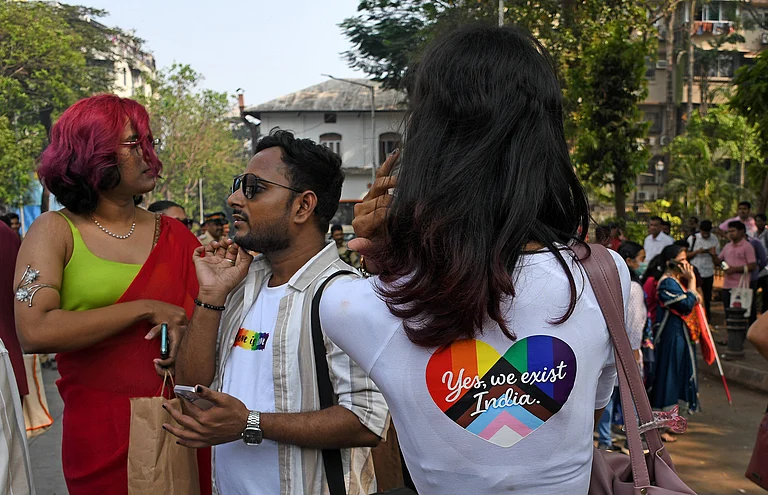
Rashtriya Janata Dal (RJD) MP Manoj Jha argued that having legislative numbers does not justify curtailing rights. Aam Aadmi Party’s (AAP) Swati Maliwal warned that vague language could be misused against families, doctors, and support networks. BJP MP Medha Vishram Kulkarni defended the legislation, saying it was intended to protect “real transgender individuals” and ensure benefits reach those recognised by birth or socio-cultural identity. Social Justice Minister Virendra Kumar framed it as a measure to protect those facing discrimination for biological reasons.
Activists argue that these debates reveal a widening gap between expert warnings and legislative action with real consequences for people like Rio and Noor whose identities and support systems are now under legal threat.
Under the 2019 Act, the process was designed to be as unburdened as possible. A self-affidavit and an Aadhaar card. The self at the centre. The process now requires prior medical intervention like surgery or hormonal treatment, followed by evaluation by a medical board led by a Chief Medical Officer. The board’s recommendation is then forwarded to the District Magistrate, who may refer the case to additional, unspecified medical experts before a certificate is issued, or denied.
Each stage introduces discretion and delay, and shifts authority away from the individual. “It is no longer about who you say you are,” Raghavi argues. “It is about whether the system agrees.”
Gender-affirming healthcare in India is already scarce. Hospitals lack trained specialists. Costs are prohibitively high. Legal recognition becomes, in effect, contingent on resources that most do not have.
For Kabir, a Dalit trans man working toward becoming a teacher, the implications are immediate and layered. Every certificate he holds carries a gender marker that does not align with his identity. Correcting documents has already meant repeated visits to government offices and frequent humiliation.
Discrimination, for Kabir, is not singular. It is shaped by both gender identity and caste. Without accurate documents, access to education and employment narrows further. “I just want to teach, but everything depends on papers,” he says.
Beyond the certification process, the Amendment introduces provisions that Raghavi describes as a medical surveillance architecture. Medical institutions would be required to report details of gender-affirming procedures directly to district authorities. Everyone who medically transitions must apply for a binary male or female marker, erasing, in administrative terms, any middle ground.
For Noor, the implications feel visceral. “In smaller systems, information travels. Once it becomes part of official records, you don’t know who might access it,” says Noor.
Critics argue that the Amendment directly contradicts the NALSA ruling, which linked gender self-identification to fundamental rights to equality, dignity, freedom of expression, and personal liberty. It also appears to run against the principles established in the 2017 privacy judgment in Justice K.S. Puttaswamy v. Union of India.
A Supreme Court-appointed advisory committee, led by former Delhi High Court judge Justice Asha Menon, had urged the Centre to withdraw the Bill before it passed, warning that the amendments came as a “shock” and risked reversing a decade of progress. But the committee’s advice was not heeded. Activists and lawyers have also alleged that pre-legislative consultation norms were bypassed. “We are in a heartbreaking situation, but we have the Constitution in our hands, and we are fighting,” says Banu.
Framing transgender rights in law has always been fraught with contradictions. Even earlier frameworks, while recognising identity, struggled to address deeper issues like property, inheritance, and kinship. The NALSA marked a shift by centring self-identification, says Banu, but translating that principle into legislation has remained uneven.
Fozia Yasin is a journalist and researcher exploring the stories and lives at the margins. She is senior associate editor with Outlook
This article appeared in Outlook’s April 11 issue titled ‘Warlord’ that focuses on the aggression unleashed on Iran by US President Donald Trump and the repercussions that are being felt across the globe with no end in sight.
Published At: