Reza Pahlavi's campaign gained momentum during the Iran conflict but has since lost political traction.
The Trump administration distanced itself from backing Pahlavi, while opposition divisions and donor concerns deepened.
Pahlavi remains Iran's best-known opposition figure but continues to face challenges in building a united movement.
Why Reza Pahlavi Is No Longer The Frontrunner For Iran's Future
The exiled son of Iran's last shah emerged as a leading opposition figure during the Iran conflict, but political divisions, waning donor confidence and a lack of US backing have complicated his leadership bid.

Summary
As the United States and Israel went to war with Iran this year, Reza Pahlavi appeared to have his strongest political opening in decades. The son of Iran's last shah declared he was ready to lead a transition after the Islamic Republic, drew enthusiastic support from Iranian exiles and conservative audiences in the United States, and secured more than $3 million in backing from a small group of prominent Iranian-American donors.
That momentum has since faded. The Trump administration has distanced itself from any suggestion that it sees Pahlavi as Iran's next leader, some financial backers have grown frustrated with his leadership, and efforts to unite Iran's fractured opposition have continued to falter. Questions have also been raised over violence and intimidation involving some of his supporters, though Reuters found no evidence linking Pahlavi himself to those incidents.
Drawing on interviews with more than 50 people, including current and former associates, alongside court documents, legal filings and social media records, Reuters examined why the exiled prince's campaign has struggled despite remaining one of the most recognisable figures in Iran's opposition. It found that while Pahlavi emerged as the most visible figure advocating regime change during the war, he has struggled to convert that prominence into a broad political movement.
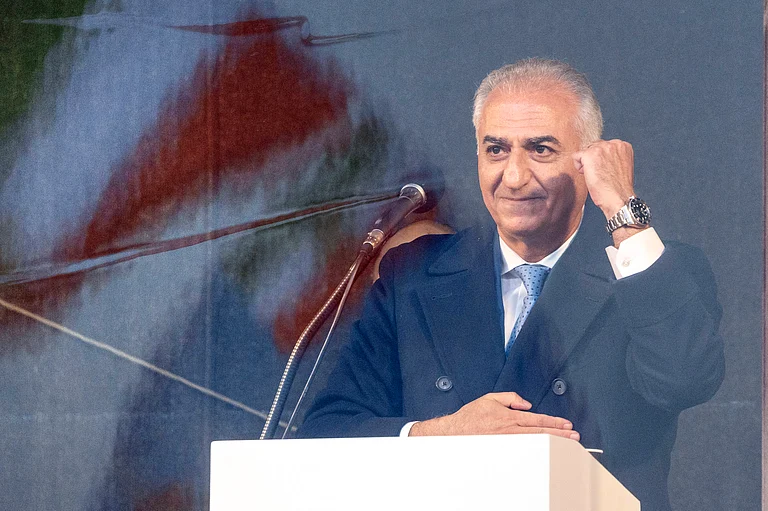

A wartime opening
Pahlavi has lived outside Iran since the 1979 Islamic Revolution overthrew his father, Shah Mohammad Reza Pahlavi. After decades campaigning against the Islamic Republic from exile, this year's conflict appeared to offer his clearest opportunity yet.
Shortly after the war began, he wrote on X: "The Iranian people have called on me to lead the transition after the regime is gone. I have accepted that responsibility."
Days later, supporters at the Conservative Political Action Conference (CPAC) in Texas greeted him with a 45-second standing ovation, with many Iranian-Americans carrying Iran's pre-revolution lion-and-sun flag.
Pahlavi has repeatedly said he does not seek power for himself but wants to oversee a democratic transition.
"This campaign started as a lifetime mission to liberate Iran 46 years ago," he told Reuters. "And it has never been about me. It's been about the Iranian people and their right to self-determination."
Advertisement
"I'm not the destination, I'm a bridge to the destination."
He also argues that his family name continues to resonate with many Iranians.
"Yes, I happen to have the Pahlavi name," he told Reuters. "And by the way, that's a positive. That's what people are chanting on the streets." It also cited a survey by the Netherlands-based Gamaan Research Institute, which found that about 48% of 31,450 respondents viewed Pahlavi favourably, while noting that polling in an authoritarian state has limitations.
Washington keeps its distance
The optimism surrounding Pahlavi's campaign proved short-lived.
Four days after his appearance at CPAC, US President Donald Trump unsettled many Iranian exiles by posting that "we are blasting Iran into oblivion or, as they say, back to the Stone Ages!!!"
According to Reuters, some Iranian-American donors who had recently contributed more than $3 million expected Pahlavi to publicly condemn the remarks. Instead, they later urged him in private conversations to work harder to unite the opposition and more forcefully denounce harassment by some of his supporters.
Advertisement
Reuters also found that, behind the scenes, the Trump administration sought to distance itself from Pahlavi.
It reported that before Iranian-American activist Ahmad Batebi addressed the UN Security Council on Iran's crackdown on protesters, US Ambassador Mike Waltz urged him not to mention Pahlavi by name. Waltz later said a focus on Batebi's own experience of torture and "the barbarism of the regime" would have "the greatest impact, rather than opposition politics."
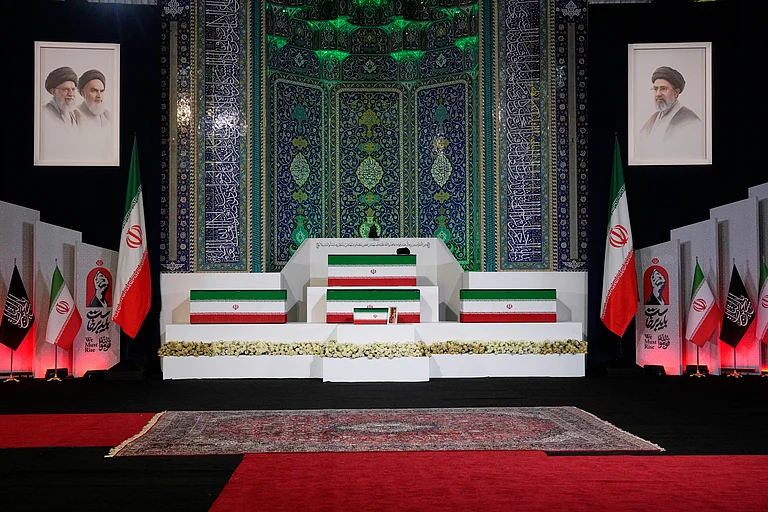
The distance became clearer after the US-Iran ceasefire agreement made no mention of regime change. Instead, Washington agreed to respect Iran's sovereignty and refrain from interfering in its internal affairs. Vice President JD Vance later said:
"The President of the United States never said that his goal was to install Reza Pahlavi to become the new leader of Iran."
Advertisement
Pahlavi criticised the agreement but insisted that Iran's future should be decided only by Iranians.
"It is not for a foreign government to decide who or what should be the alternative for Iran. That's up to the Iranian people."
He also defended his support for foreign military action following Tehran's crackdown on protesters, arguing that the regime had shown "no mercy whatsoever". While saying Iranians remained the "boots on the ground", he argued they needed foreign military help to "equal the playing field", adding that strikes should "hit the regime as hard as you can" while avoiding "civilian infrastructure."
A divided opposition
Reuters found that Pahlavi's biggest challenge may not be winning international attention but uniting Iran's deeply fragmented opposition. Monarchists, republicans, secular activists, socialists, religious groups and ethnic organisations all oppose the Islamic Republic but often disagree over what should replace it.
Several attempts to build a united front have failed. One of the most prominent, the Georgetown Coalition formed in 2023, collapsed within weeks. Reuters reported that three people familiar with a meeting in Toronto alleged Pahlavi's wife, Yasmine, told other opposition figures they were "nobodies" compared with her husband. Yasmine Pahlavi denied making the remark, calling it "a complete fabrication. No such interaction occurred in Toronto. Such lies are disappointing."
Advertisement
Criticism has also centred on some of Pahlavi's closest aides. Senior adviser Saeed Ghasseminejad wrote on X: "You're either with Prince Reza Pahlavi or with the Islamic Republic. If you're weakening the field commander for any reason whatsoever, you're an agent of the enemy." He later told Reuters the post referred only to "a small extremist faction of the monarchist movement".
Pahlavi acknowledged concerns over the rhetoric used by some around him and said he had introduced stricter protocols.
"You can no longer act independently. You have to be much more careful."
Pahlavi rejected suggestions that he lacked an organised movement, telling Reuters he remained in contact with "cell leaders" from "over a thousand different groupings" inside Iran, a claim Reuters could not independently verify.
Iranian dissident Hossein Ronaghi, who has been jailed several times, told Reuters he did not blame Pahlavi personally for abuse by supporters, "but he does bear a political and moral responsibility to speak out clearly, repeatedly and unequivocally against threats, intimidation, fabricated accusations and the exclusion of opponents."
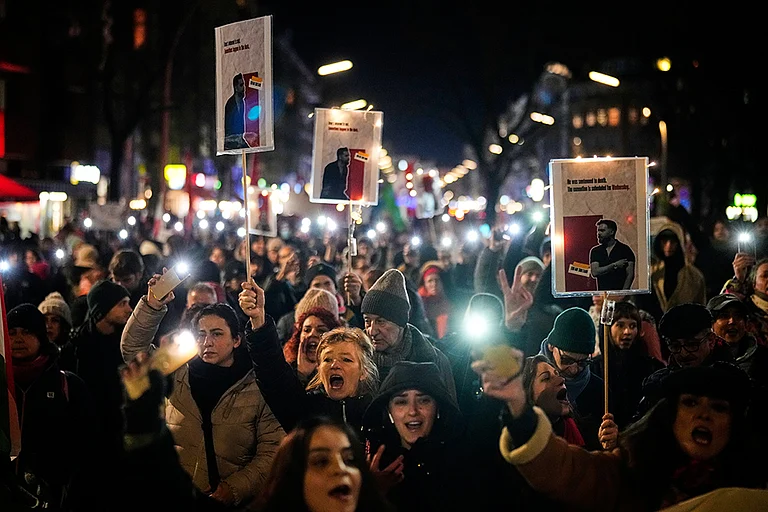


Violence, criticism and donor concerns
Reuters documented incidents in the United Kingdom, the Netherlands and Austria in which people identified as Pahlavi supporters were accused of violence or harassment. These included the assault of Kurdish journalist Dilovan Emadaldin Silashor in London, online harassment targeting an Iranian software engineer in the Netherlands, and threats against the owner of a Persian restaurant in Vienna after he refused to display Iran's pre-revolution flag.
Pahlavi condemned such behaviour.
"I condemn it. I distance myself from that. I don't justify it. I don't condone it. And, in fact, I ask for whatever authority it is to have them face the crime they've committed. You cannot just go and start brutalizing people."
Reuters found no evidence that Pahlavi was involved in any of those incidents.
Some donors also became disillusioned. Reuters reported that a private WhatsApp group of 28 prominent Iranian-American business leaders—whose companies together were said to have a combined market capitalisation of more than $1 trillion—discussed backing Pahlavi after the conflict. Fewer than 10 members ultimately contributed more than $3 million.
Among them was Uber chief executive Dara Khosrowshahi. A company spokesman confirmed his contribution to Reuters but said it was intended primarily to support Pahlavi's security and reflected the view that he should serve only as a transitional figure.
Reuters also examined the case of Masood Masjoody, an Iranian-born academic in Canada who had once supported Pahlavi and had interacted with him during an online Zoom discussion before later filing lawsuits against him and several supporters over alleged online harassment. After Masjoody was found dead, Canadian authorities charged two Pahlavi supporters with his murder. Reuters found no indication that Pahlavi was connected to the case. Calling the killing "tragic", he said: "Whoever was responsible for this murder ought to be facing a court of law and be judged for the crime they've committed."
Critics have also questioned Pahlavi's commitment to efforts to have the Islamic Revolutionary Guard Corps (IRGC) designated a terrorist organisation. Swedish lawmaker Alireza Akhondi and campaign organiser Hassan Verkiany told Reuters he supported the campaign publicly but declined to take part in key initiatives. Pahlavi rejected the criticism, saying some activists wanted to use his profile to advance their own campaigns. He later welcomed the European Union's decision to designate the IRGC a terrorist organisation.
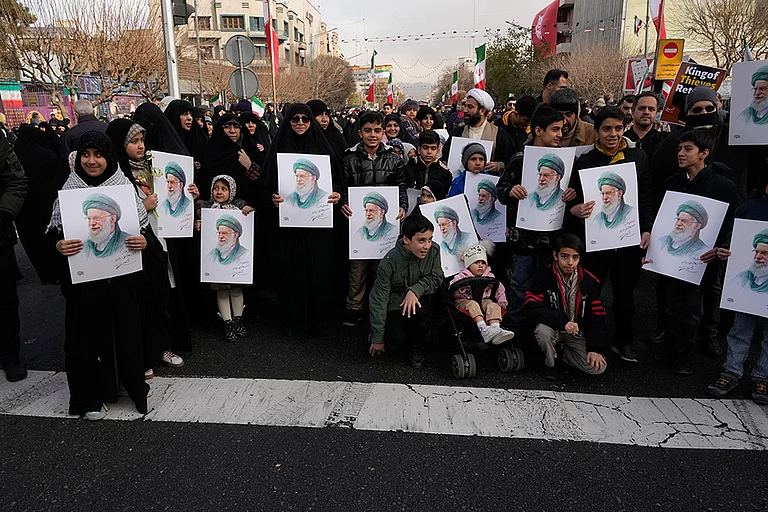

Pahlavi maintains that he is not seeking office but only to help guide Iran through a transition before its people decide their future political system.
Pahlavi continues to describe himself as "a bridge" to a democratic transition rather than its destination. Reuters' reporting, however, found that recognition alone has not resolved the political hurdles facing his campaign. With the Trump administration ruling out backing him as Iran's next leader, divisions within the opposition persisting and questions remaining over the strength of his organisation inside Iran, the momentum that briefly built around his leadership bid during the war has faded.
Published At:
Tags