Venezuela’s natural beauty has linkages with its long struggle with oil wealth, inequality, and foreign intervention.
Both Maduro and Chávez were working-class leaders seeking social justice, contrasted with Western portrayals and US hostility.
For ordinary Venezuelans, the fear is stark: if the Bolivarian project fails, they risk losing welfare, rights, and environmental protection.
Where Roses Bloom In The Shadow of Oil Politics
If the oligarchs return to Venezuela, the social housing will go, the public schools will go, the healthcare clinics will go, the food parcels will go, and the forests will be cut down

Summary
In January, which is the dry season in Venezuela, a gorgeous tree, the Rosa de Venezuela (or Scarlet Flame Bean), blooms with red and orange-red ball-shaped clusters of flowers. The last time I visited the Fuerte Tiuna area in Caracas, one of the five sites struck by the United States military at 2 am on January 3, 2026, I saw a large Rosa de Venezuela tree in full bloom. Sitting at the southern edge of the Caribbean Sea, Venezuela benefits from the warm tropical weather that allows a range of beautiful flowering trees to flourish across the country, including in Caracas—a city overcrowded by the petroleum boom and bust that has been in place for a century. By February, when the rain begins slowly, trees that are familiar at all similar latitudes (Caracas is on the same line as Chennai, for comparison)—Jacaranda with its lavender-blue flowers, Araguaney (sometimes called the Vasantha Rani) with its yellow flowers.
Nicolás Maduro, the President of Venezuela, who—with his wife Cilia Flores—is in US custody in New York City, loves flowers. Just before the pandemic, Maduro was keen to enhance Venezuela’s flower industry and to begin to export these Caribbean jewels across South America. But then the sanctions tightened and the pandemic threw everything out of focus. He grew up in a home in central Caracas, with loving parents who had strong ideas of dignity and justice. Nicolás Maduro García, his father, was a trade union man and brought socialist ideas into the home, while Teresa de Jesús Moros, was a devout Catholic who taught Maduro, as he told me years later, to “never shy away from pain”. These trees surrounded his childhood, which was filled with sports and hard work. Maduro became a public bus driver, and then a trade union leader. All the time I have known him, he has liked to refer to himself as a bus driver or a worker, an ordinary man who was propelled by the immense charisma of Hugo Chávez into the presidency of Venezuela.
Advertisement
It is easy to be demonised by the United States government. Most of the infrastructure of the media (the undersea cables and the satellites as well as the news outlets and the web platforms) are owned by Western companies, and most of their content comes to media houses unfiltered through syndication services such as the Associated Press and Reuters. When the US President or Secretary of State winks in a direction, that media seems to follow in lockstep. Some of this has to do with the general belief that the US government is benevolent and that others have the tendency to be malevolent or at least less believable than the White House. People scoff at President Donald Trump but that does not lessen the faith in the general orientation laid out by the US government towards others in the world. If the US says that Maduro is a dictator or that Cuban President Miguel Díaz-Canel is a dictator, the world’s media follows suit with little variation. When the US said that it had conducted a law enforcement mission into Venezuela and not a military invasion, this was repeated almost verbatim from Tokyo to Lima. Maduro and Flores are in prison; they are slowly being forgotten as the press moves on.
Advertisement
I first went to Caracas in 1994 and was struck by the beauty of the city, and by the familiar inequality that wracked it. Oil flowed out of the country, but so did its wealth. Decades earlier, Venezuela’s most celebrated oil minister and one of the architects of OPEC—Juan Pablo Pérez Alfonzo—wrote that oil was the “devil’s excrement”. It was a curse. In the modern world, when oil is our major fuel, it brought with it avarice and destruction, but rarely wealth for those who lived above it. Foreign oil companies and their governments treated the oil lands as their own, and the oil peoples as disposable and irrelevant. That is what Pérez Alfonzo feared, which is why he eccentrically refused to drive to work, but walked to his office every day. It was a kind of protest by this solemn man. Maduro, a bus driver, was on the other side of this conundrum, making the life of working-class Venezuelans easier by ferrying them from their factories to their homes.
Advertisement
But when Chávez, the military officer child of schoolteachers, appeared on the scene in the early 1990s, Maduro was motivated. Why couldn’t the oil wealth be used to emancipate the Venezuelan people from misery? I was sitting in an Italian restaurant in central Caracas in 1994 when President Rafael Caldera, the old warhorse of Christian Democracy, announced to his people that despite his promises he was taking them back to the International Monetary Fund (IMF). It was a full-scale betrayal. I thought we would have an uprising on the streets, as had happened in 1989 (the Caracazo). Nothing like that took place. But Chávez, still in prison, ruminated about his chances and decided to run for the presidency when Caldera’s term ended in 1999. Shouldn’t the oil wealth be better harnessed, so that the Venezuelans did not have to repeatedly return to the IMF for help?
Advertisement
Venezuela, about three times the size of Rajasthan, is breathtakingly beautiful with dramatic Andean peaks, lush Amazon rainforests, vast llanos savannahs, and pristine Caribbean beaches. Underneath all that is the world’s largest oil reserves and a host of other precious minerals and metals. Pérez Alfonzo was right: oil ruins a country. The area of Lake Maracaibo had been deeply polluted by the large oil conglomerates, and the Venezuelan people had got used to importing everything that they needed—including food, which is remarkable for an Amazonian-Caribbean country—with their oil income.
The potential of the country and its people had been squandered by the time Chávez came to office in 1999, but his dynamism and his vision were compelling. It produced a new energy in the country, as Venezuelans grasped their past—Simón Bolivar liberating them from Spanish imperialism—and used this Bolivarian past to imagine a new future with a new Constitution (1999) and a new law for oil (2001). Money flowed in and it was used to build social housing and new schools, to build farms and feed the poor, and to eradicate diseases and illnesses that had become endemic. To walk through the neighbourhoods of the working-class, the new generation of bus drivers and primary schoolteachers, was to experience the vibrant energy of Chavismo and Bolivarianism.
When Chávez was in West Bengal in 2005, he pointed to the trees and said, “These are like the trees of my childhood in Barinas”, and indeed when I was in Barinas, I felt the same. That same year, Maduro visited India and was enamoured by Sathya Sai Baba, becoming a devotee of the guru (when we would meet, he would make a great fuss about saying namaste and wanting to engage me on meditation and yoga). Portrayed in the Western press as dictators, these men—born in lower middle-class families—had a simple mission: to eradicate suffering in their land. It was a heartfelt agenda. But they had to confront very powerful forces that wanted to destroy them: the oil companies, the mining companies, the financial companies, and those political forces led by the US government that will not tolerate any socialist agenda.
Before the pandemic, I visited the Amazonas State in Venezuela, which had perhaps the deepest problems of poverty and environmental destruction. With a local Venezuelan journalist, I went to San Carlos de Río Negro which is along the Colombian-Venezuelan border and had been extraordinarily neglected by all governments and was only of interest to smugglers and the normal gangsters who set up shop near remote border regions. But here, the Bolivarian project had arrived with medical assistance and with the expertise and political will to form a self-managed commune and territorial assemblies. The 1999 Constitution had protected indigenous rights, and the Eco-Socialist Ministry (with the United Nations’ Food and Agricultural Organization) was conducting all kinds of surveys here to find out about these rights and to ensure protection for forests (including beautiful flowering trees). Young people had been recruited to study education so that they could return to their own towns as schoolteachers. I met some of them, enthusiastic, but cautious: “If this fails,” they said, “We will lose everything.”

If this fails, we will lose everything. This is the sentiment of the people who rally daily in Caracas and elsewhere for the return of Maduro. They are not paying attention to the unsourced stories in the Western media about intrigues within the ruling section in Caracas or about whether Maduro had been given to the US as a sacrifice. This is not of interest to them. They are worried about something clearer: if this fails, we will lose everything. If the oligarchs return, whether they bring their Nobel Prizes with them or leave them with Trump, the social housing will go, the public schools will go, the healthcare clinics will go, the food parcels will go, and the forests will be cut down. Who will speak for them, the people of San Carlos de Río Negro far from Caracas, but equally for the people of Petare, a poor barrio in Caracas? Who will speak for these people, and who will speak for the blooming roses?
Vijay Prashad is the director of Tricontinental: Institute For Social Research. his latest book is on Cuba: Reflections On 70 Years Of Revolution And Struggle, written with Noam Chomsky
(Views expressed are personal)
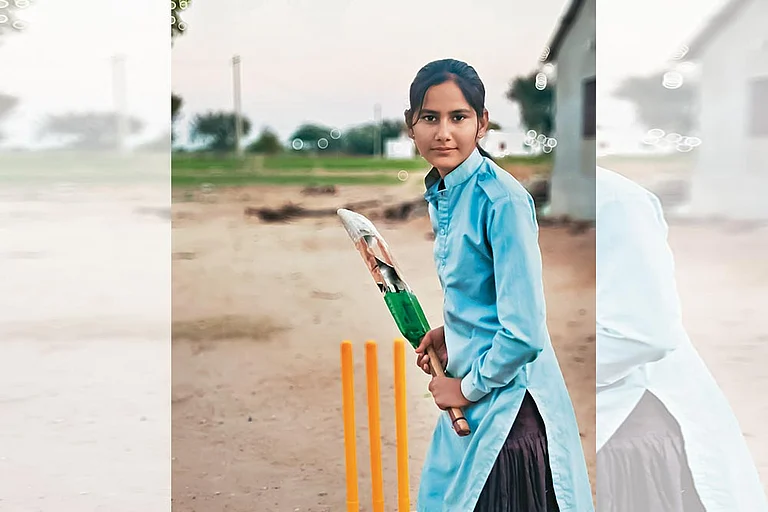
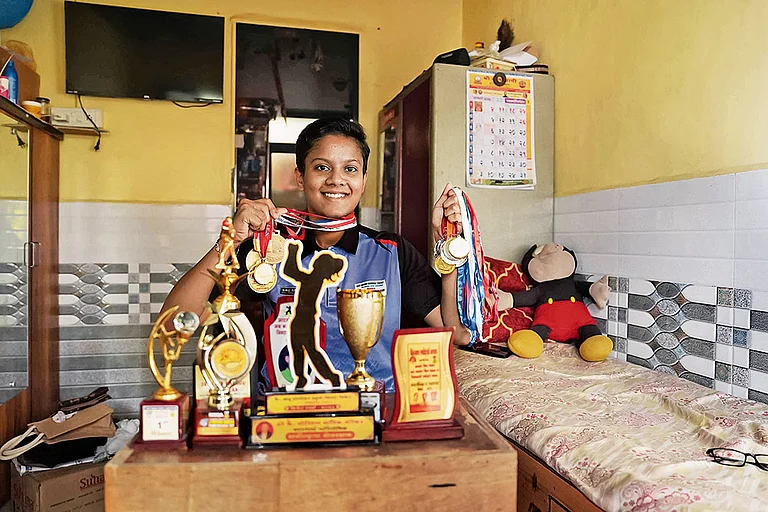
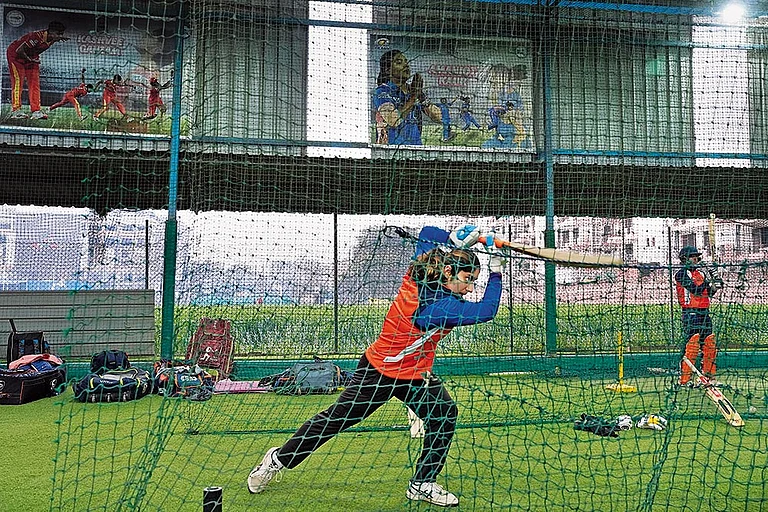
This article is part of the Magazine issue titled No More A Gentleman's Game dated February 11, 2026 which explores the rise of women's cricket in India, and the stories of numerous women who defeated all odds to make a mark in what has always been a man's ballgame.
Published At: