Advertisement
X

Iran’s Protests: A History Of Resistance, Repression And An Eyewitness Account

As a forty-year-old woman who has repeatedly been subjected to state violence, I went into the streets to claim my freedom and basic human rights.

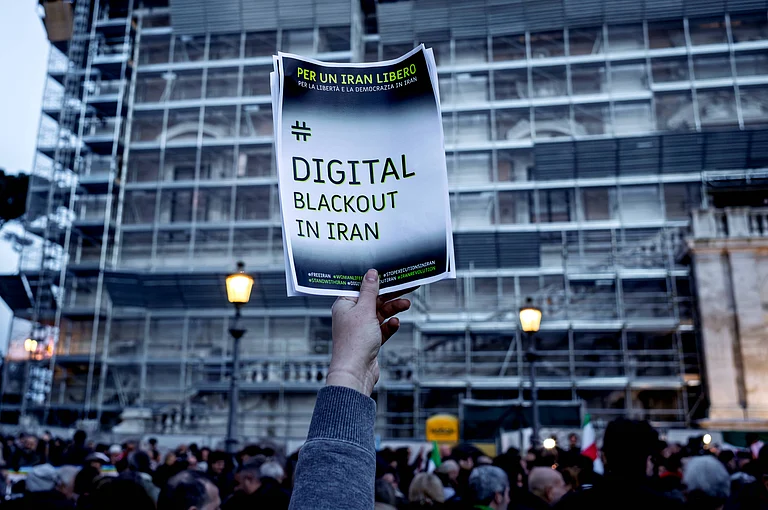
Members of the Iranian community in and around Rome during the sit-in to commemorate the death of Mahsa Amini and all the victims of the Iranian regime organized by the National Council of Resistance of Iran (NCRI) in Rome..The NCRI is a political organization founded in 1981, linked to the anti-theocratic People s Mojahedin Party of Iran (PMOI). It describes itself as a broad coalition of five opposition organizations and parties. Iranian diplomat Maryam Rajavi is the NCRI s president. Rome Italy IMAGO / ZUMA Press Wire
Summary
  • Throughout these years, the primary force behind the suppression of protests has been the Islamic Revolutionary Guard Corps

  • A widespread misunderstanding is that economic sanctions are the primary cause of Iran’s crisis and the main driver of protest

  • This movement is about human dignity, security, freedom of choice, and the nation's right to self-determination


The protests in Iran are neither sudden nor a short-term reaction to a single crisis. What is unfolding today on the streets is the continuation of a long historical confrontation between Iranian society and a political system that, from its inception, has been built on repression, exclusion, and the denial of popular will. Since the establishment of the Islamic Republic in 1979, every form of civil, political, social, or even labour protest has been met with organised violence.

One of the darkest chapters of this history is the mass execution of political prisoners in the summer of 1988, when thousands of detainees—many of whom had already completed their sentences—were secretly executed over the course of a few weeks. This crime was never independently investigated, and none of those responsible were held accountable. On the contrary, many later rose to senior political, judicial, and security positions. This culture of impunity became a defining feature of governance in the Islamic Republic.

The same pattern has repeated itself for decades. In 1999, student protests demanding freedom of expression were violently suppressed. In 2009, millions of Iranians protested election results widely believed to be fraudulent and were met with mass arrests, torture, killings, and the house arrest of movement leaders. In November 2019, nationwide protests were answered with a complete internet shutdown and the direct shooting of civilians, leaving hundreds dead within days.

This trajectory reached its peak in 2022. Following the death of Mahsa (Jina) Amini in the custody of the morality police over compulsory hijab, one of the most widespread protest movements in Iran’s modern history emerged. Women, students, schoolchildren, workers, and families across the country took to the streets. Their demands were clear: human dignity, freedom and an end to a repressive system. The state’s response was unprecedented. According to independent human rights organisations, more than 1,500 protesters were killed, thousands arrested, hundreds blinded by pellet gunfire and several young people executed after sham trials without due process.

Advertisement

Throughout these years, the primary force behind the suppression of protests has been the Islamic Revolutionary Guard Corps and its affiliated units—an institution that is not only the regime’s military arm but also one of its central political and economic actors, operating directly under the command of the Supreme Leader, Ali Khamenei.

Why Reform Is Impossible 

To understand Iran today, a common misconception must be abandoned: the belief that Iranian society is still seeking reform from within the system. This path has been tried repeatedly—through high electoral participation and support for factions labelled “reformist.” None of these efforts produced meaningful or lasting change.

The reason lies not in individual failures, but in the structure of the system itself. Any genuine reform—whether expanding civil liberties, enforcing transparency, or holding security institutions accountable—directly threatens the foundations of clerical rule. As a result, reforms have consistently been neutralised or crushed.

Advertisement

Over time, the so-called reformist current became absorbed into the power structure. Many of its leading figures were themselves active participants in the repressive machinery of the 1980s. The divide between “reformists” and “hardliners” has therefore been less a real rupture than an internal arrangement that ultimately converges on preserving the system. From this perspective, the shift in public demands from reform to fundamental change is not sudden radicalism, but the result of repeated historical failure.Iran protests

Economy, Sanctions, and a Critical Misreading

Another widespread misunderstanding is the belief that economic sanctions are the primary cause of Iran’s crisis and the main driver of protest. While sanctions have had an impact, this narrative obscures the deeper reality.

Iran’s economic collapse is first and foremost the result of domestic policies: the allocation of enormous resources to military and security institutions, extensive spending on proxy forces in the region, heavy investment in missile programs, and systemic corruption across all levels of governance. The Revolutionary Guard—also responsible for domestic repression—controls large sectors of the economy without transparency or accountability. Poverty, therefore, is not the cause of protest; it is one of the direct consequences of the existing power structure.

Advertisement

The Myth of “Regional Power”

Foreign analyses often describe the Islamic Republic as a “regional power” whose weakening could cause instability. This view ignores Iran’s human reality. What is presented as regional power is not the product of sustainable development or popular legitimacy, but of militarisation and the export of crisis beyond national borders.

This form of “power” is, in fact, a sign of internal weakness. A system that lacks public consent at home sustains itself through repression and external intervention. Reducing Iranians to a secondary variable in security calculations means disregarding the suffering of millions.

What is called regional power is largely the result of asymmetric warfare, reliance on proxy forces, and the consumption of the resources of an impoverished society to project strength that lacks economic foundations, popular legitimacy, and internal stability.

Not an Ideological Conflict

These protests are not an ideological struggle between competing belief systems. Iranians did not take to the streets to replace one doctrine with another. What is unfolding is a fundamental confrontation between the right to live freely and a system built on control, fear, and violence. This movement is about human dignity, security, freedom of choice, and the right to self-determination—rights that must exist before any ideology.

Advertisement

An Eyewitness Account

I was there myself. Protesting in Iran is nothing like demonstrating in free societies; it is closer to knowingly entering a battlefield. As a forty-year-old woman who has repeatedly been subjected to state violence—and who has lost her job, security, and part of her identity—I went into the streets to claim my freedom and basic human rights.

We knew how to prepare: we covered our faces and did not carry our primary phones. During arrests, the first step is confiscation and inspection of all messages. Possessing any independent news app can result in charges of “acting against national security.” Many people go out without phones or with old devices.

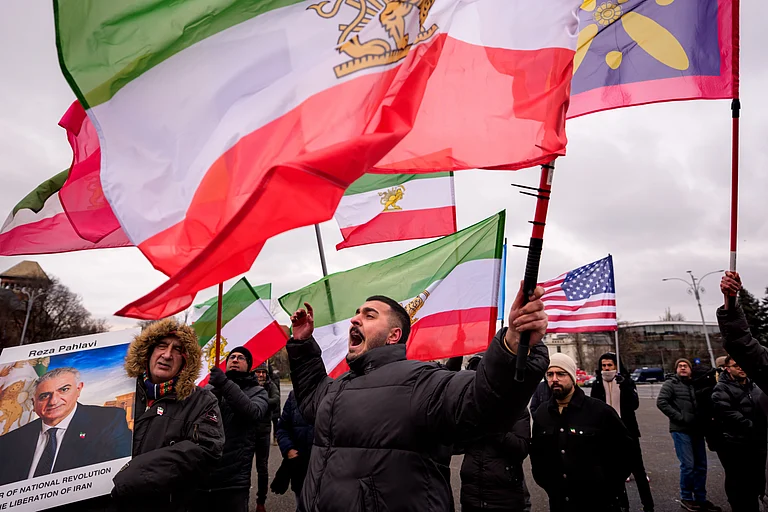
We moved in groups of two or three, reaching main streets through side alleys. The slogans were explicit: against Ali Khamenei personally, and in support of Prince Reza Pahlavi as a symbol of national change. The goal was not reform; it was transformation.

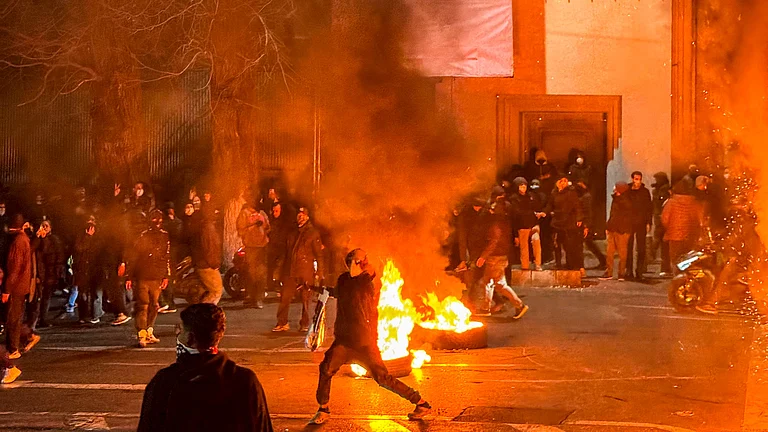
Without warning, the shooting began from rooftops of banks and government buildings—first tear gas, then live ammunition. Plainclothes forces attacked from both sides. Boys were targeted in the face; girls were deliberately shot in the thighs and between the legs. The wounded were taken away. The dead were kicked even after death. Several pellet rounds hit my leg.

The violence continued. The internet was shut down. At night, phone calls and text messages stopped working. Going to a hospital meant arrest; doctors who helped were detained. Bodies were returned only in exchange for money, otherwise buried in mass graves—the same pattern seen in 1988.

What the People of Iran Want

For years, Iranians have demanded an end to clerical rule. This demand is neither emotional nor temporary; it is the result of four decades of repression, discrimination, and denial of human dignity. Today, the people of Iran are asking the international community—particularly democratic governments and the United States—for support. What Iranians ask of the world is simple yet vital: to be seen, to be heard, and not to be left alone.

This movement is about life.

It is about freedom.

And it is about a nation’s right to determine its own destiny.

Published At:
US