Healthcare collapse: Lebanon’s hospitals are under attack, over 1.2 million people are displaced, and the country has only six weeks of medical supplies left.
Political crisis: Israeli strikes and threats in the south are complicating the Lebanese government’s efforts to curb Hezbollah’s armed role.
Aid shortfall: International support remains far below needs, raising fears of a deeper regional crisis.
Exclusive Interview: Only 6 Weeks Of Medical Supplies Left, Says Lebanon’s Former Health Minister
While the US, Israel and Iran have agreed to a two-week ceasefire, the truce does not extend to Lebanon, where Israel continues to pound civilian areas. The strikes have killed over 1,500 people, displaced nearly 1.2 million, and pushed the whole country to the brink of collapse.

Summary
Even as the US, Israel and Iran agreed to a two-week ceasefire, Lebanon remains outside the truce, with Israeli strikes continuing unabated. While Pakistan Prime Minister Shehbaz Sharif, who helped facilitate the talks, said the ceasefire extended to Lebanon, Israeli Prime Minister Benjamin Netanyahu flatly denied that Lebanon was included.
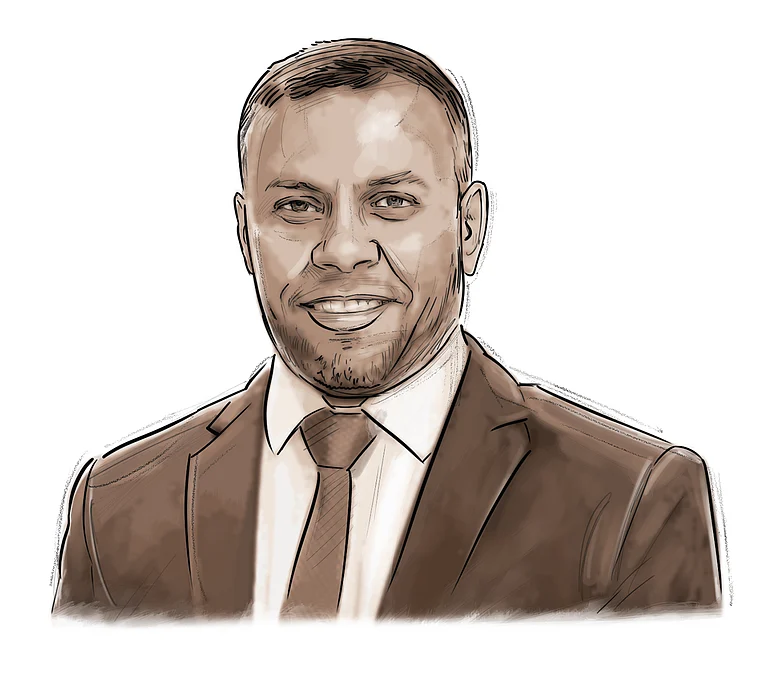
Since the war on Iran began, Lebanon has been on edge. In a war that’s spilling over, Israel is attacking Lebanon in response to strikes by Hezbollah and is also intending to occupy southern Lebanon up to the Litani River as a security buffer against Hezbollah attacks. The deepening conflict, as per official estimates, has left over 1,500 dead and nearly 1.2 million displaced in Lebanon. With hospitals under attack and the health system collapsing, it’s the citizens who are getting impacted in the worst possible ways. Firass Abiad, Lebanon’s former minister of public health, who served from September 2021 to February 2025, speaks to Mrinalini Dhyani about the healthcare crisis, displacements, the need for aid, the role of Hezbollah and the present war situation, which is highly dynamic.
Could you describe the situation on the ground in Lebanon?
We are seeing attacks on residential areas, including in the capital, Beirut. The raids targeting healthcare personnel and medical facilities continue. The Ministry of Public Health is reporting on this daily. We have reported that many hospitals and facilities have had to close, either because they were directly targeted or because they were in evacuation areas, and it was not safe for them to continue. We are also noticing a large number of displacements. We’re talking about 1.2 million now, which is the equivalent of a quarter of the population. A lot of them have been displaced in a very short period of time, almost in three weeks, and that means there aren’t proper shelters. Some are on the streets; some are living on the highway
Five major hospitals have reportedly been forced to shut down, while the others are being targeted. How is the healthcare system coping with these disruptions?
Advertisement
We are barely able to cope. A lot of hospitals have stopped accepting elective cases; they are working only with emergencies. Because people in the shelters are not able to come to health centres, we are sending mobile units to them.

How severe is the shortage of electricity, oxygen, fuel, blood supplies and essential medicines?
Lebanon imports almost everything. We are a small country; we don’t have enough natural resources. The increase in fuel prices and limited availability is a major worry. The government has prioritised the health sector, but what if this thing drags on for longer than expected? We have only six weeks of medical supply left.
Are international humanitarian corridors and aid routes functioning adequately enough to allow the entry of medical supplies?
The UN agencies are here. (UN Secretary-General António) Guterres himself came to Lebanon. They have called for a flash appeal of $308 million. We have only been able to get almost one-third of that, which is way below the needs. Remember, Lebanon also hosts a large number of Syrian refugees. So, we will see whether there will be more aid coming to Lebanon because we don’t have enough resources.
Advertisement
In one of your tweets, you spoke about the resilience of Lebanon’s healthcare system that is not “resilience by design” but one “forged through crises”. Could you elaborate on that?
One of the reasons to understand the resilience of our system is to understand that we have a lot of fragmentation in our system—multiple providers, no universal payer. But one of the silver linings of that fragmentation is that the system becomes decentralised. The importance of this decentralisation is that if one part of the system is attacked, the other parts can continue to work independently. That gives some resilience to any health system. The other factor is that the country has been in a financial crisis for the past five or six years, but we have become better at finding solutions with the limited resources that we have. Will this make up for all the present needs? Of course not. But at least this might explain a bit of the resilience of the system.
Advertisement
What are the specific solutions you have resorted to?
We were quick to adopt oxygen generators and solarisation, and now, with what is happening, these are coming in handy. We have also decentralised our blood banks. Even if the routes are interrupted, our decentralised blood banks can still serve the population.

There have been reports of direct strikes on medical infrastructure and first responders. How systematic has this damage been?
The attacks have been systematic in the south in the sense that they are really hampering the ability of the first responders to move. They are being targeted. Even if they attack one healthcare personnel, it amounts to a war crime. This is against international humanitarian law. Their main aim is not only to prevent the population from accessing health care but also to incite despair and hopelessness among the population.
Advertisement
Israel has reportedly used white phosphorus ammunition in southern Lebanon. Your health ministry had reported at least 173 injuries due to exposure between October 2023 and May 2024. Could you tell us about the impact on civilians and the long-term effects as a doctor?
We have reported on the use of white phosphorus. It causes very severe burns, and some of these burns cannot be countered with traditional mechanisms. We have had to train our healthcare workers on how to deal with white phosphorus burns. They can be very treacherous. There are long-term impacts. Scars, both physical and mental, remain.
One of the most significant increases we are seeing is in the use of medications for mental well-being. Even if the physical scars disappear, the mental scars will stay for a very long period of time. This is not the first time white phosphorus has been used. It is now very well documented. It is detrimental both to people and to the environment. This is internationally prohibited.
Could you tell us about the condition of Lebanon’s health infrastructure before this escalation happened?
Lebanon has dealt with a severe financial crisis followed by Covid. This really impacted infrastructure because the ability to invest was severely hampered. Also, because of the financial crisis, there was a migration of much of the healthcare workforce, including, by WHO (World Health Organization) estimates, 30 per cent of doctors and nurses. That put more pressure on the health system, especially healthcare delivery in regions and districts away from the capital.
Do you think Lebanon has been caught in the crossfire when it comes to Israel’s conflict with Iran?
Lebanon has been through a lot, and we might be one crisis away from the disintegration of the whole system. A vast majority of the population is against wars and does not wish to get entangled in a regional conflict.

The Lebanese government has taken one of its strongest positions against Hezbollah by banning its armed operations. Do you think that the Lebanese state currently has the political and institutional capacity to enforce that position?
The Lebanese government does, but the issue is, now that our land is being occupied and Israel is threatening to annex the south of Lebanon, can the government really go and disarm people who are saying they are fighting for their land? The Lebanese government is in a very difficult situation.
Having served in the cabinet yourself, how deeply do Hezbollah’s military actions shape domestic politics and decision-making within the Lebanese state?
The ultimate question posed to Lebanese people is—we have, on our southern border, a very aggressive state that believes in expansion and land grab, as we have seen in the West Bank and Gaza. So, in the face of such an expansionist neighbour, what would be the right policy?
The Lebanese government and a very large number of Lebanese believe that this should be pursued through the international community, by engaging with international platforms such as the United Nations and in accordance with international law.
Hezbollah believes that this route will not lead anywhere. They believe that Israel is not going to listen to the international community or to the decisions coming out of the Security Council. Their only route is through resistance, through taking up arms, and working in the way they do.
Now, the Lebanese government, after the last war specifically, and for a year and four months, saw no response from Hezbollah. But what we saw was a continuing attack by Israel over that period that, it claimed, was on Hezbollah operatives, but a lot of times it was on civilians. Despite the fact that the Lebanese government was taking important steps, such as disarming Hezbollah in southern Lebanon, dismantling its military wings, and taking several other measures, the attacks continued. The issue that the Lebanese are facing is: what truth should we follow?
The fact is that Israel does not listen to the UN, does not follow UN resolutions, and is not willing to withdraw from areas that it has occupied. It did not respond to the Lebanese government’s call for direct negotiations.
The fact that some of their ministers are talking about a northern expansion, and that the borders of Israel should extend much further north, occupying almost 20 per cent of Lebanon, also raises serious concerns. All of this weakens the argument of our government and strengthens the point made by Hezbollah—that Israel does not really want any diplomatic solution and that it will do whatever it wants, irrespective of the good intentions of the Lebanese government.
Do you think Israel, just like Gaza, is making Lebanon a part of the “Greater Israel project”?
This is not a secret. If you read the Israeli press, if you listen to their officials, you will know. It was, for instance, said by their minister of finance and reiterated by their minister of defence.
If you look at neighbouring countries like Syria, despite the fact that the Syrian government took steps to talk and coordinate with Israel, the Israelis have no intention of withdrawing from the areas they are occupying in Syria. This means that Israel is undermining the diplomatic route, the peaceful route through international mediators and the United Nations. They are even attacking the United Nations forces in Lebanon.
At this point, do you think banning Hezbollah was the right move?
The question about banning the military wing goes to the premise of what is a state. Under current international norms, the only party that has legitimate responsibility over the use of force is the state. The Lebanese government was stressing its authority and responsibility for having a monopoly over the use of force.
A non-state actor cannot legitimately use force because then it can use it not only on outside actors but also on inside actors as well, which is a very destabilising issue.
The premise was that as the Israeli occupation of the south is resolved by diplomatic means, there would be no need for Hezbollah to have arms. As we liberate our occupied lands, why would a non-state actor need to have arms or remain armed, and so on?
Because Lebanon does not want to be part of a bigger regional conflict, it was the right moment. Now, with the escalation that Israel is carrying out, it is weakening this argument of the Lebanese government.
Where do you see West Asia heading amid this crisis?
We are in the fog of war, as they say. Nobody knows where we are going. Are we escalating? Are we de-escalating? All we know is that, unfortunately, we are moving more and more into a crisis. The resources required to stabilise a country such as Lebanon or the region are becoming less with each passing day. The crisis is becoming more entrenched.
The worry is that we may reach a point of no return where the system cannot hold and everything comes crashing down. That would be bad news for everybody in the region, including Israel.

Is Lebanon getting enough international support or aid?
Unfortunately, we are seeing more words than action. There are a lot of those flash appeals that are coming out, but the contributions have been way below the needs. It will have implications because the Lebanese state is already extremely weak and without proper strengthening, we cannot really ask the state to do what all parties are asking it to do.
Published At: