Russian President Vladimir Putin arrived in New Delhi for the BRICS Summit 2026 on Friday, where he is scheduled to hold bilateral talks with Prime Minister Narendra Modi.
Will India Use ‘Cautious Language’ at BRICS Due to Trump’s Tariff Threats? Ex-Diplomat Srikumar Menon Explains
BRICS serves as an important platform for consultation and cooperation on major global and regional issues, while also wielding economic and diplomatic influence on the world stage

Relations between India and China have shown signs of improvement in recent months, with air links, visa services and high-level diplomatic engagements gradually being restored.
In a conversation with Outlook, retired diplomat and former Ambassador of India to South Sudan, Angola and São Tomé and Príncipe, Srikumar Menon, spoke about the changing dynamics within BRICS, the impact of US tariff threats and India’s cautious approach to the bloc’s push for de-dollarisation.
(Edited Excerpts)
With Donald Trump repeatedly warning BRICS countries against challenging the US dollar and threatening punitive tariffs, how much is US pressure shaping the agenda of this year's BRICS summit in New Delhi?
I do not doubt that Trump’s tariff threats will push India to use more cautious language at the 2026 New Delhi BRICS Summit, though without changing its core agenda. Under the theme “Building for Resilience, Innovation, Cooperation and Sustainability,” India prioritises inclusive global governance, economic cooperation, resilient supply chains, development finance, digital innovation, sustainability and practical deliverables.
US pressure has made India particularly cautious on de-dollarisation and other alternative financial mechanisms. New Delhi has explicitly rejected both a common, unified BRICS currency and an anti-dollar geopolitical agenda, while favouring the framing of local-currency settlements and payment systems as tools of diversification and resilience. At the same time, tariffs and sanctions have pushed BRICS to build economic shields and protect itself from Western pressure.

Is BRICS becoming a platform for a post-American world order - or is India using BRICS to negotiate better terms within an order where America will remain indispensable?
In India's strategic view, BRICS is not perceived as the nucleus of a 'post-American' global order - rather, it is seen as a platform to secure a greater voice, better terms, and wider strategic options within an evolving multipolar system.
Factors like the grouping’s diversity, inherent internal rivalries and continued dependence on Western markets, technology and finance actually limit its ability to replace US-led institutions or the dollar. While China and Russia favour stronger de-dollarisation and alternative financial structures, India, Brazil and others remain focused on development, institutional reform, resilience and practical cooperation.
I see New Delhi’s approach as one of "calibrated multi-alignment." Through BRICS, India seeks fairer global governance and economic diversification, while simultaneously deepening its vital strategic, technology, defence, and economic ties with the United States. For India, BRICS serves as a stabilising safety net and a bargaining tool for a multipolar world—not as an alternative to American leadership, at least not anytime soon.
Advertisement
Does India want BRICS to emerge as an alternative to the US-led global order, or does New Delhi see BRICS primarily to make the existing global order more multipolar while preserving its relationship with Washington?
India views BRICS as an instrument for advancing a more multipolar, representative and equitable global order - certainly not as an anti-Western or anti-American bloc. PM Modi and ESM Jaishankar have clearly and consistently stressed that BRICS should be “non-Western, not anti-Western,” focusing on reforming existing institutions rather than replacing them.
India’s approach reflects its broader policy of multi-alignment and strategic autonomy. While China and Russia favour a stronger challenge to Western dominance and the dollar, New Delhi emphasises practical cooperation deliverables in the form of development finance, resilient supply chains, digital infrastructure, climate action and Global South interests.
India uses BRICS to gain global leverage without hurting its vital ties to the US and the West. It seeks more negotiating leverage while protecting its vital partnerships in defense, technology, trade, and investment. Instead of replacing the current Western-led order, New Delhi simply wants to reshape it.
Advertisement
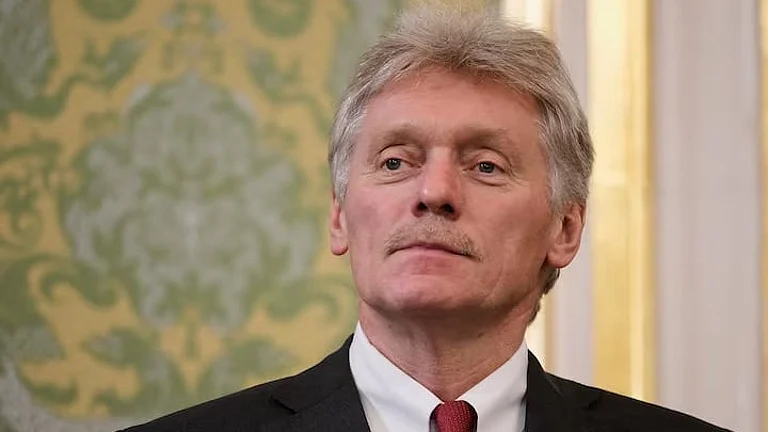
India is simultaneously deepening its engagement with Russia and China through BRICS while maintaining a critical strategic and economic relationship with the US. How difficult is this balancing act becoming under the Trump administration?
I, like many, share the view that Trump's presidency makes India's balancing act that much harder - given that its ties to Russia and China (through BRICS) clash directly with its critical US relationship.
Washington’s transactional diplomacy, tariffs and pressure over Russian oil have raised the costs of India’s strategic autonomy, while China’s growing influence within BRICS and Russia’s increasing dependence on Beijing further complicate New Delhi’s room for manoeuvre.
As I see it, India is pursuing an “America-plus” approach - deepening cooperation with Washington in defence, technology and trade while retaining Russia and China as important economic and diplomatic partners. India's challenge is to protect its independent foreign policy while navigating the shifting economic pressures.
Advertisement
Could Trump's use of tariffs, sanctions and the dollar's financial dominance accelerate the very de-dollarisation that Washington is trying to prevent?
Using tariffs and sanctions as economic weapons can backfire and weaken the US dollar. These aggressive penalties force countries to reduce their dollar dependence and avoid financial risks by trading in local currencies, launching alternative payment systems, and buying gold. The main danger is not an immediate collapse of the dollar, but rather a slow destruction of trust in its neutrality. Because the depth of US markets and a clear lack of viable alternatives will keep the dollar on top for the foreseeable future, we will not see it replaced overnight. However, I feel that continued use of excessive US pressure will simply fragment global finance and gradually erode American economic leverage.
There is talk of a possible Trump-Xi-Putin trilateral meeting later this year. year. If such a meeting happens, could it alter the dynamics within BRICS, particularly India's position between the US, Russia and China?
Advertisement
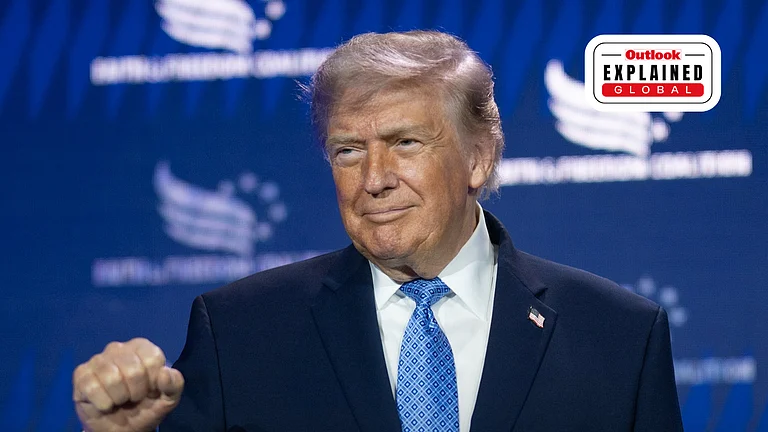
The immediate Impact of a possible Trump-Xi-Putin meeting will be to boost Chinese and Russian influence within BRICS, but it won't change India's core stance. If the three powers align, they may turn BRICS into an anti-Western bloc, which contradicts India's pragmatic, development-first goals. The risks and rewards from this could be better US ties with Russia and China which in turn could give India more diplomatic room to manoeuvre.
If India is sidelined, it will push back by strengthening its roles in both BRICS and the US-led Quad. Thus, India will keep its multi-alignment strategy, managing each big power independently. India’s position will be shaped less by the trilateral’s optics than by its substance and implications for India’s energy security, borders, technology access and strategic autonomy.
Published At: