Student suicides rose to 14,488 in 2024, nearly 80% higher than a decade ago.
The government cites career stress, isolation, mental disorders and family problems as key factors.
Experts blame poor policy execution and lack of jobs, not just exam pressure.
Career Stress, Mental Disorders: Govt Lists Causes Of Student Suicides; Experts Push Back
With student suicides reaching a record 14,488 in 2024, the government has told Parliament that career stress, isolation and untreated mental disorders are among the key factors driving the crisis

Summary
The government has said student suicides are linked to a range of factors including professional and career problems, a sense of isolation, abuse and violence, family problems, mental disorders, addiction to alcohol, financial losses and chronic pain, as it outlined a series of measures being taken to address suicide and mental health concerns among students.
In a written reply to a question on student suicides in the Lok Sabha, Minister of State (MoS) for Education, Dr Sukanta Majumdar, said the National Crime Records Bureau (NCRB) collects suicide data from cases recorded by the police and publishes comprehensive data in its annual Accidental Deaths & Suicides in India (ADSI) reports.
The reports provide year-wise, state-wise, gender-wise and age-group-wise details of student suicides, the minister said.
To address the issue, Majumdar said the government is taking a multi-pronged approach focused on psychological support for students, teachers and families, early identification of distress, counselling, suicide prevention and strengthening mental health services.
One of the Ministry of Education's key initiatives mentioned in the response is MANODARPAN, which provides psychological support to students, teachers and families through a national toll-free helpline staffed by trained counsellors. It also organises live interactive sessions, Sahyog, and webinars, Paricharcha, to create awareness about mental health. These sessions are telecast on PM e-VIDYA channels and are also available on the NCERT Official YouTube channel.
Help At Different Levels
The government also pointed to provisions for counselling in schools. The Central Board of Secondary Education (CBSE) has mandated the appointment of a counsellor and wellness teacher in every secondary and senior secondary school affiliated with it. In Jawahar Navodaya Vidyalayas, two counsellors, one male and one female, are provided for each school. As of February 2026, 830 counsellors had been engaged on a contractual basis across JNVs, while directions have also been issued to Kendriya Vidyalayas to appoint counsellors on contract.
Advertisement
For higher education institutions, the University Grants Commission (UGC) issued an advisory in January 2023 circulating the National Suicide Prevention Strategy framed by the Ministry of Health and Family Welfare. In April that year, it issued guidelines calling for safeguards against academic and peer pressure, behavioural issues, stress, career concerns and depression, besides promoting physical fitness, positive thinking and supportive networks among students.
The UGC has also undertaken anti-ragging campaigns across its official social media platforms, including X, Instagram, Facebook, LinkedIn, WhatsApp and YouTube, as per Majumdar’s response. The campaigns use videos, banners and other material in 21 languages.
The government said anti-ragging measures include a 24x7 national anti-ragging helpline, workshops and seminars, mandatory undertakings by students and parents, inclusion of consequences of ragging in institutional prospectuses and display of anti-ragging posters.
The Ministry of Education also circulated a framework on the emotional and mental well-being of students in higher education institutions in July 2023, asking institutions to take proactive measures. The framework emphasises counselling services, early identification of distress, suicide-prevention standard operating procedures, student support networks, strengthened grievance redressal mechanisms and periodic institutional reviews.
Advertisement
The Guidelines for Regulation of Coaching Centres, issued in January 2024, also provide for student-support and protection measures, including counselling facilities, transparent fee structures, prohibition of batch segregation and safeguards against practices that could intensify academic pressure.
Under the Malaviya Mission Teacher Training Programme, the government has conceptualised an integrated approach to promoting positive mental health, resilience and well-being. Two fortnightly sessions are being held with higher education faculty to help them respond to student mental health concerns and facilitate early intervention.
The government said annual National Wellbeing Conclaves were organised at IIT Hyderabad in November 2024 and IIT Bombay in November 2025, while a regional workshop on mental health was organised at IIT Madras in July 2026.
Several institutions have also introduced their own mental health initiatives. IIT Kharagpur, for instance, has implemented the SETU (Support, Empathy, Transformation & Upliftment) framework, while IIT Madras, IIT Delhi, IIT Guwahati, IIT Gandhinagar and IIT Roorkee have conducted workshops on mental wellness and stress management.
Advertisement
The government further said that all IITs, IIMs, NITs and IIITs have dedicated mental health or counselling centres staffed by professional counsellors, clinical psychologists and, in some cases, psychiatrists.
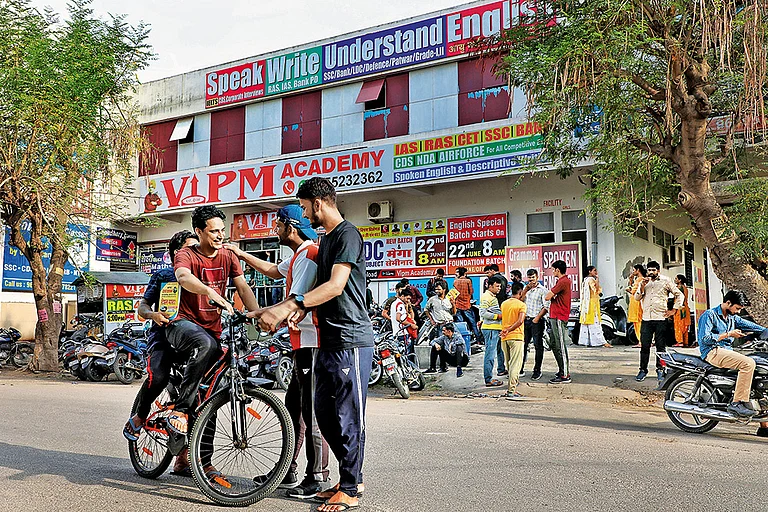
Student Suicides Hit Record 14,488 In 2024
The government's response comes as the latest NCRB data shows that student suicides in India have reached a record high.
According to the 2024 Accidental Deaths and Suicides in India (ADSI) data, 14,488 students died by suicide in 2024, a 4.3% increase from 13,892 in 2023. The rise came even as the total number of suicides in India declined marginally by 0.4%, from 171,418 in 2023 to 170,746 in 2024.
The longer-term trend is sharper. Student suicides increased from 8,068 in 2014 to 14,488 in 2024, an increase of nearly 80% in a decade. Between 2015 and 2024, more than 1.15 lakh students died by suicide; across 2014-2024, the cumulative figure was 1,23,918.
Advertisement
Students accounted for 8.5% of all recorded suicides in 2024, compared with 8.1% in 2023. The 2024 figure translates to nearly 40 student suicides every day.
Of the 14,488 students who died by suicide, 7,669 were male and 6,819 were female.
Maharashtra recorded the highest share at 13.2%, followed by Uttar Pradesh at 10.9%, Madhya Pradesh at 10% and Tamil Nadu at 8.9%.
The largest share of victims were those educated up to the secondary level, accounting for 25.6 % of student suicides. Those educated up to the higher secondary level accounted for 18.3%, followed by middle-school education at 17.7 %. Students educated up to the primary level accounted for 14.4%, while graduates and those with higher education accounted for 5.6%.
Family problems remained the leading reported cause of suicide in the broader NCRB data, accounting for 33.5 % of cases, followed by illness at 17.9 % and drug or alcohol addiction at 7.6%. Among student suicides, 2,032 deaths in 2024 were attributed to failure in examinations, accounting for around 14 % of the student total.
A More Complex Picture
Experts say the numbers point to a wider student mental health crisis in which academic pressure is only one part of a more complex picture.
A senior psychiatrist, on condition of anonymity, said exam pressure, cutthroat competition, parental expectations, career worries, and social media are among the triggers he encounters among students.
“Triggers such as these are important, but they do not tell the whole story. Many students who attempt or die by suicide dealing with depression, anxiety, bipolar disorder or severe emotional distress that had gone unnoticed and untreated,” he said.
Aparajitha Gautam, head of Delhi Parents’ Association, called "unpredictability of careers” the main reason for student suicides. She said that family pressure is normal, but what “kills” a student is the “struggle for seats”.
“The planning of the government is failing. So many policies were announced under NEP [National Education Policy]. How many of them do we see being implemented in reality?” she questioned, adding that the government “lacks execution”. “By making these statements, the government is shrugging the responsibility off its shoulders,” she said, adding that the student suicides are not just about exam pressure but also a severe lack of jobs in India.
While government data outlines a range of contributing factors, from career stress to family problems and untreated mental illness, experts and parent groups say the response so far has not matched the scale of the crisis. With student suicides rising nearly 80% over the past decade despite multiple counselling and awareness initiatives, questions remain over whether existing policies are being implemented effectively enough to reverse the trend.
Published At: