Kamal Haasan celebrates his 72nd birthday with a legacy spanning six decades.
Five performances across Hindi cinema showcase his remarkable versatility.
From Sadma to Hey Ram, revisiting the actor's memorable roles.
Kamal Haasan Turns 72: Five Career-Defining Performances Of The Versatile Actor Every Cinema Lover Must Watch
On his 72nd birthday, revisit five Kamal Haasan performances that crossed language barriers and showcased his extraordinary ability to transform himself for the screen

Summary
Indian cinema has produced several accomplished performers, but few have explored the possibilities of acting quite like Kamal Haasan. An actor, filmmaker, screenwriter and producer, he has spent more than six decades pushing the boundaries of mainstream cinema. Whether playing emotionally vulnerable characters, experimenting with physical comedy or taking on morally complicated roles, Haasan has consistently demonstrated an ability to disappear into the characters he portrays. His work across Tamil, Telugu, Malayalam, Kannada and Hindi cinema has also made him one of the few performers to enjoy recognition across different film industries.
Born on November 7, 1954, Kamal Haasan turns 72 this year. He began his acting journey as a child artiste in the 1960 Tamil film Kalathur Kannamma, winning the President's Gold Medal for his performance. His association with filmmaker K Balachander proved particularly significant in shaping his career, eventually leading to a remarkable body of work that includes films such as Moondram Pirai, Nayakan and Dasavathaaram. A three-time National Film Award winner for Best Actor and recipient of several other honours, Haasan has never restricted himself to acting alone. He has directed, written, produced and choreographed films, often taking creative risks that have challenged conventional storytelling.
Among his many performances, some have travelled beyond language barriers and found audiences across India, particularly through their Hindi versions.
Kamal Haasan's 5 best performances across Indian cinema:

Sadma (1983) IMDb
In Sadma, Kamal Haasan plays Somu, a schoolteacher who takes responsibility for Nehalata (Sridevi), a young woman who loses her memory and regresses to a childlike mental state following an accident. What could have easily become an exaggerated performance is instead handled with considerable warmth and emotional restraint.
Haasan makes Somu an affectionate, patient and occasionally helpless man. His comic exchanges with Nehalata bring moments of lightness, but the actor never loses sight of the emotional vulnerability beneath them. His performance becomes particularly affecting as Somu develops an attachment to a woman who cannot fully understand the depth of his feelings.
The film's final stretch remains one of the most devastating moments in Hindi cinema. Haasan's expressions and physical performance communicate a heartbreak that dialogue cannot adequately capture. It is a role that demonstrates how much he can convey without resorting to melodrama.
Advertisement

Hindustani (1996) IMDb
In S Shankar's Hindustani, released in Hindi as Indian, Haasan plays dual roles as freedom fighter-turned-vigilante Senapathy and his son Chandru. The two characters share a face but have sharply different outlooks towards corruption and morality.
As Senapathy, Haasan brings physical discipline, authority and an intimidating sense of conviction to the character. His body language and controlled mannerisms establish a man shaped by his experiences during the freedom struggle. As Chandru, he adopts a considerably more casual approach, portraying a younger man whose relationship with corruption is complicated by his circumstances.
The contrast between the father and son is central to the film. Haasan makes their ideological conflict convincing without allowing the two performances to become interchangeable. His work also gives the film its emotional foundation, making the conflict more than a conventional battle between a vigilante and corrupt officials.

Advertisement

Pushpaka Vimana (1987) IMDb
One of Kamal Haasan's most unusual performances came in Singeetam Srinivasa Rao's Pushpaka Vimana, released in Hindi as Pushpak. A silent black comedy, the film follows an unemployed young man who takes over the identity of a wealthy businessman after finding himself in possession of an unexpected opportunity.
What makes Haasan's performance particularly impressive is how much he communicates without dialogue. His expressions, gestures, timing and physical movements become the film's primary storytelling tools. He moves effortlessly between mischief, panic, greed and moments of genuine vulnerability.
Comedy in a silent film depends heavily on precision, and Haasan understands exactly when to hold a reaction and when to let a physical gesture deliver the joke. The performance also shows his willingness to experiment with a form that offered none of the usual comforts of dialogue or dramatic monologues. Even decades later, Pushpaka Vimana remains an example of his instinctive understanding of screen comedy.
Advertisement

Chachi 420 (1997) IMDb
Playing a man pretending to be a woman could have easily become a collection of exaggerated mannerisms. Haasan, however, approaches Lakshmi as a fully formed character. From her voice and walking style to her expressions and interactions with the people around her, he builds a convincing personality while maintaining the comedy.
His performance is particularly effective because the humour comes from the situations rather than simply the disguise. Beneath the comic misunderstandings is a father who misses his daughter and wants to remain part of her life. Haasan balances the physical comedy with that emotional motivation, giving the film a warmth that makes Lakshmi more than just a memorable comic act.
Advertisement

Hey Ram (2000) IMDb
In Hey Ram, which he also wrote, directed and produced, Kamal Haasan plays Saket Ram, an archaeologist whose life changes after his wife Aparna is killed during the communal violence surrounding Partition. His grief gradually turns into hatred, taking him down a path of political and religious extremism.
This is among Haasan's most demanding performances because Saket is not written as a conventional hero. He is a deeply flawed man whose personal tragedy influences his understanding of the world. Haasan traces this transformation through his expressions, silences and increasingly unsettling behaviour.
What makes the performance compelling is that he does not ask the audience to justify Saket's actions. Instead, he presents a man whose judgement is clouded by grief, prejudice and revenge. As the character moves further into extremism, Haasan allows the contradictions within him to remain visible.
It is a layered performance that reflects the film's larger concerns about communal hatred, political ideology and the human cost of violence.
An Actor Who Continues To Challenge Himself
What connects these five performances is not a particular genre or style of acting, but Kamal Haasan's refusal to repeat himself. In Sadma, he delivers a deeply affecting portrayal of love and helplessness, while Pushpaka Vimana demonstrates his command over physical comedy without dialogue. Chachi 420 highlights his gift for transformation, Hindustani showcases his ability to inhabit contrasting personalities and Hey Ram reveals his interest in characters shaped by personal and political conflict.
Across these films, Haasan has shown that versatility is not simply about changing appearances or adopting different accents. It is about understanding what makes a character human, even when that character is flawed, eccentric or difficult to comprehend. His performances have also helped bring different regional film industries and storytelling traditions to a wider Hindi-speaking audience.
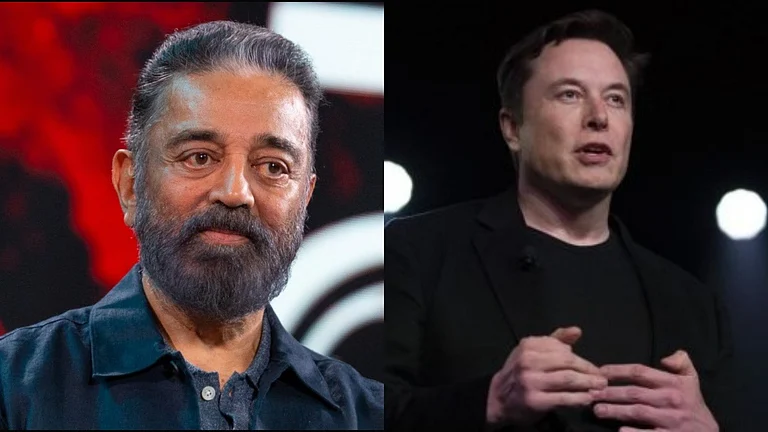
As Kamal Haasan turns 72, these films serve as a reminder of a career built on experimentation, technical curiosity and an enduring commitment to the craft of acting. Few performers have been willing to take as many creative chances, and fewer still have managed to make such different choices memorable across generations.
Published At: