Karnataka wants to build the Mekedatu dam across the Cauvery to meet Bengaluru's drinking water needs and generate hydropower.
Tamil Nadu opposes the project, arguing that it could affect the flow of Cauvery water to the state.
The dispute centres on interstate water-sharing rights, the Cauvery water-sharing arrangement and the project's approval.
A Dam, Two States And The Cauvery: Understanding Karnataka-Tamil Nadu Mekedatu Dispute
Tamil Nadu has renewed its opposition to Karnataka’s proposed dam on the Cauvery, citing concerns over downstream water flows and the interests of the state’s farmers

Summary
Tamil Nadu Minister Nirmal Kumar on Tuesday reiterated the State government's opposition to Karnataka's proposed Mekedatu dam project, asserting that Chief Minister Vijay would not allow "even a single brick" to be laid for its construction and warning that any attempt to proceed with the project would invite a strong response from the state.
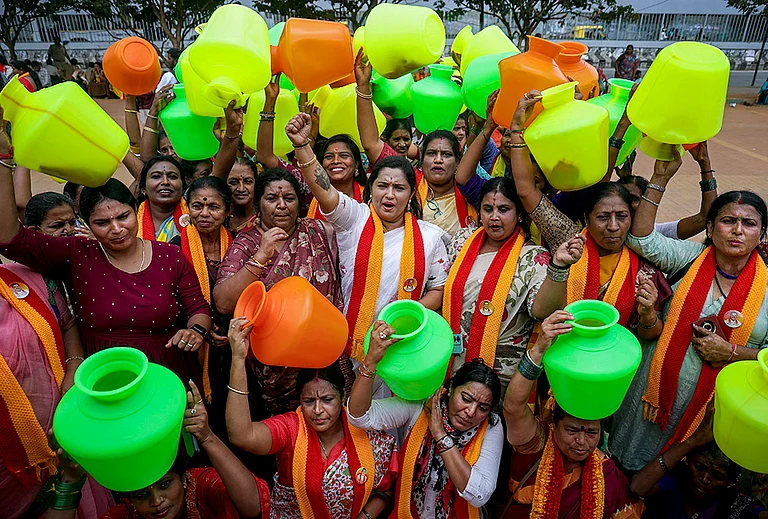
The renewed opposition comes amid a fresh political tussle between the two neighbouring states over the sharing of Cauvery waters. While Karnataka maintains that the project is necessary to meet Bengaluru's drinking water requirements and generate electricity, Tamil Nadu fears that it could affect the flow of water to its territory, particularly its agricultural regions.
The dispute is not new. The Cauvery has been at the centre of a prolonged disagreement between the two states, with the proposed dam adding another dimension to the contest over its waters.
But what exactly is the Mekedatu project? Why does Karnataka want to build it, and why is Tamil Nadu opposed to the proposal?

What Is Mekedatu Dam Project?
The Mekedatu project, formally known as the Mekedatu Balancing Reservoir and Drinking Water Project, is Karnataka's proposal to construct a dam across the Cauvery river near the Karnataka-Tamil Nadu border.
The proposed structure is a concrete gravity dam with a reservoir intended to store water and regulate its release. According to the project proposal, it would have a total storage capacity of 67.16 thousand million cubic feet (TMC), including 59.46 TMC of live storage.
The project also envisages a hydroelectric power plant with an installed capacity of 400 MW.
Mekedatu is located downstream of the confluence of the Cauvery and Arkavathi rivers but upstream of the interstate boundary. Karnataka believes the location would help it regulate the river's waters while meeting the growing requirements of Bengaluru.
Advertisement
Why Does Karnataka Want To Build The Dam?
Karnataka has put forward three principal objectives for the project: drinking water supply, regulation of river flows and electricity generation.
The state's primary argument is that Bengaluru and its surrounding areas need additional water resources as the city continues to expand. The proposed reservoir is expected to help meet drinking water requirements in the Bengaluru Metropolitan Region and adjoining areas.
Around 4.75 TMC of water has been earmarked for drinking water needs.
Karnataka has also argued that the reservoir would help regulate the flow of Cauvery water towards Tamil Nadu. The state maintains that the project would enable it to manage water releases more effectively.
The proposed 400 MW hydroelectric plant is another component of the project, which Karnataka sees as an additional source of power generation.

Why Is Tamil Nadu Opposing The Project?
Tamil Nadu's opposition stems from its position as a lower riparian state, meaning that it receives Cauvery water after it flows through Karnataka.
Advertisement
The river is particularly important for agriculture in Tamil Nadu, including the Cauvery delta region, where irrigation depends heavily on its waters.
The state fears that a reservoir upstream would give Karnataka greater control over the storage and regulation of water before it flows downstream. It has expressed concern that this could affect the timing and quantity of water reaching Tamil Nadu, particularly during years of deficient rainfall.
Tamil Nadu has also maintained that Karnataka cannot proceed with a new storage project in the Cauvery basin without the necessary approvals and consideration of the interests of the other basin states, including Kerala and Puducherry.
The central disagreement, therefore, concerns whether the proposed reservoir could be operated without affecting the water-sharing arrangement and Tamil Nadu's established rights.

What Is The History Of The Cauvery Water Dispute?
The disagreement over Cauvery waters dates back to agreements signed in 1892 and 1924 between the princely State of Mysore and the Madras Presidency during British rule.
Advertisement
After Independence and the reorganisation of states, the dispute continued between Karnataka and Tamil Nadu, with Kerala and Puducherry also asserting their interests as basin states.
Following years of unsuccessful negotiations, the Cauvery Water Disputes Tribunal was constituted in 1990 to adjudicate the matter.
In 2018, the Supreme Court delivered its judgment on the sharing of Cauvery waters, leading to the establishment of the Cauvery Water Management Authority (CWMA) and the Cauvery Water Regulation Committee (CWRC). These bodies oversee the implementation of the water-sharing arrangement.
What Is The Current Status Of The Mekedatu Project?
The project remains subject to examination by the competent authorities and the requisite statutory clearances. Karnataka's proposal has also faced objections from Tamil Nadu, which has approached legal authorities, including the National Green Tribunal and the Supreme Court.
In November 2025, the Supreme Court declined to entertain Tamil Nadu's challenge at that stage, observing that the project was still under examination by the competent authorities.
Advertisement
Karnataka Chief Minister DK Shivakumar has continued to press for the project, saying the state would abide by the law and implement whatever the courts decide.
Published At: