CWRC directed Karnataka to release 3,500 cusecs daily, reigniting Cauvery water-sharing tensions with Tamil Nadu.
Mekedatu project controversy deepened after political leaders renewed objections over approvals and river management authority.
Deficient rainfall, reservoir concerns and distress-sharing disputes continue driving recurring Cauvery conflicts between States.
Why Cauvery Water Dispute Is Back In Karnataka's Political Spotlight
The CWRC's water release directive, Karnataka's rainfall concerns, Tamil Nadu's objections and the renewed Mekedatu debate have brought the long-running Cauvery dispute back into focus

Summary
The Cauvery water-sharing dispute has returned to the forefront after the Cauvery Water Regulation Committee (CWRC) directed Karnataka to release 3,500 cusecs of water a day to Tamil Nadu for 15 days.
The order comes despite deficient rainfall across the Cauvery basin. Karnataka has maintained that the State is facing drought-like conditions, with concerns over drinking water, irrigation and livestock.
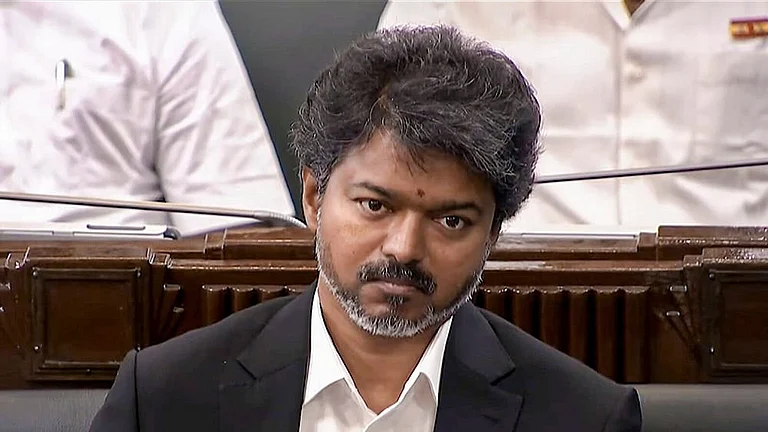
The directive has also revived the political debate over Karnataka's proposed Mekedatu balancing reservoir. Tamil Nadu Chief Minister C. Joseph Vijay has sought Prime Minister Narendra Modi's intervention to ensure that no statutory or administrative approval is granted to the project unless it is consistent with the Cauvery Water Disputes Tribunal's 2007 award and the Supreme Court's 2018 judgment.
Fresh Cauvery Tensions
The issue gained further attention after reports that Karnataka's revised Detailed Project Report (DPR) for the Mekedatu reservoir was returned for failing to conform to the Tribunal's award and the Supreme Court's judgment.
Reacting to the development, senior DMK leader T.K.S. Elangovan said the Karnataka government had "no authority over the Cauvery river". He said "only the Cauvery Water Management Authority" could decide on water sharing.
On the Mekedatu project, Elangovan said "nobody else can intervene once a tribunal is appointed". He also dismissed a proposed meeting between Tamil Nadu Chief Minister C. Joseph Vijay and Karnataka Deputy Chief Minister D.K. Shivakumar over the dispute as a "show off".
"What is the use of talking to the Karnataka Chief Minister? He is firm that he is going to build a dam across Mekedatu," Elangovan said.
He argued that appeals should instead be made through the tribunal to halt the project rather than through political negotiations.
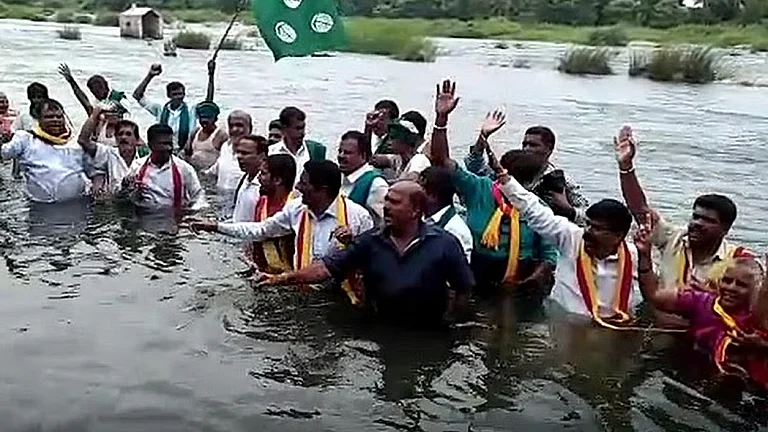
The dispute has also triggered protests across Karnataka, with pro-Kannada organisations and farmer groups arguing that the State cannot spare water while its own requirements remain unmet.
Advertisement
What Has The CWRC Ordered?
The Cauvery Water Regulation Committee has directed Karnataka to release 3,500 cusecs of water every day for 15 days to Tamil Nadu.
According to Karnataka, implementing the direction could require releasing nearly twice the stipulated quantity because of losses in the dry riverbed before the water reaches Biligundlu, the interstate measuring point.
The order followed Tamil Nadu's contention that it had received only about 3.5 TMC of water between June 1 and July 23 against the quantity due under the Cauvery Water Disputes Tribunal award, as modified by the Supreme Court in 2018.
The State argued that even after accounting for deficient monsoon conditions, at least another 3 TMC ought to have been released.
Why Is Karnataka Opposing The Release?
Karnataka has argued that deficient rainfall has left reservoirs with inadequate inflows and that priority must be given to drinking water, agriculture and livestock.
Advertisement
Deputy Chief Minister D.K. Shivakumar has said the State will challenge the CWRC's direction before the Cauvery Water Management Authority after consultations with the Advocate General, legal experts and senior officials.
He maintained that the "rain god has not been kind" and pointed out that the CWRC had rejected Tamil Nadu's earlier requests for water release on two occasions before issuing the present direction.
The order has also sparked protests across Bengaluru, Mysuru, Mandya and Ramanagara. Protesters described the direction as "unscientific", arguing that Karnataka was struggling even to meet drinking water needs and could not release about 4.5 TMC of water under prevailing conditions.
The BJP has also criticised the Congress government, alleging that Karnataka's case on water availability was not presented effectively before the CWRC and claiming that water had been released even before the committee issued its latest order.
Advertisement
Supreme Court's 2018 Verdict
The Supreme Court's judgment of February 16, 2018 modified the Cauvery Water Disputes Tribunal's 2007 award.
The Tribunal had allocated 419 TMC of water to Tamil Nadu, 270 TMC to Karnataka, 30 TMC to Kerala and seven TMC to Puducherry, with 14 TMC reserved for environmental protection.
The Supreme Court increased Karnataka's share to 284.75 TMC while reducing Tamil Nadu's allocation to 404.25 TMC. Tamil Nadu was also permitted to extract 10 TMC of groundwater, while the allocations to Kerala and Puducherry remained unchanged.
The court also held that Karnataka's drinking water requirement must be placed "on a higher pedestal".
What happens In A Distress Year?
The Cauvery Water Disputes Tribunal provided for proportionate reduction in allocations during years of deficient rainfall.
Its award states that where the available yield is less in a distress year, the allocated shares of Karnataka, Tamil Nadu, Kerala and Puducherry shall be reduced proportionately.
Advertisement
Tamil Nadu has argued that although deficient rainfall justifies lower releases, Karnataka should still release water in accordance with the principle of proportionate reduction.
Karnataka, however, maintains that the present shortage has made compliance with the CWRC's direction impracticable and that releasing water would affect its own essential requirements.
Why Does The Dispute Recur Almost Every Monsoon
The dispute resurfaces almost every monsoon because the availability of Cauvery waters depends on seasonal rainfall, while the allocations and monthly releases fixed by the Tribunal continue to govern sharing between the riparian States.
In years of deficient rainfall, disagreements arise over the extent of proportionate reductions and the quantity of water that Karnataka should release downstream. Tamil Nadu argues that scheduled releases must continue in accordance with the Tribunal's award and the Supreme Court's judgment, while Karnataka contends that poor inflows and local requirements, particularly drinking water, make such releases difficult.
The recurring disagreements are further complicated by Karnataka's proposed Mekedatu balancing reservoir. Tamil Nadu maintains that increased upstream storage could affect downstream releases during dry years, whereas Karnataka argues that the project is intended primarily for Bengaluru's drinking water supply, groundwater recharge and hydropower generation, and would not alter the allocations fixed by the Tribunal or the Supreme Court.
The latest controversy over the project's revised DPR and the renewed political exchanges between the two States have once again highlighted the unresolved differences over balancing upstream development with downstream water-sharing obligations.
(With inputs from agencies)
Published At:
Tags