The Centre has proposed Article 371(K) to provide constitutional safeguards for Ladakh.
It envisages a directly elected body with powers over key local subjects.
Control over finances, bureaucracy, policing and law and order remains unresolved.
What Is Article 371(K), And How Could It Change Ladakh’s Governance?
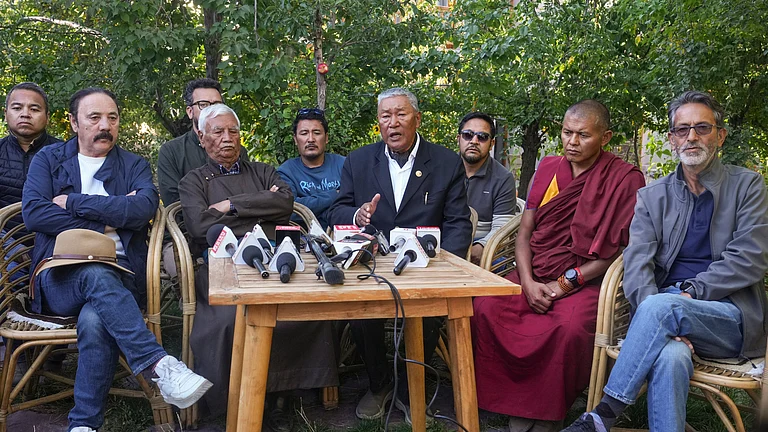
The Ministry of Home Affairs (MHA) outlined the proposal during talks with the Leh Apex Body (LAB) and Kargil Democratic Alliance (KDA) in New Delhi on September 9

Summary
The Centre has proposed a new constitutional provision, Article 371(K), that could give Ladakh a directly elected governing body with legislative powers over land, culture, language, forests, the environment and natural resources, the Indian Express reported
The Ministry of Home Affairs (MHA) outlined the proposal during talks with the Leh Apex Body (LAB) and Kargil Democratic Alliance (KDA) in New Delhi on September 9. However, it did not provide a draft or clarify whether the proposed body would control finances, planning, the bureaucracy, police and law and order.
Ladakh’s representatives described the proposal as incomplete and sought a written framework before the next round of talks, expected in October.
What Centre Has Proposed
According to civil society representatives at the meeting, the MHA proposed creating an elected body with law-making powers at the Union Territory level, as reported by The Hindu.
“The MHA stated that the intended UT-level body would be elected by direct election, and would have legislative powers with respect to land, culture and language, forest, environment, natural resources, and any other subject matter reserved for the UT under Article 240,” their statement said
Ladakh Chief Secretary Ashish Kundra said the meeting discussed the “broad contours” of a special governance structure under Article 371.
“A general air of positivity prevailed as the broad contours of a sui generis model of governance under Article 371 of the Constitution were discussed. Deepening democracy is the goal,” he wrote on X.
Article 371(K) does not currently exist. The Constitution contains Article 371 and Articles 371-A to 371-J, which provide different safeguards and administrative arrangements for specific states. Creating a new provision for Ladakh would require a constitutional amendment.
Advertisement
Why Ladakh is Seeking Safeguards
The demand dates to the reorganisation of Jammu and Kashmir in 2019. The Jammu and Kashmir Reorganisation Act divided the former state into two Union Territories: Jammu and Kashmir with a legislature, and Ladakh without one.
Before the change, Ladakh elected four representatives to the Jammu and Kashmir Assembly. Since becoming a Union Territory on October 31, 2019, it has been administered through the Lieutenant Governor and centrally appointed officials.
Leh had long demanded Union Territory status, arguing that the region received inadequate attention under the former Jammu and Kashmir government. Support for the new arrangement weakened as concerns grew over the absence of a legislature and the limited role of elected representatives.
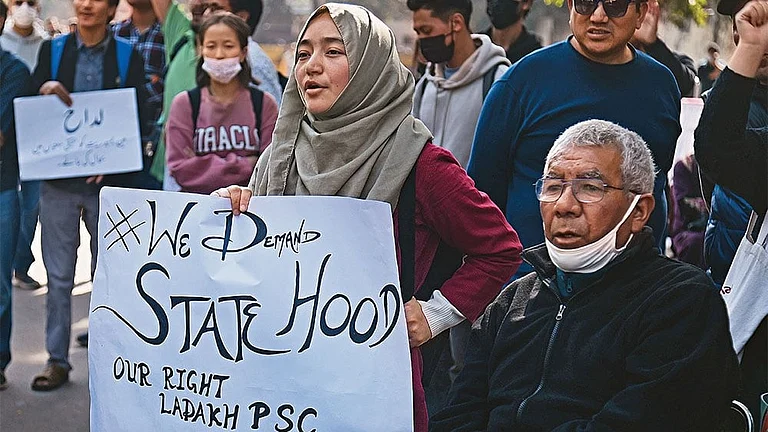
The LAB and KDA have since demanded statehood, Sixth Schedule status, protection for local land and employment, and greater representation in decisions involving infrastructure and natural resources.
Ladakh currently has autonomous hill development councils in Leh and Kargil, but neither possesses the powers of a legislature or the constitutional authority available to councils established under the Sixth Schedule.
Advertisement
What Article 371 Provides
Article 371 and its lettered provisions create special arrangements for 12 states. Their scope differs according to the political, social and cultural conditions of each state.
Under Article 371-A, parliamentary laws dealing with Naga religious and social practices, customary law, customary justice and ownership or transfer of land and resources do not automatically apply to Nagaland unless its Assembly approves them.
Article 371-G provides comparable protections to Mizoram in matters involving Mizo religious and social practices, customary law and land ownership. Other Article 371 provisions create development boards, legislative committees or special representation arrangements.
The proposed Article 371(K) would be different because it would apply to Ladakh, a Union Territory rather than a state. Its powers would depend on the final wording approved by Parliament.
Article 371(K) Versus Sixth Schedule
The Sixth Schedule, under Article 244 of the Constitution, establishes Autonomous District Councils and Regional Councils in designated tribal areas. It currently operates in Assam, Meghalaya, Mizoram and Tripura.
Advertisement
These councils can frame rules and laws on specified subjects, including land, forests, water, agriculture, village administration, inheritance, social customs and mining.
The National Commission for Scheduled Tribes recommended Sixth Schedule protection for Ladakh in September 2019, citing its predominantly tribal population and distinctive cultural heritage. No region outside the Northeast has so far been included under the framework.
The Centre’s Article 371(K) proposal instead envisages a directly elected body for the entire Union Territory. It would create a Ladakh-specific arrangement rather than extend the existing Sixth Schedule model.
The final difference will depend on the elected body’s executive, legislative and financial authority, which the MHA has not yet detailed.
Powers Remain Unresolved
Ladakh’s representatives said the presentation did not explain how authority would be divided among the elected body, the Lieutenant Governor and the Union government.
Cherring Dorjay Lakruk of the LAB told The Hindu he was “disappointed” because the MHA had largely repeated the position discussed at a meeting on May 22 and had not supplied a draft.
Advertisement
“We cannot say that the meeting was a complete success. We hoped to get a draft proposal assuring us protection under Article 371. However, that was not provided,” climate activist Sonam Wangchuk said.
Wangchuk said the delegation wanted the elected body to control the police and bureaucracy. “The MHA only said that they will look into these demands. No assurance was given,” he added.
The LAB and KDA also asked the Lieutenant Governor to refrain from taking major decisions concerning land, administration and the bureaucracy until the constitutional framework is finalised.

What Happens Next
Ladakh’s representatives want the Centre to share a draft and introduce the constitutional amendment during Parliament’s Winter Session.
The next round of negotiations will have to settle the elected body’s composition, law-making jurisdiction, budgetary authority and control over local administration. It must also define the powers retained by the Lieutenant Governor and the future role of the Leh and Kargil hill councils.
Published At: