Punjab is moving towards a new model of higher education centred entirely on online and digital learning, with the state Assembly recently approving legislation for three private digital universities.
Three Digital Universities In Punjab: What The New Bills Mean For Students & Higher Education
Punjab has cleared Bills for three private digital universities, aiming to expand online higher education while raising questions over UGC compliance, quality, regulation and access for students

The Aam Aadmi Party (AAP) government says the move could widen access to higher education and accelerate a digital transformation in the sector. The Opposition, however, has raised questions over regulatory compliance, quality control and the extent of government oversight.
The three Bills now await the Governor’s assent before becoming law. Even after that, the proposed universities will have to comply with University Grants Commission (UGC) recognition and regulatory requirements before awarding degrees.
Three Digital Universities
On August 10, the final day of the Punjab Vidhan Sabha’s monsoon session, the House passed three Bills, the Cloud University, Hoshiarpur Bill, 2026; MS Digital University, Patiala Bill, 2026; and Physicswallah Digital University, Patiala Bill, 2026.
The legislation will enable the establishment of three private digital open universities under Punjab’s Private Digital Open Universities Policy, 2026, notified in January.
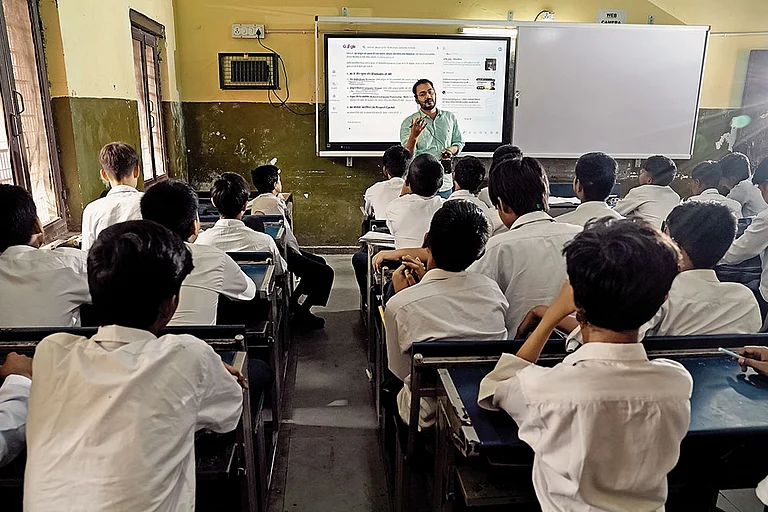
The policy seeks to expand access to higher education through fully online and digital modes. Students would be able to pursue undergraduate, postgraduate and professional programmes without attending regular physical classes.
The universities will be self-financed and are expected to use online classes, digital assessments, virtual laboratories, Learning Management Systems, digital content studios, AI-enabled learning tools, AI-proctored examinations, live sessions and round-the-clock student support.
Physical campuses would primarily function as administrative headquarters rather than conventional teaching campuses.
The Cloud University will be located at Bohan on the Hoshiarpur-Chandigarh Road and is promoted by the Rayat and Bahra Group. The MS Digital University will come up at Fatehpur village in Patiala district and is associated with the Balraj Singla Education Society.
The Physicswallah Digital University is proposed at Nandpur Kesho village in Patiala and is linked to NextSeed Foundation, associated with edtech company Physics Wallah.
The universities are expected to offer programmes across engineering, medical and paramedical sciences, life sciences, humanities, liberal arts, management and social sciences, among other disciplines.
Advertisement

Funding And Safeguards
The universities will be completely self-financed, with no grants or financial assistance from the Punjab government. Sponsors must maintain a minimum corpus of ₹20 crore exclusively for university development and have at least five years of credible experience in online education.
They will require around 2.5 to 3 acres for administrative headquarters, along with adequate digital infrastructure. At least 15% of seats will be reserved for Punjab-domiciled students.
The framework also provides for credit transfers under the National Credit Framework and Academic Bank of Credits. Universities must establish student grievance mechanisms, including an Ombudsman, while the Governor will act as Visitor with inspection powers.
AI-generated educational content must be identified, reviewed and approved by academic bodies. Violations of UGC or other norms could attract penalties of up to ₹25 lakh.
Advertisement
Why Has The Opposition Objected?
Congress MLAs strongly opposed the Bills, alleging that the AAP government was opening the door to the commercialisation of higher education and giving private entities excessive control,as Indian Express reported.
The Opposition also questioned how fully online programmes could adequately provide practical and laboratory-based training, particularly in engineering, medical, paramedical and science courses.
Independent MLA Rana Inder Pratap Singh argued that UGC rules do not permit online classes for certain programmes, including engineering, medical, paramedical courses and PhD programmes. Congress MLAs also alleged that the legislation was passed without adequate discussion and would weaken public universities.
During the debate, Opposition members entered the well of the House and raised slogans. Despite the protests, the Bills were passed by majority.
What Does The Government Say?
According to Indian Express, Education Minister Harjot Singh Bains rejected the Opposition’s objections, saying the Congress legislators had been misled by the introductory portion of the Bills.
Advertisement
Bains pointed to Clause 4(b), which states that the universities must comply with the UGC Regulations on Open and Distance Learning Programmes and Online Programmes, 2020, as well as the National Credit Framework, Credit Framework for Online Learning and Academic Bank of Credits.
The legislation therefore attempts to create a state-level framework for private digital universities while retaining compliance with national higher education regulations. The key question now will be how these institutions secure UGC recognition and implement programmes that require practical or laboratory-based learning.
Published At: