The Thane doctor assault has reignited concerns over the growing violence faced by healthcare workers across India.
Despite state-level laws, doctors' bodies say weak enforcement and the absence of a central protection law leave medical professionals vulnerable.
Studies suggest workplace violence is widespread, with ICUs, emergency departments and patients' relatives accounting for most incidents.
Thane Doctor Assault: Why Doctors' Safety Remains An Unresolved Crisis In India
The assault at the KDMC-run Shastri Nagar Hospital in Dombivli has become the latest reminder of the need to ensure doctors' safety.

Summary
"I have resigned because there is a lot of fear. Goons are watching us, and I have already left the city. They are very dangerous people. The other doctors may continue working there, but I cannot. I will not go back there again."
Those were the words of one of the doctors assaulted at a civic hospital in Maharashtra's Thane district. He told NDTV that he had resigned and left the city following the attack allegedly involving Ramesh Mhatre, a leader of the Eknath Shinde-led Shiv Sena.
His decision has once again highlighted a question that has surfaced repeatedly after attacks on healthcare workers across India: why do doctors continue to face violence inside hospitals despite years of protests, state-level protection laws and repeated demands for stricter safeguards?
The assault at the KDMC-run Shastri Nagar Hospital in Dombivli has become the latest reminder of a problem that extends well beyond a single incident.
The Thane Incident
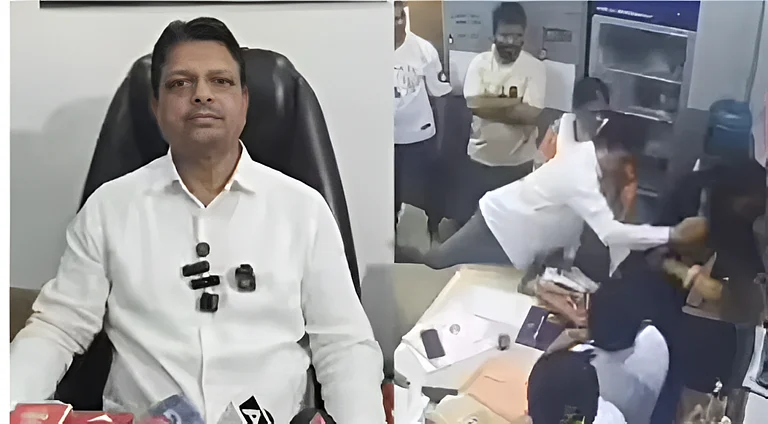
The assault took place after doctors advised the family of a newborn to shift the infant to another hospital because the neonatal intensive care unit (NICU) was full. According to police, Shiv Sena corporator Ramesh Mhatre and his associates allegedly assaulted doctors and hospital staff after arriving at the hospital. Video footage of the incident triggered widespread outrage within the medical fraternity.
The Vishnu Nagar Police later arrested Mhatre, who was booked under provisions of the Bharatiya Nyaya Sanhita (BNS) and the Maharashtra Medicare Service Persons and Medicare Service Institutions (Prevention of Violence and Damage or Loss to Property) Act, 2010. Three of his associates had already been arrested.
Before his arrest, Mhatre expressed regret over the altercation but denied allegations that he assaulted the doctor.
"I regret the physical altercation that took place. I state with full confidence that I did not raise my hand against the female doctor. What appears in the CCTV footage might look that way due to the camera angle," he said.
Advertisement
Mhatre claimed he addressed the doctor informally because he considered her "like a daughter" and alleged that while they were speaking, she continued talking on the phone instead of listening to their grievance.
"I tapped her hand. We have been guided by Balasaheb's teachings; we have never raised a hand against women, nor will we ever do so in the future," he said.
The incident prompted protests by the Indian Medical Association (IMA), with routine OPD services suspended across KDMC hospitals while emergency services continued.
How Common Are Attacks On Doctors?
India does not maintain a central database tracking violence against doctors or healthcare workers. Minister of State for Health and Family Welfare Anupriya Patel informed Parliament in November 2024 that law and order is a state subject and such incidents are not compiled centrally.
Despite the absence of official nationwide figures, multiple academic studies suggest that workplace violence is widespread. A review published in the journal Cureus in 2023 found that nearly three-fourths of Indian doctors surveyed had experienced some form of workplace violence during their careers, with emergency departments, intensive care units and post-operative wards emerging as the most vulnerable settings.
Advertisement
A more recent study published in the Indian Journal of Occupational and Environmental Medicine found that 60.9 per cent of 658 surveyed doctors had experienced workplace abuse over the previous year, while about 3.9 per cent reported physical assault. Night shifts and emergency care were identified as particularly high-risk situations.
The Biggest Threat For Doctors
Contrary to the perception that hospitals are targeted by organised criminal groups, most assaults arise from emotionally charged confrontations involving patients' relatives or attendants.
Incidents of violence are most commonly triggered after the death of a patient or a sudden deterioration in their condition. Other frequent flashpoints include delays in treatment caused by overcrowding, referrals to another hospital because of the unavailability of beds or specialist care, allegations of medical negligence, disputes over bills in private hospitals, and the involvement of local political workers or other influential individuals who intervene on behalf of patients' families.
Advertisement
The Thane incident reflected one of the most common triggers: a referral because specialised neonatal care was unavailable.
What Laws Protect Doctors?
Several states, including Maharashtra, have enacted laws specifically aimed at protecting medical professionals.
The Maharashtra Medicare Service Persons and Medicare Service Institutions (Prevention of Violence and Damage or Loss to Property) Act, 2010 criminalises violence against healthcare workers and damage to hospital property. Those convicted can face imprisonment of up to three years along with financial penalties.
At the national level, Parliament amended the Epidemic Diseases Act during the Covid-19 pandemic to make violence against healthcare personnel treating epidemic patients a cognisable and non-bailable offence. However, those protections apply only during notified epidemics.
Medical associations, including the IMA and the Federation of All India Medical Association (FAIMA), have repeatedly demanded a comprehensive central law covering all healthcare workers, irrespective of whether an epidemic is underway. That demand remains pending.
Advertisement
Why Do Attacks Continue?
Medical associations have repeatedly alleged that FIRs are sometimes delayed, prosecutions move slowly and hospitals often lack clear protocols for handling violent situations. Political influence in some cases also raises concerns about accountability.
A study published by the National Institutes of Health states that the average medical officer posted in the outpatient department sees close to 350 patients a day.
Attacks often stem from a perception of neglect among patients and their families. Tensions rise further when communication is ineffective, treatment is delayed or a patient’s condition suddenly deteriorates. Since many patients lack health insurance, a diagnosis can also come as a financial shock, pushing families into emotional turmoil and causing anger to be displaced onto the physician.
The study stated that violence is most common in high-pressure areas such as ICUs, where close to 50 per cent of violent incidents occur. Nearly 70 per cent of such attacks are caused by patients’ relatives.
Are Hospitals Secure Enough?
Security arrangements differ sharply across India's healthcare system.
Large corporate hospitals generally have controlled entry points, CCTV surveillance, trained security personnel and visitor restrictions. Many district hospitals, municipal hospitals and smaller government facilities operate with limited security despite handling large patient volumes.
Following the rape and murder of a trainee doctor at Kolkata's RG Kar Medical College and Hospital in 2024, the Supreme Court constituted a National Task Force to recommend measures for improving the safety and working conditions of healthcare professionals. Among the issues examined were hospital security infrastructure, emergency response systems and workplace safety protocols.
An Unresolved Crisis
Nearly every major assault on doctors follows a familiar pattern: public outrage, protests, promises of stronger security and renewed calls for a central law. Yet the attacks continue.
Doctors' organisations, including the Indian Medical Association (IMA), have consistently demanded a Central Protection Act to curb escalating violence against healthcare professionals. They have also called for hospital security similar to airports, designated safe zones and better working conditions for on-duty resident doctors.
As of now, no central law has been enacted to specifically criminalise violence against doctors in all circumstances. However, the Central Protection of Healthcare Workers and Medical Establishments from Violence Bill, 2025 has been introduced in the Rajya Sabha. The private member’s bill proposes strict penalties, including imprisonment ranging from six months to ten years and fines that may extend up to Rs 10 lakh, depending on the severity of the violence.
The Thane assault has once again brought those longstanding demands back into focus. For one doctor, however, the debate has already become deeply personal. His decision to leave the city rather than return to work underscores the cost of a healthcare system where those providing care increasingly fear for their own safety.
Published At: