The Supreme Court stayed the Madras High Court’s blanket cow slaughter direction.
Tamil Nadu argued that its 1958 law permits slaughter under specified conditions.
The state said the High Court went beyond the relief originally sought.
Tamil Nadu Cow Slaughter Case Explained: Why SC Stayed Madras HC Order
The Supreme Court stayed the Madras High Court’s blanket ban after Tamil Nadu argued that state law permits cow slaughter under specified conditions.

Summary
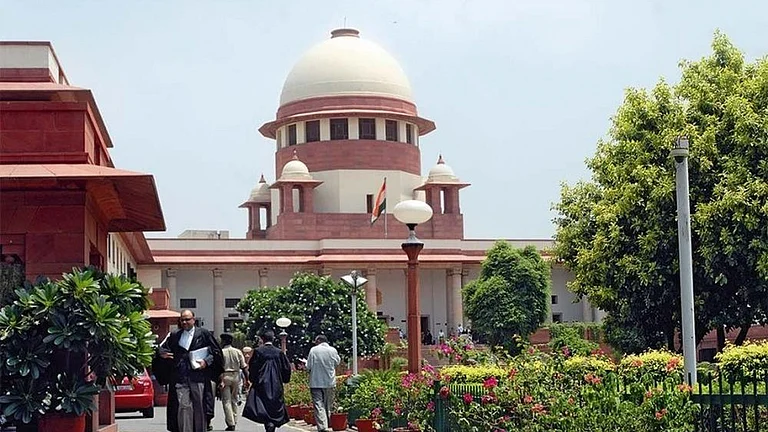
The Supreme Court on Monday stayed a Madras High Court direction requiring the Tamil Nadu government to ensure that no cow or calf was slaughtered anywhere in the state during Bakrid or on any other day. The interim relief came while the top court was hearing the State government's challenge to the High Court's May 27 order.
The Tamil Nadu government argued that the High Court's direction was contrary to the Tamil Nadu Animal Preservation Act, 1958, which permits the slaughter of certain cows under specified conditions. It also contended that the High Court had gone beyond the relief sought in the original petition and had effectively imposed a blanket prohibition that does not exist under the State law.
How Did The Dispute Begin?
The dispute originated from a public interest litigation filed by K. Surya Prasanth, General Secretary of the Hindu Makkal Katchi, before the Madras High Court.
The petition was filed ahead of Bakrid and sought directions to prevent the slaughter of animals outside designated slaughterhouses in Coimbatore. The petitioner alleged that local authorities had allowed temporary sheds to be used for animal slaughter despite rules requiring slaughter to take place only at notified locations.
According to the petition, representations submitted to the police and district administration seeking action against the alleged illegal slaughter had received no response.
What Did The Madras High Court Direct?
The petitioner had sought only to restrict animal slaughter to designated locations. However, the Madras High Court went beyond the relief sought and directed that no cow or calf should be slaughtered anywhere in Tamil Nadu on Bakrid or on any other day.
The Division Bench of Justices G.R. Swaminathan and V. Lakshminarayanan observed that sacrificing a cow is not an essential religious practice during Bakrid. The Bench relied on Section 4 of the Tamil Nadu Animal Preservation Act, 1958, which permits the slaughter of cows only after certification that the animal is over 10 years of age and permanently unfit for work and breeding.
The Bench also referred to Government Order (GO Ms No. 1715) issued in 1976, which prohibited the slaughter of cows in state slaughterhouses with the objective of promoting milk production and supporting the rural economy.
Advertisement
The High Court held that "the authorities cannot permit slaughter of any animal in a place other than designated slaughter houses" and further directed that "no cow or calf is slaughtered on the eve of Bakrid or on any other day", thereby imposing a blanket prohibition.
Why Did Tamil Nadu Govt Challenge The High Court Order?
The Tamil Nadu government approached the Supreme Court through a Special Leave Petition, arguing that the High Court's direction was inconsistent with the Tamil Nadu Animal Preservation Act, 1958.
The State submitted that the Act permits the slaughter of cows above 10 years of age if a competent authority certifies that they are permanently unfit for work and breeding.
It also argued that other laws—including the Prevention of Cruelty to Animals Act, 1960, the Prevention of Cruelty to Animals (Slaughter House) Rules, 2001, the Tamil Nadu Urban Local Bodies Act, 1998, and the Tamil Nadu Urban Local Bodies Rules, 2023—regulate where and how slaughter may take place rather than imposing a blanket prohibition.
Advertisement
According to the State, the petitioner had sought only restrictions on slaughter outside authorised locations, whereas the High Court imposed a statewide ban that extended beyond the relief sought in the petition.
The government also described the order as an instance of "judicial lawmaking" and argued that it was internally contradictory because it recognised that slaughter could take place at designated locations while simultaneously directing that no cow or calf should be slaughtered anywhere in the State.

Why Did SC Stay The Order?
A Bench of Justices Vikram Nath and Sandeep Mehta heard the State government's appeal on July 13.
The Bench observed that the final portion of the High Court's order appeared to require prima facie "correction".
It issued notice on the State's appeal and stayed the operation of the High Court's direction insofar as it required a complete prohibition on the slaughter of cows and calves across Tamil Nadu.
Advertisement
The Tamil Nadu Animal Preservation Act, 1958
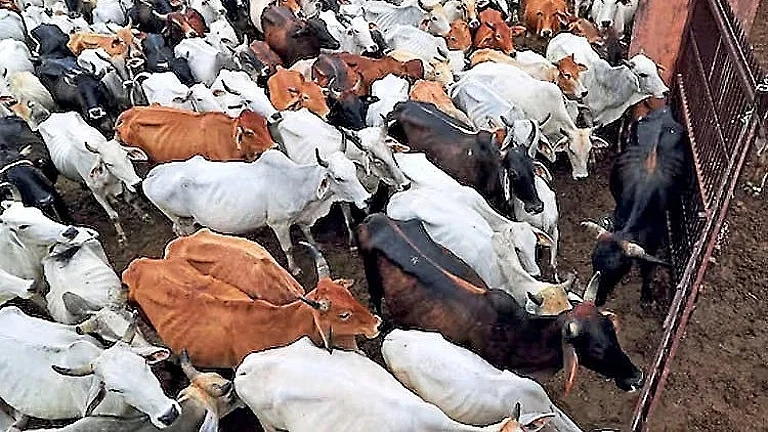
The Tamil Nadu Animal Preservation Act does not impose a complete ban on cow slaughter.
Under Section 4 of the Act, a cow above the age of 10 years may be slaughtered if a competent authority certifies that it is permanently unfit for work and breeding.
The High Court also referred to Government Order No. 1715, issued by the Agriculture Department in 1976, which prohibited the slaughter of cows in state slaughterhouses with the objective of promoting milk production and supporting the rural economy.
Why Do Cow Slaughter Laws Differ Across States?
Cow slaughter laws are not uniform across India because individual states enact their own legislation on the subject.
The Constitution places matters relating to the preservation, protection and improvement of livestock under the State List, allowing state legislatures to frame their own laws.
Advertisement
Article 48, one of the Directive Principles of State Policy, directs the State to take steps to prohibit the slaughter of cows, calves and other milch and draught cattle. However, Directive Principles are not enforceable by courts and instead serve as guiding principles for policymaking.
As a result, states have adopted different legal frameworks. Some have enacted near-total prohibitions on cow slaughter, while others permit it under specified conditions. Tamil Nadu follows the latter approach through the Tamil Nadu Animal Preservation Act, 1958.
Published At: