Supreme Court barred unauthorised sharing of judicial hearing recordings on digital platforms.
Prior approval is required before uploading, reposting, editing or monetising clips.
The interim order does not restrict legitimate news reporting of court proceedings.
Supreme Court Bars Sharing Of Court Hearing Videos Without Prior Approval
The Supreme Court said selective and decontextualised clips could undermine judicial dignity and public confidence.

Summary
The Supreme Court on Friday issued an interim order prohibiting the unauthorised extraction, editing, circulation, uploading, reposting or monetisation of audio and video recordings of judicial proceedings on social media and other digital platforms.
A bench comprising Chief Justice of India Surya Kant and Justices Joymalya Bagchi and V Mohana ruled that such recordings could be shared publicly only after obtaining permission from the competent court authority.
“There shall be no extraction, modification, dissemination, posting, re-posting, uploading or monetisation of audio/video recordings of the judicial proceedings on social media or other digital platforms without the prior permission of the Registrar General of the concerned High Courts or the Secretary General of the Supreme Court,” the interim order stated, as reported by Live Law
The bench, however, clarified that the direction would not restrict legitimate news reporting of court proceedings or operate as a gag order on freedom of speech.
Justice Bagchi said, “What we are stopping is video recording and uploading of video recordings. We have also said that if any livestreaming or audio-visual is to be shown, it should be with permission of the Secretary General and Registrar General of the High Court.”
The court was hearing a Public Interest Litigation filed by journalist Harshita Grover seeking safeguards against the selective clipping, editing, circulation and commercial use of recordings from court proceedings.
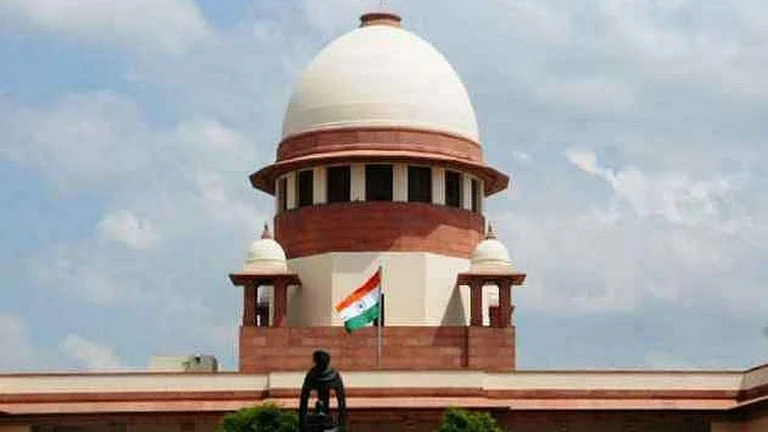
‘Court Cannot Be A 24x7 Entertainment Channel’
The petition argued that livestreaming had been introduced to strengthen transparency and uphold the principle of open justice. However, the absence of adequate safeguards had enabled courtroom recordings to be edited, decontextualised and circulated for commercial gain.
According to LiveLaw, the court observed that selective and out-of-context clips could undermine the dignity of judicial institutions and weaken public confidence in the justice delivery system.
Responding to Solicitor General Tushar Mehta’s submission that social media platforms were filled with clips uploaded by lawyers to highlight their courtroom arguments, Justice Bagchi remarked, “We cannot stop a demon which is out of the bag.”
Advertisement
He also questioned unrestricted public access to livestreamed proceedings.
“We should ensure limited access and therefore restrict livestream itself. Parties must expressly make a prayer that ‘I want to see’. It cannot be a 24x7 entertainment channel,” Justice Bagchi said.
He further noted that links provided for virtual hearings were often circulated indiscriminately and said that access to such proceedings also needed to be regulated.
Notice Issued To Social Media Platforms
The Supreme Court issued notices to Meta, X and other social media intermediaries over the circulation of courtroom videos.
It also directed the Central government to submit a proposal identifying the nodal ministries that could assist in implementing the measures sought in the petition.
The High Courts were asked to file reports detailing their compliance with the Supreme Court’s guidelines governing the livestreaming of judicial proceedings.
Justice V Mohana reiterated that the interim order should not be interpreted as a restriction on news reporting or freedom of expression.
Advertisement
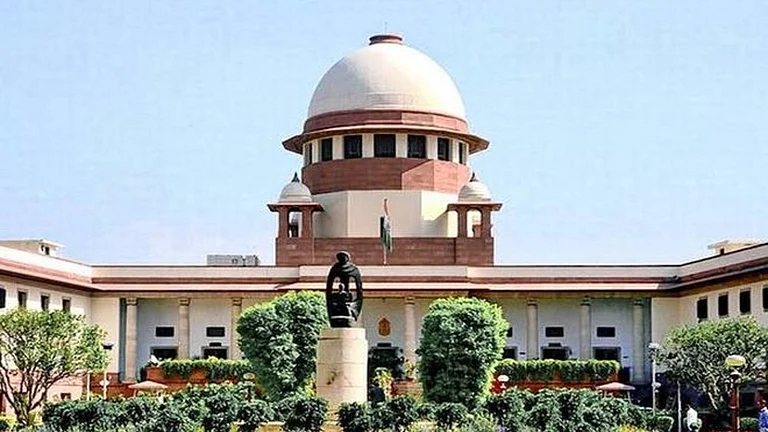
Concerns Over Viral Clips And AI Manipulation
Senior Advocate Vikas Singh, appearing for the petitioner, referred to a recent incident in which a petitioner allegedly threw papers towards the bench and abused the Chief Justice. Videos of the episode subsequently circulated widely online.
“It has become a joke,” Singh said.
Supporting the concerns raised in the petition, Solicitor General Tushar Mehta warned that artificial intelligence could also be used to manipulate courtroom recordings.
“With AI tools, judges’ or lawyers’ words can be changed and uploaded on social media,” he said.
Chief Justice Surya Kant also spoke about instances in which remarks attributed to him had allegedly been distorted.
“In the print forum, I have already experienced it. What I never said was thrust upon me by these people,” the CJI remarked.
Published At: