A survey across 14 Indian states shows more women say they are playing sport.
Cricket participation among women has doubled since 2020.
Social attitudes towards women athletes are changing more slowly than participation.
Study Finds More Women In India Playing Sport As Attitudes Towards Sportswomen Shift Gradually
BBC News and Collective Newsroom's research across 14 states shows rising participation of women in sports, especially in cricket, while social perceptions of sportswomen change more slowly

Summary
More women in India say they are playing sport and even considering it as a career, but public attitudes towards women athletes remain divided, according to research presented by BBC News and the Collective Newsroom.
The findings were shared at a press conference where the organisations released a study examining attitudes towards women’s sport, sportswomen and women in India.
The research follows a similar survey conducted in 2020. For the latest study, more than 10,000 people aged 15 and above were interviewed across 14 states between December 2025 and January 2026, allowing researchers to compare how participation and attitudes have changed over five years.
One of the clearest shifts appears in cricket. The proportion of women who say they play the sport has doubled across the states surveyed, rising from five per cent in 2020 to ten per cent in the latest study.
Among younger women, the change is more pronounced. Sixteen per cent of women aged between 15 and 24 now say they play cricket, compared with six per cent five years earlier.

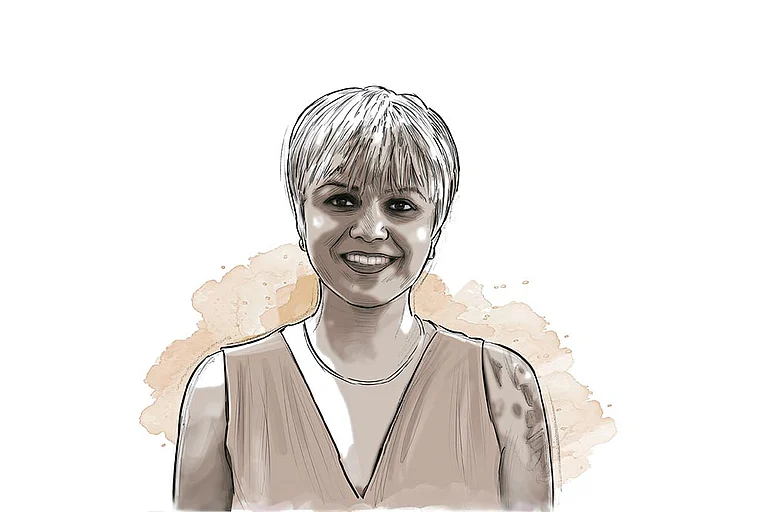
Rupa Jha, Editor in Chief and co-founder of Collective Newsroom, said the study was designed to assess how attitudes and participation have changed over time.
“Five years is a substantial amount of time since we first did the research, so we wanted to go back and see whether things had changed,” she said.
“We kept the parameters almost the same as in 2020. We returned to the states we had surveyed earlier and added a few more, covering 14 states in total. We interviewed 10,000 young women across urban and rural areas.”

She said the findings largely reflected trends that had already begun to emerge.
“The idea was simply to understand how things are changing. In many ways, the findings reaffirm what we are already seeing about women in sport, especially in cricket.”
Advertisement
The research also suggests that younger women are beginning to view sport differently.
“One in four young women now say sport is a possibility for them, not just a pastime,” Jha said. “For me, as a woman who never played sport and was never encouraged to play, that is an important change to see.”
Audience interest in women’s sport also appears to be growing. Fifty-one per cent of respondents said they had followed coverage of women’s sport in the past six months.
Cricket accounts for much of that attention. Twenty-eight per cent of respondents said they watch the Women’s Premier League, compared with 15 per cent who followed the earlier T20 Challenge in 2020.
The gender gap in cricket participation has also narrowed. In 2020, there were five men playing cricket for every woman. The latest survey suggests the figure is now closer to three men for every woman.
Arnab Dutta of Kantar India, who worked on the survey, said the research repeated many of the same questions used in the earlier study.
Advertisement
“We asked around 10,000 people the same questions as in the earlier survey, and what we are seeing is that the number of women saying they play sport has increased over the years,” he said.

Dutta said the survey used structured sampling methods to reduce bias.
“We use a structured sampling frame and randomly select respondents across demographics and social groups so that the study does not introduce bias,” he said.
“No survey can claim an absolute number, but the results suggest there is real on-ground improvement in women’s participation in sport.”
Despite signs of increased participation, the study also highlights continuing barriers. Sixty-five per cent of respondents who do not play sport said lack of time was the main reason, while 13 per cent cited safety concerns.
Perceptions of women’s sport also remain mixed. Forty-three per cent of respondents said it was less entertaining than men’s sport. Nearly half said sportswomen should be attractive, a proportion higher than in the earlier study.
Advertisement
Jha said the findings suggest changes in participation may be happening faster than shifts in social attitudes.
“There are still challenges. The research shows that social attitudes have not changed as quickly, but those kinds of changes usually take longer,” she said.
“Both things are connected. As more women start playing sport, attitudes will gradually begin to change.”
She said the research forms part of wider work linked to the Indian Sportswoman of the Year initiative, which began in 2020 to highlight the achievements of female athletes.
“Women in India are often covered in the news only when they are victims of violence,” she said. “One of the aims of this work was to look at women through a different lens and show that their lives are much more than that.”
The organisation has also tried to highlight personal stories through its reporting and documentaries.
Advertisement
“We also produced a documentary called Playing to be Seen, which was released on BBC platforms, looking at how women across India are trying to claim space in sport,” Jha said.
“In that documentary there is a young girl from Rajasthan who talks about going out to play football. She says that when she goes out to play football, her father asks why she goes there and whether she has a boyfriend. She tells him: ‘I go to play football, and football is my boyfriend.’”
Published At: